Venison alternatives starting to move
Consolidation in the deer industry in the last five years means mainly the more committed farmers are left, which is good for the industry, says Kris Orange.




 increase font size
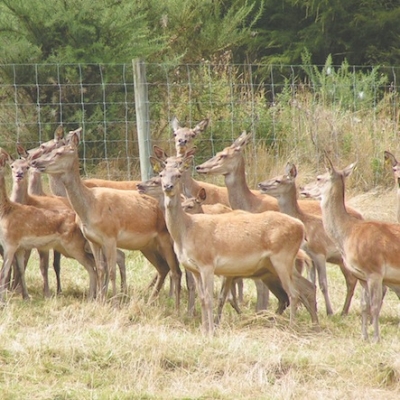 Feed hinds well during lactation.
TO GROW premium weaners, deer farmers must maintain their lactating hinds at a body condition score of at least 3.0 on a 5-point scale.
This is the conclusion that can be drawn from a one-season trial by AgResearch showing that when hind body condition scores (BCS) dropped from 3.5 to 2.8 calf growth began to suffer.
“Feeding hinds well during lactation should pay dividends,” says trial leader David Stevens. “Calf weaning weight is a major factor in determining whether a young animal reaches slaughter weight for the premium chilled market in spring and in ensuring that female replacements are ready for the stag at 15 months.”
Another AgResearch scientist, Geoff Asher, says that when pasture covers drop below 1200kgDM/ha, hinds that start lactation in good condition can protect the growth of their calf better than lighter hinds. This is because they use their fat to buffer the calf from adverse grazing conditions. “However, after about 80 days of restricted feeding, even the hinds that were originally in good condition were not able to buffer their calves.”
In the experiment, 240 hinds with a BCS of 3.5 were split pre-calving into two mobs. One was fed to maintain condition at 3.5 and the other to lose condition to BCS 2.5 before calving. After calving they were again split, with some on restricted feed (under 1200kgDM/ha) and some on ad lib feed (2400kgDM/ha). Calves were weighed every three weeks.
Lighter hinds on restricted feed had the lightest calves at weaning (47kg). Their calves were forced to graze pasture early, as their mothers were not lactating properly.
On the other hand, hinds that were light at the start of the experiment picked up quickly if they were well-fed during lactation, producing calves with similar weights (around 57kg) to those weaned off heavier hinds than had been well fed. This shows that pasture restrictions during lactation have a bigger effect on calf weight than the original condition of the hind.
Providing pasture at greater than 2400kgDM/ha during the high allowance treatment resulted in calves that were significantly heavier than calves on low allowances during lactation. This was regardless of the feeding regime pre-calving. This supports previous findings that feeding after calving is most important in species rearing a single offspring.
“The messages hold true for later restrictions – like in December/January. It is all about the rate of loss in body condition,” says Stevens. “Once their body condition hits 2.8 (from 3.5) hinds basically start to turn-off lactation.”
Monitoring condition of the hind at mid-lactation is critical, he says. This can be via binoculars in the paddock, but the best option is to bring a number of animals into the yards for individual scoring, enabling an average to be calculated. A BCS chart can be found on the Deer Industry NZ website www.deernz.org
“A calf that is heavier has a greater capacity to gain weight during the autumn and winter than a lighter animal,” Stevens says. “Lightweight weaners take longer to finish and to reach mating weights, so incur greater cost and generate considerably less income.”
Funding for the research came from AgResearch and DEEResearch Ltd, the organisation that channels deer farmer levy funds into research.
Tel 03 489 9035
Consolidation in the deer industry in the last five years means mainly the more committed farmers are left, which is good for the industry, says Kris Orange.
A conference just for the younger generation is one way the deer industry hopes to retain young people in deer farming.
Deer Industry NZ is fielding an upsurge in the number of farmers wanting to join an Advance Party (AP).
Deer farmers are being encouraged to look closely at their animal health as part of the ‘Passion2Profit’ initiative.
With dry conditions and a disappointing venison schedule, it has been a tough start to the year for many non-velvet deer farmers.



Healthy snacking company Rockit has announced Wang Yibo, one of China's most influential celebrities, as its new brand ambassador.
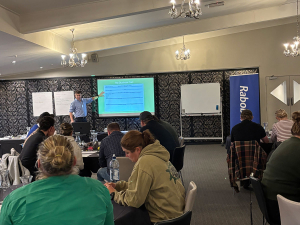
Rabobank has celebrated the tenth anniversary of its AgPathways Programme, with 23 farmers from Otago and Southland gathering for two-and-a-half days to learn new business management and planning skills.
Adopting strategies to reduce worm burden on farm goes hand-in--hand with best practice farm management practices to optimise stock production and performance, veterinarian Andrew Roe says.
Last night saw the winners of the 2026 Beef + Lamb New Zealand (B+LNZ) Awards named at a gala dinner at Te Pae Christchurch Convention Centre.
A 12-month pathway programme has helped kickstart a career in dairy for an 18-year-old student-turned-farmer.
Zespri says its global fruit sales revenue has reached a record NZ$5.9 billion from sales of 248.1 million trays.


OPINION: The old saying 'a new broom sweeps clean' doesn't always hold up, if you ask the Hound.
OPINION: This old mutt went to school to eat his lunch, but still knows the future of the country, and…