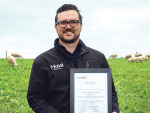
Maui Milk achieves grass-fed certification in NZ
Sheep milk processor Maui Milk has achieved grass-fed certification of milk supply against the AsureQuality Grass-Fed Scheme.




 increase font size
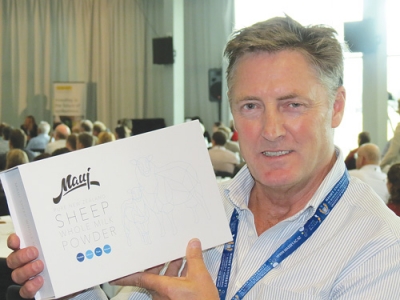 Maui Milk’s Peter Gatley says there’s no way NZ’s fledging sheep milking industry will ever replace the bovine sector.
Talk of a billion dollar sheep dairy industry is unhelpful, according Maui Milk chief executive Peter Gatley.
Gatley heads the company, a joint venture between the Waitiuhi Kuratau Trust (WKT) on the southwest side of Lake Taupo, and a small group of Chinese marketing and distribution experts. He says while there is room for expansion in the industry it will be done to match market demand.
"I don't see it replacing bovine at all. I certainly don't see the sheep driving all the cows into the sea – no way at all," he told Rural News.
"Take the perspective of the dairy goat co-operative – a great business with great products, a solid base, good distribution, some happy suppliers and a waiting list of farmers keen to be involved. But they have been going for 20-30 years and they are turning over about $180 million. If we could emulate the sort of thing the dairy goat co-operative has done, but do it in 10 years that would be great," Gatley says.
WKT has farmed sheep and beef for many years, but just eight years ago embarked on a sheep dairy operation. While it worked well it lacked good access to market, but this changed when the Chinese business people heard about it.
Since the joint venture was formed, Gatley – whose background is in genetics – has seen a fundamental change in way the business (with 3000 ewes) has been run.
"With the demand for more product we changed the system, which previously had been low input, low output with lambs reared at foot and ewes milked once a day. There was not a huge emphasis on high-energy nutrition, but now we have geared that up, rearing about 2500 lambs directly onto the platform and getting the full benefit of the lactation of the ewes," Gatley explains.
"We have fed the lambs as best we could and milked the ewes twice a day, herd tested them, culled out the bottom end and identified the best ones for breeding."
All the milk produced at WKT goes for processing at Waikato Innovation Park into milkpowder. The reason is that powder is a stable form, easy to handle, doesn't need refrigeration and has a good shelf life, Gatley says.
"It's beautifully packaged and marketed in Shanghai and surrounds and we need quite a bit more just to satisfy demand and to give us some efficiency in our process, as it is very expensive to make powder in small batches."
Sheep milk processor Maui Milk has achieved grass-fed certification of milk supply against the AsureQuality Grass-Fed Scheme.

Sheep infant nutrition maker Blue River Dairy is hoping to use its success in China as a springboard into other markets in future.
Sheep milk processor Maui Milk is on track to record average ewe production of 500 litres by 2030, says outgoing chief executive Greg Hamill.
Sheep milk powder and products exporter Maui Milk is partnering with one of China’s biggest dairy players to boost its market presence.
Dairy sheep and goat farmers are being told to reduce milk supply as processors face a slump in global demand for their products.


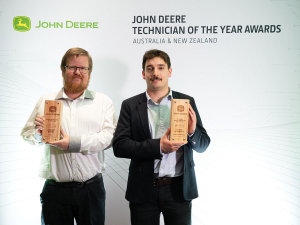
Leading John Deere technicians and apprentices from New Zealand and Australians were recognised at the recent sixth annual JD Technician of the Year Awards, held in Brisbane.
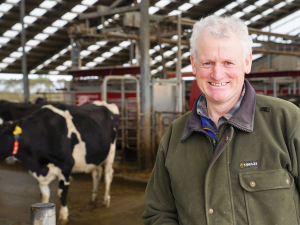
In Dacre, near Invercargill in New Zealand’s South Island, Bruce Dinnington is running a dairy operation unlike any other.
A free online platform aggregating governance vacancies across rural and regional New Zealand has been launched.
Environment Minister Nicola Grigg has announced details of a new rural plastics recycling scheme.
Agricultural drone operators say that a government decision to allow lower-risk drone work without certification won’t lower standards but drive innovation and efficiency.
OPINION: Warning bells are ringing in the arable sector.





OPINION: The same mainstream media muppets that brought you Jacindamania in 2017 have been flat out pimping for the Opportunities…
OPINION: Your old mate reckons the atrocious way farmers in the UK are treated by their lords and masters in…




