What Would Synlait Be Worth to Fonterra or a2 Milk?
Speculation of a possible joint move by Fonterra and a2 Milk to buy Synlait raises a much bigger strategic question, says agribusiness expert Dr Nic Lees.




 increase font size
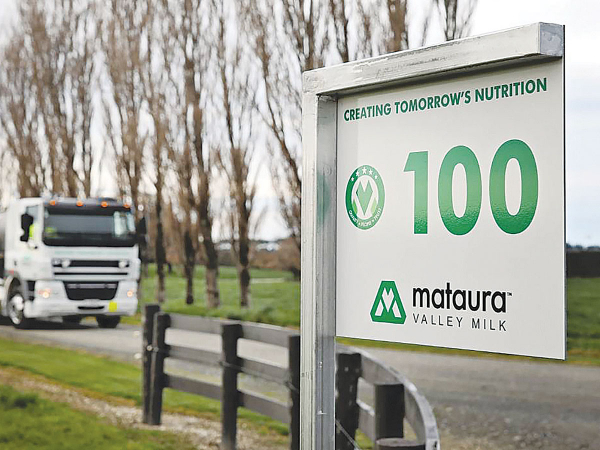 Infant formula market upheaval in China is creating challenges for Southland milk processor Mataura Valley Milk.
China's infant formula market upheaval is creating short-term challenges for Southland milk processor Mataura Valley Milk (MVM).
Its third party customer base is dwindling as customers deal with inventory issues triggered by changing dynamics in China.
MVM is 75% owned by a2 Milk Company (a2), which is also facing declining volumes in infant formula sales in China.
At an a2 investor presentation last week, MVM chief executive Bernard May says the short-term outlook for Mataura is "more challenging than anticipated".
The drop in infant formula business means the factory will be producing more commodity products - whole milk and skim milk powders. This will adversely impact earnings, he says.
However, a2 plans to increase MVM utilisation over time. Next year it will start producing a2 instant WMP. The plant is expected to reach profitability within five years.
May says as a2 expands its product portfolio in the future, MVM will have a key role in the production process.
a2 is also looking at MVM making its infant formula brands alongside Synlait for both English and Chinese labels. A blending and canning facility is also being planned at Mataura.
a2 acquired the majority stake in MVM three months ago for $268 million from China Animal Husbandry Group (CAHG), which will retain a 25% interest.
May told investors that MVM is a world-class facility - one of the most technically advanced nutritional sites globally.
He says the purchase allows the company access to existing supply agreements with local farmers engaged to supply the highest quality milk and significantly transition to A1-protein free in three seasons.
It also provides a2 supplier and geographic diversification and complements existing supply from Synlait.
While the Chinese infant formula market remains the largest and most attractive in the world, volume growth is declining.
At last week’s investor presentation, a2 chief market strategist Eleanor Khor noted that with declining volumes, retail pricing is also now under pressure and making conditions even more challenging is the fact that consumers are no longer actively prioritising international brands: instead, they are looking for brands that resonate, and local competitors are more effectively connecting with consumers in their home market than multinational corporations.
“This is potentially unsurprising given the speed at which the consumer landscape is evolving. Generations are getting ‘shorter’ and the market is now made up of mostly post-‘90s mums with very different attitudes and behaviours,” says Khor.
The changing Chinese market has prompted a change in a2’s growth strategy.
Managing director David Bortolussi says the China infant milk formula market has experienced unprecedented change over the past 12 months, which has required them to adapt their growth strategy.
“We have reviewed our brand positioning to ensure continued distinctiveness and to capture the full potential of our China label and English label products in key channels.”
Speculation of a possible joint move by Fonterra and a2 Milk to buy Synlait raises a much bigger strategic question, says agribusiness expert Dr Nic Lees.

China remains New Zealand’s biggest market, taking $23 billion of our exports, but it’s no longer a commodity story, says Prime Minister Christopher Luxon.
Fonterra is strengthening its foodservice presence in China with the launch of a new cream for professional bakeries at Bakery China 2026 in Shanghai.
OPINION: What does the birth rate in China have to do with stock trading? Just ask a2 Milk Company.
OPINION: Media reports say global recalls tied to cereulide toxin contamination in milk-based nutrition brands could inflict combined financial losses exceeding $1 billion.


Mid Canterbury Federated Farmers arable chair, Bevan Lill, said Beef + Lamb NZ data indicated that for the last six years, the average arable return on investment was about 0.8% while inflation ran about 4% - so the average arable farm was going backwards at about 3% a year.

Seed and grain companies share the concerns of arable farmers about the viability of their sector, says Seed and Grain New Zealand chief executive Dr Sarah Clark.
The New Zealand Institute of Forestry (NZIF) says unnecessary changes to New Zealand’s Emissions Trading Scheme (NZ ETS) will seriously erode investor confidence and result in significant reductions in forest planting rates.
For the first time in a quarter of a century, Federated Farmers has something positive to say about the Labour Party’s climate change policy leading into a general election.
A warning for New Zealand seed and grain companies – be prepared for an exodus of farmers from the arable sector.
Now in its fourth year, the 2026 Fencing Industry Awards, formed part of the proceedings of the FCANZ Conference, held in Nelson during August.



OPINION: The same mainstream media muppets that brought you Jacindamania in 2017 have been flat out pimping for the Opportunities…
OPINION: Your old mate reckons the atrocious way farmers in the UK are treated by their lords and masters in…




