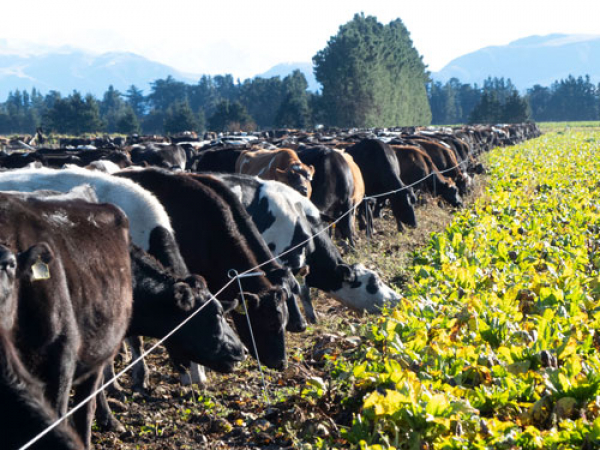
Environment Southland (ES) says it welcomes the recently announced changes to intensive winter grazing rules.
We fully support the changes that have been made to the National Environmental Standards for Freshwater and can see the Government has carefully considered the recommendations from the Southland Advisory Group in making those changes,” says ES chairman Nicol Horrell.
The Southland Advisory Group was established by Environment Southland following a meeting with farmers and Ministers David Parker and Damien O’Connor in September 2020. The group was tasked with looking at the implementation of the intensive winter grazing rules within the National Environmental Standards for Freshwater.
The group included several farmers, and staff from Beef + Lamb NZ, DairyNZ, Federated Farmers, Fish and Game and ES. Their report was presented to Minister in December 2020.
“The advisory group’s recommendations around pugging, mean slope, and resowing dates have clearly been taken on board. We are glad the Government has taken these steps as they will provide practical solutions, not only for farmers to implement on the ground, but also for councils which monitor and enforce these regulations,” Horrell says.
The updated regulations come into effect on 1 November 2022 and will not impact the 2022 winter grazing season.
However, farmers planning intensive winter grazing operation for the 2023 season will need to be familiar with the new regulations and requirements. Existing use rights will not apply to the 2023 winter grazing season and practices will need to be adjusted to comply with the new regulations.
“While we welcome these amendments, we still need to assess the changes in more detail to understand the implications,” says Horrell.