Fonterra Elections 2026: Voting Opens Tuesday 20 October
Fonterra shareholders can begin voting on Tuesday 20 October in the 2026 Board of Directors’ election, a Co-operative Council election in one Ward, and seven Annual Meeting resolutions.




 increase font size
 Fonterra chief executive Miles Hurrell says China is continuing to recover well and this is reflected in the recent Global Dairy Trade (GDT) auctions.
This season's farmgate milk price could match last season’s $7.14/kgMS payout, despite the carnage caused by Covid-19.
BNZ senior economist Doug Steel told Rural News that this would be a remarkable achievement.
“Dairy prices have firmed up in recent months, six months ago there were dire forecasts,” he says.
“If global prices maintain recent strength, our calculations suggest this season’s milk price will be close to last season’s $7.14.”
BNZ is forecasting a milk payout of $7/kgMS for the 2020-21 season. Last month Fonterra lifted its milk payout midpoint range by 20c to $7.
Fonterra chief executive Miles Hurrell says China is continuing to recover well from Covid-19 and this is reflected in recent Global Dairy Trade (GDT) auctions.
Hurrell noted strong demand from Chinese buyers, especially for whole milk powder, a key driver of the milk price.
Steel says that New Zealand farmers enter the second half of the dairy season with less trepidation than at the start of the season in June.
“The economic bounce back from the initial Covid restrictions around the world has been stronger than many predicted.
“This, including Asia doing better than elsewhere, has set a better backdrop for dairy demand.”
GDT prices have increased about 12% since the start of the season.
Covid vaccine hopes have also buoyed risk appetite and the prospect of better medium-term economic conditions, Steel says.
“It brings the potential for better dairy demand and prices ahead.
“There are already signs of this demand with the number of unsatisfied bidders in the early-December GDT auction reaching its highest level since April 2019.”
However, Covid remains the biggest threat with many countries still struggling to contain the virus. The food service sector, including restaurants and bars are struggling to remain open under government-imposed restrictions.
There are also geopolitical risks and trade tensions simmer.
Steel says the supply side is important too.
“Global milk supply has been growing, but not excessively so,” he says.
“NZ milk production in October was only 0.3% higher than a year ago, a marked slowing as some areas got a bit dry after what was a strong start to the season.
“To the extent that this slowdown has helped support prices recently, it may not last long, as recent rain should see NZ milk production comparisons to a year earlier improve somewhat ahead.”
BNZ is forecasting milk production for the entire season to be “a touch over 1%” over last year.
Fonterra shareholders can begin voting on Tuesday 20 October in the 2026 Board of Directors’ election, a Co-operative Council election in one Ward, and seven Annual Meeting resolutions.

Fonterra Co-operative Group chief financial officer Andrew Murray has resigned to take up a role outside the dairy giant.
Four candidates have been confirmed for two director positions on Fonterra’s board.
A record farmgate milk price and strong global demand is laying the foundation for continued growth of organic dairy farming in New Zealand.
Waikato milk processor Tatua has again declared a record milk payout to farmer shareholders, leaving other processors in the dust.


Decades piloting planes has ensured vet and farmer David Hayes is focused on safety. So, after a serious accident while welding on farm, he is sharing his experience so others can learn from it.
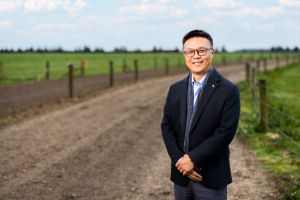
Canterbury milk processor, Synlait Milk has confirmed Leon Fung as its chief executive officer.
OPINION: Making it easier to collect rainwater and use it to grow crops and livestock is a no brainer.
As part of its Election 2026 coverage, Rural News asked political parties how they would help pull the arable sector out of the doldrums. Here's what they said:
Farmers are being encouraged to rethink how they manage waste on farm with the launch of ruralwastesorted.co.nz, a new website bringing together practical tips, real farmer experiences and resources.
New Zealand Winegrowers (NZW) is celebrating the India-New Zealand Free Trade Agreement (FTA) coming into force today, bringing New Zealand wine improved access to one of the world’s fastest-growing economies.


OPINION: The same mainstream media muppets that brought you Jacindamania in 2017 have been flat out pimping for the Opportunities…
OPINION: Your old mate reckons the atrocious way farmers in the UK are treated by their lords and masters in…




