
AHAP Progress Report Shows NZ Horticulture Building Real Momentum
According to a progress report on the Aotearoa Horticulture Action Plan (AHAP), New Zealand's horticulture sector is making real progress on the big issues facing growers.




 increase font size
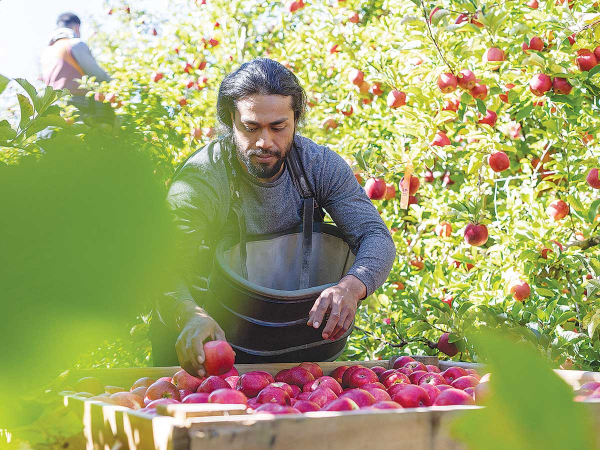 Fruit pickers and machinery operators could be among those affected by the pause on the release of MIQ rooms announced last week.
Overseas workers on their way to drive machinery and pick fruit could be affected by last week's decision to pause the release of MIQ rooms.
The Ministry of Business, Innovation and Employment (MBIE) announced last week that MIQ facilities which were used to accommodate returnees from overseas are now being used for community cases.
More facilities and more rooms will be needed as the outbreak unfolds.
"The Government has decided to extend the pause on the release and re-release of rooms for a short period until the situation becomes clearer," it says.
Rural Contractors New Zealand (RCNZ) expects 125 machinery operators to arrive in the country between now and December.
About 150 fruit pickers from selected Pacific countries are expected to start arriving every 16 fays from the end of this month.
MIQ rooms for these arrivals are booked under 'time sensitive travel allocation' approved by the Ministry for Primary Industries (MPI).
RCNZ chief executive Andrew Olsen told Rural News that the first cohort of arrivals, making up 65% of the total contingent, is expected within the next two months. The rest will arrive between November and December.
"I have spoken to MPI and they tell me there's no change to our arrangement."
Apples and Pears NZ chief executive Alan Pollard says the hort sector has MIQ rooms booked until November.
He says while some arrivals were deferred in recent weeks, planning for these flights and spaces continues.
In addition, the Government recently announced one way quarantine-free travel from Vanuatu, Samoa and Tonga.
Pollard says planning is well advanced on putting in place the steps needed to make this happen.
"We were hopeful that these flights would commence in September, but realistically it is more likely to be in October," he adds.
According to a progress report on the Aotearoa Horticulture Action Plan (AHAP), New Zealand's horticulture sector is making real progress on the big issues facing growers.
While the Government has moved quickly to make commercial hauliers' lot easier during the current fuel crisis, they appear to be stuck in the creep box when it comes to the agricultural industry.
Ensure your insurance is fully comprehensive and up to date because as a rural contractor you don’t know what’s around the corner.
We are encouraged that employers are already engaging with two new visas for seasonal workforce recruitment.
When Ben Enock came to New Zealand for vineyard work in 2007, his primary aim was to pay for his children's education at home in Vanuatu.



During the nesting season, from September to December, industrious starlings can quickly build nests in the darker areas behind tractor and vehicle, usually close to hot engines, typically resulting in localised damage or in some cases complete write-offs.
The meat processing industry is much more collegial than it was in the past and is now more focused on common goals.
With the last couple of months having seen some potential tractor purchases put on hold with the impending election and continued input cost rises, year-to-date figures, ending September, has seen deliveries up around 5% over the same period in 2025, with a total of 2026 units.
Beef+Lamb New Zealand is calling for nominations for director roles in the Northern South Island and Northern North Island electoral districts.
Fonterra chief executive, Richard Allen says being resilient has helped the dairy industry overcome extreme volatility in recent years.
The head of the Ministry for Primary Industries (MPI) trade and international relations group says New Zealand is well-positioned to secure trade access and compete internationally as the world becomes more complicated, demanding and uncertain.





OPINION: The same mainstream media muppets that brought you Jacindamania in 2017 have been flat out pimping for the Opportunities…
OPINION: Your old mate reckons the atrocious way farmers in the UK are treated by their lords and masters in…