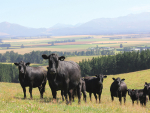
BVD Control Begins Long Before You See A Problem
Bovine Viral Diarrhoea (BVD) is sometimes viewed as a dairy industry issue, but the reality is that the disease can have serious consequences for beef breeding herds as well.




 increase font size
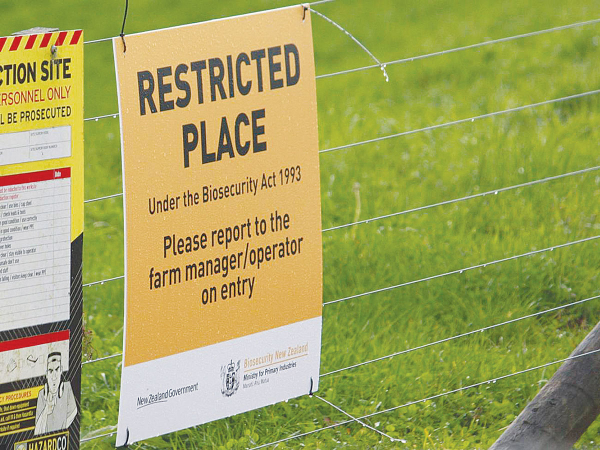 Four years into the attempt to eradicate M. bovis from New Zealand, only one infected property remains in the country.
Four years into a world-first attempt to eradicate Mycoplasma bovis (M. bovis), agreed jointly between the Government and farming sector groups, just one infected property remains in New Zealand.
Prime Minister Jacinda Ardern and Agriculture Minister Damien O’Connor marked the milestone at the national bulk milk testing lab MilkTestNZ in Waikato today alongside eradication partners DairyNZ and Beef + Lamb NZ.
“When we took our one shot to eradicate we did so to protect our national herd from a painful disease, our economy from a sharp shock, and our rural communities from widespread anxiety,” Ardern said.
She said that partnership with the primary sector was critical.
“No one in the world had attempted to eradicate M. bovis before, and if we were going to try something that had never been done, we needed to do so together.
“I want to acknowledge how tough it’s been for those farmers who have lost their herds and stock genetics built up over decades. Your action has preserved our productive sectors that underpin the prosperity of all New Zealanders.”
Damien O’Connor said no working farms are currently confirmed infected and the one remaining infected property is a large beef feed-lot, with careful planning under way to start clearing it later this year.
“Though we can’t rule out occasional finds elsewhere, we think it’s the right time to consider the future framework for the M. bovis Eradication Programme,” O’Connor said.
He said partners, including the Ministry for Primary Industries, are working on a transition of the M. bovis Eradication Plan to an agency under a National Pest Management Plan and will provide O’Connor with a proposal for consideration.
The plan, he said, will take into account what works for farmers and will be available for public consultation in the second half of 2022, with implementation set to begin in 2023.
“We are at an important juncture. We are aiming to move from delimiting – controlling the last known pockets of the disease – to provisional absence. This will be followed by significant surveillance testing of herds around the country to provide assurance there are no undetected pockets of disease.
“Our world class bulk milk testing and beef herd surveillance developed over the past four years will continue to be crucial tools.”
DairyNZ chairman Jim van der Poel said a lot was owed to farmers for their efforts in eradicating M. bovis and the robust biosecurity practices on-farm, which continues to be important.
“This programme has at times been challenging for farmers and it’s important we acknowledge that. That work means we are now on a clear path to eradication and this transition will help maintain that status.
“To protect the sacrifices and investment made, it’s important our farmers continue to manage their herds well, particularly through the national animal tracing system (NAIT). We’ve come a long way and what we are doing here is watched and discussed by other farming countries,” Van der Poel said.
Beef + Lamb New Zealand chairman Andrew Morrison said it was committed to ensuring the pest management programme worked for farmers.
“Farmers will remain at the centre of our work because without them we can’t get to the point of proven absence of the disease. We will also maintain close governance oversight of the programme in the transition to an agency.
“We really want to hear from farmers during their consultation later this year.
“I encourage farmers to ensure they know where their cattle are coming from, to record movements and to have good on-farm biosecurity practices,” Morrison said.
Bovine Viral Diarrhoea (BVD) is sometimes viewed as a dairy industry issue, but the reality is that the disease can have serious consequences for beef breeding herds as well.

Election years are always a concerning time for farmers, according to DairyNZ chair Tracy Brown.
Testing confirms H5 bird flu in a single northern giant petrel, found dead on a remote Cape Palliser beach in the Wairarapa, says Dr Mary van Andel, the Ministry for Primary Industries' (MPI) Chief Veterinary Officer.
Bovine Viral Diarrhoea (BVD) is sometimes viewed as a dairy industry issue, but the reality is that the disease can have serious consequences for beef breeding herds as well.
Four years since it was first detected in New Zealand, researchers and growers now know much more about management of maize pest fall armyworm (FAW).


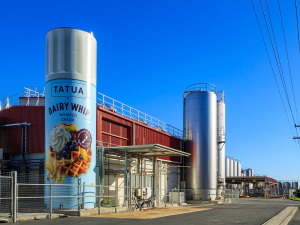
Waikato milk processor Tatua has again declared a record milk payout to farmer shareholders, leaving other processors in the dust.
A Labour-led Government won’t be bringing back the controversial freshwater rules of 2020.
National’s much-touted free trade deal with India featured in the Rural Issues Debate at Mystery Creek, Hamilton on Wednesday night.
New Zealand's 2026-27 freshwater fishing season has opened, with anglers encouraged to head to rivers and lakes over the coming days as conditions look favourable across much of the country.
Central Otago District Council (CODC) has voted against a plan to spread treated sewage sludge from Cromwell and Alexandra on farmland near Lauder, a decision Federated Farmers says reflects strong opposition from rural residents.
Pāmu has released its FY26 Integrated Annual Report, reporting a Net Operating Profit of $113 million, more than double the $49 million recorded in FY25.





OPINION: The same mainstream media muppets that brought you Jacindamania in 2017 have been flat out pimping for the Opportunities…
OPINION: Your old mate reckons the atrocious way farmers in the UK are treated by their lords and masters in…




