
Strong wool market shows signs of recovery after prolonged slump
The strong wool market has improved in the past six months, despite drops in production over recent years.




 increase font size
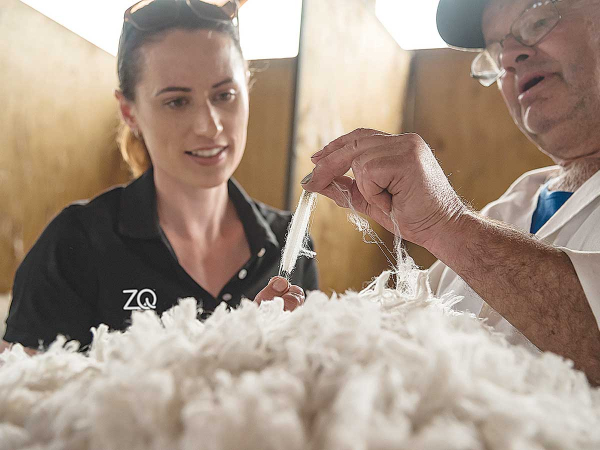 Central Otago merino farms are among the many already signed up for the New Zealand Merino Company's new ZQRX programme. Photo: New Zealand Merino.
The New Zealand Merino Company (NZM) has jumped on the regen ag bandwagon and launched what it claims is the world’s first “regenerative wool platform”.
NZM claims this will “improve the sector’s environmental footprint”, while appealing directly to increasingly environmentally-conscious consumers.
The company has partnered with wool apparel and footwear brands Allbirds, icebreaker and Smartwool to launch the ZQRX programme, which promises consumers that the wool they are buying is farmed according to an “index of regenerative farming practises”.
The company has signed up 167 farmers to the programme.
In a press release, NZM chief executive John Brakenridge says the global fashion industry is responsible for 10% of global greenhouse gas emissions and on-farm emissions represent about 60% of the emissions associated with woollen products.
“Regenerative farming represents a considerable opportunity to sequester (store) carbon, and slow climate change,” he said. “Through the adoption of regenerative practices that both store more carbon and emit less, we could reduce our on-farm emissions down to zero.
“We dream of a day when all wool is farmed with regenerative practices,” Brakenridge added.
Dave Maslen, NZM general manager for markets and sustainability, told Rural News that ZQRX builds on NZM’s successful ZQ programme, which was launched in 2007 as an audited set of standards for growers around animal welfare, environmental integrity and social responsibility.
He says RX goes beyond ZQ’s audit-based model.
“An audit is really good at setting a base standard but we know that our growers are doing a lot more on their farm every day; they go way beyond what an audit requires them to do.
“We wanted a way to be able to capture that and we wanted a way to be able to communicate that through to our consumers.”
RX instead uses an index of 15 Key Performance Indicators (KPIs) across environment, social responsibility and animal welfare, and uses “science and data” to measure performance, he said.
Maslen denies that they are merely jumping on a “regenerative bandwagon.”
“It basically speaks to people wanting to leave their properties in a better place or in a better position what it was when they started. I’m not aware of a single grower that supplies us, that doesn’t share that sentiment.”
He says NZM had “a really big portfolio of R&D going on” with local experts and third parties around such things as rates and modes of carbon sequestration in soils, and greenhouse gas net emission calculators.
One example of the KPIs was a monitoring toolkit for growers to be able to measure instream invertebrates, as an indicator of their farm’s biodiversity.
Maslen says the rate at which a grower might move up or down the index depended on the individual. NZM would ask growers what measure they wanted to improve on and NZM advisors would help draw up a strategy to achieve it.
To be part of the programme was to be on a journey of continual improvement, he said.
The number signed up already represented close to half of the 400 in the old ZQ programme, and more were interested in joining.
Maslen did not put any figures on the likely cost to growers in joining the scheme, but claims the rewards were in the returns.
He says the performance of grower contracts under ZQ had been well ahead of the average commodity market and NZM expected that to continue and accelerate under RX.
The strong wool market has improved in the past six months, despite drops in production over recent years.
The New Zealand Merino Company (NZM) is expanding its collaboration with TextileGenesis to deliver full traceability for 100% of ZQ certified wool and ZQRX regenerative wool.
The first phase of a Ministry for Primary Industries (MPI) investigation into allegations of mistreatment of sheep connected to shearing practices has been completed.
Animal rights protest group PETA is calling for Agriculture Minister Todd McClay to introduce legislation which would make it mandatory to have live-streaming web cameras in all New Zealand shearing shed.
The New Zealand Merino Company (NZM) says it will investigate claims of animal cruelty made by animal rights group PETA.



LIC shareholders have elected a new North Island representative to the co-operative's Board, along with five representatives to its Shareholder Reference Group (SRG), following the company's Annual Meeting held in Invercargill.
Farmers across parts of Southland and South Otago are continuing to deal with difficult conditions after a prolonged run of wet weather, with pressure building around feed supply, stock management, pasture damage, farm infrastructure and everyday workloads.
Federated Farmers says it welcomes Labour's commitment to reviewing the Sharemilking Agreements Act, calling on other major parties to do the same.
For Canterbury dairy farmers Sian Meijer and Rick Wobben, wearable technology has become one of their most valuable on-farm tools - helping manage 1850 cows across an expansive, high-performing dairy operation while improving efficiency, mating outcomes and day-to-day decision making.
Fonterra has unveiled its annual results for the 2026 financial year, posting $27 billion in revenue and close to $20 billion returned to New Zealand farmer owners and unit holders.
The first major update to the Dairy Cattle Code of Welfare in more than a decade has been released, marking what DairyNZ describes as an important step in ensuring animal welfare standards continue to evolve alongside scientific evidence and on-farm realities.





OPINION: The same mainstream media muppets that brought you Jacindamania in 2017 have been flat out pimping for the Opportunities…
OPINION: Your old mate reckons the atrocious way farmers in the UK are treated by their lords and masters in…




