
Westpac Urges Farmers to Prepare Now for El Niño Drought
Westpac NZ is calling on farmers and growers to start preparing now for the possibility of a dry summer, as likely El Niño conditions raise the risk of drought across parts of the country.




 increase font size
 Westpac has raised its forecast payout for the season by 30 cents to $7.40/kgMS.
Dry weather around New Zealand could restrict milk supply and squeeze global dairy prices higher, says Westpac’s senior economist Michael Gordon.
The bank has raised its forecast payout for the season by 30c to $7.40/kgMS.
“Stronger than expected dairy prices so far this season have boosted the outlook for this year’s payout, and dry weather is creating a risk that prices could go even higher in the short term,” says Gordon.
“However, our forecast still allows for some easing in world prices over this year as China’s economic growth slows and trade tensions remain high.”
Last week’s Global Dairy Trade (GDT) auction saw gains in most products; overall price index rose 1.7%.
The rebound was led by a 2.4% rise in whole milk powder prices, with smaller gains for skim milk powder (up 0.7%) and cheese (up 0.6%). Butter rose by 5.5%, but anhydrous milkfat fell 2.6%.
Gordon says dairy prices have now recovered most of the sharp drop in the last auction of 2019.
He concedes there’s a risk that world prices could be squeezed higher in the near term, as dry weather restricts the global milk supply.
“That’s especially the case for New Zealand. DCANZ data shows that milk collections in November were up slightly on the previous year, and are up 0.5% for the season to date.
“But a lack of rain over the summer period has seen a rapid drying-out across many regions, which means that milk production could fall short over the tail end of the season.”
DairyNZ is cautioning farmers to plan ahead as dry conditions set in. NIWA soil moisture deficit maps show soil moisture levels are significantly below historical averages
across the upper North Island, parts of the Waikato, Taranaki, Manawatū, the North Island’s East Coast, Marlborough, Canterbury and Otago.
Meanwhile, it is not clear to what extent the Australian bushfires will impact the global milk supply.
The Australian dairy industry has already been hit hard by drought in recent times – milk collections over 2019 were down 7% on the previous year.
Westpac NZ is calling on farmers and growers to start preparing now for the possibility of a dry summer, as likely El Niño conditions raise the risk of drought across parts of the country.

A new Westpac NZ community banking van begins making visits around Northland this week.
Westpac NZ has announced new initiatives that aim to give customers more options to do their banking in person.
A $10 milk price remains on the cards for this season despite recent softening of global dairy prices.
The Commerce Commission has announced that it has filed proceedings against Westpac New Zealand.


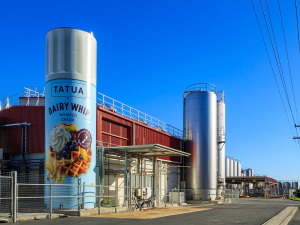
Waikato milk processor Tatua has again declared a record milk payout to farmer shareholders, leaving other processors in the dust.

A Labour-led Government won’t be bringing back the controversial freshwater rules of 2020.
National’s much-touted free trade deal with India featured in the Rural Issues Debate at Mystery Creek, Hamilton on Wednesday night.
New Zealand's 2026-27 freshwater fishing season has opened, with anglers encouraged to head to rivers and lakes over the coming days as conditions look favourable across much of the country.
Central Otago District Council (CODC) has voted against a plan to spread treated sewage sludge from Cromwell and Alexandra on farmland near Lauder, a decision Federated Farmers says reflects strong opposition from rural residents.
Pāmu has released its FY26 Integrated Annual Report, reporting a Net Operating Profit of $113 million, more than double the $49 million recorded in FY25.





OPINION: The same mainstream media muppets that brought you Jacindamania in 2017 have been flat out pimping for the Opportunities…
OPINION: Your old mate reckons the atrocious way farmers in the UK are treated by their lords and masters in…




