Federated Farmers Welcomes ACT’s New Farming Policies
Federated Farmers has welcomed new rural policies released by ACT, saying they align closely with its own election priorities.




 increase font size
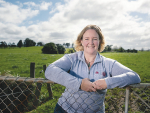
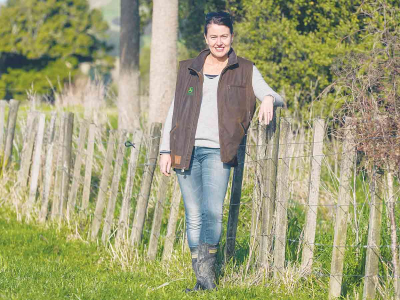 Feds biosecurity spokeswoman Karen Williams.
The days are gone when you may wear on a farm the shoes you have worn on overseas trips, says Feds biosecurity spokeswoman Karen Williams.
“That’s unless you put them through a high quality cleaning process -- not just a wash down,” she said.
Heightened awareness of biosecurity issues is now required.
“We should have been taking this seriously for a long time, given pea weevil has been here four years, M. bovis has been significant for 2.5 to three years, then there’s blackgrass, velvet leaf, etc,” Williams told Rural News.
“It is up to us. MPI can [work] at the border but no system is foolproof. If we want to protect ourselves -- ‘our farms, our fortress’ -- then we need to introduce that awareness to maximise our systems on farm.”
African swine fever (ASF) is well spread through Europe, so New Zealand is being “shortsighted” if it targets only the Philippines and farm workers, says Williams.
“We are all responsible. We all travel a lot -- for pleasure, business or looking at new farming opportunities offshore.
“All New Zealanders, including farmers, need to be really vigilant about cleaning before we come back, and ideally not wear footwear overseas that we bring back and wear on farm.
“We have to be a bit clever about that and consider that is not a farm shoe. That is something entirely different.”
Or we must sanitise them at a high level of hygiene for which new products are available.
We need to invest more in on farm practices, she says.
“It is like your health and safety plan. You need an on farm biosecurity plan and be committed to using that when you get visitors or contractors. There are several things you can specify and checklist,” Williams said.
“If you know you are purchasing seed from a high risk area or livestock from an area that has velvet leaf, you need to lift your own on farm controls.
“At home in Wairarapa [with pea weevil] probably any contractor coming on farm presents a reasonable risk. We are talking to our contractors now about cleaning down machinery -- clean down before entering and clean down before leaving -- so there is no plant or soil material there that can harbour pest seeds or any sort of pathogens or bugs. That is the way we need it to go.
“Even visitors definitely need a footwear check and maybe just go in the farm vehicle rather than the visiting vehicle.
“And then being upfront right at the start about hygiene protocol and areas where you are welcome on farm and areas which are no go. Just like your health and safety.”
‘Your farm, your fortress’ is the big focus, says Williams.
“You ultimately take responsibility. You have signage just like health and safety. Visitors should be alerted to the significant risk and a phone number provided to enable an induction.
“Be upfront with visitors about what you are trying to protect and why, and what behaviours you require of them.”
Williams says training of staff is important.
“Get your staff informed and involved, and share what the risk looks like so everyone buys in. You can generally generate better outcomes.”
She says farmers need to take ownership because ultimately it is their problem.
Her personal experience of the pea weevil incursion has been four years of big change in not being able to grow them, hundreds of meetings and emails and costs such as voluntary payments.
“We need to work in partnership with MPI. They are front footing anything that comes across the border.
“But they are not going to get every last pair of shoes coming in from travel overseas. We are a travelling nation so we all need to take responsibility.”
She says the Feds was delighted when Air New Zealand decided to show biosecurity videos on flights.
Federated Farmers has welcomed new rural policies released by ACT, saying they align closely with its own election priorities.

A farmgate milk price of $10/kgMS this season is firming up as milk powder prices soar and the New Zealand dollar weakens.
Federated Farmers is backing Feilding High School’s call to keep Agriculture and Horticultural Science as a standalone subject in Year 11.
National’s pledge to introduce 19 new national standards shows the party is serious about getting Wellington out of farming, Federated Farmers says.
Mobile phone coverage and reliability are deteriorating in rural areas, and farming families are bearing the cost, according to a Federated Farmers survey.


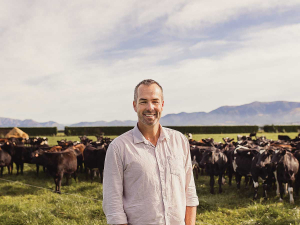
For Canterbury dairy farmer Cameron Henderson, supporting Meet the Need comes down to a simple question: how can the success of New Zealand farming benefit more than just those within the industry?
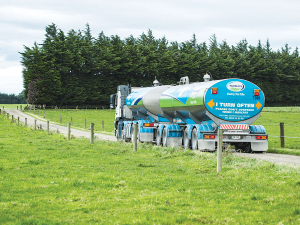
Fonterra board members are in line for a pay rise of around 3%.
Dairy processors are ready to further boost New Zealand’s export earnings but want the incoming government to match their ambition with good policy.
Massey University is best placed to solve the “problems” facing the dairy industry, says vice chancellor, Pierre Venter.
Synlait's longest serving employee – a man who joined the Canterbury-based milk processor even before it began processing milk – is now its newest executive.
A dairy industry leader believes eradicating the common and costly disease, Bovine Viral Diarrhoea (BVD) is within reach.



OPINION: The same mainstream media muppets that brought you Jacindamania in 2017 have been flat out pimping for the Opportunities…
OPINION: Your old mate reckons the atrocious way farmers in the UK are treated by their lords and masters in…




