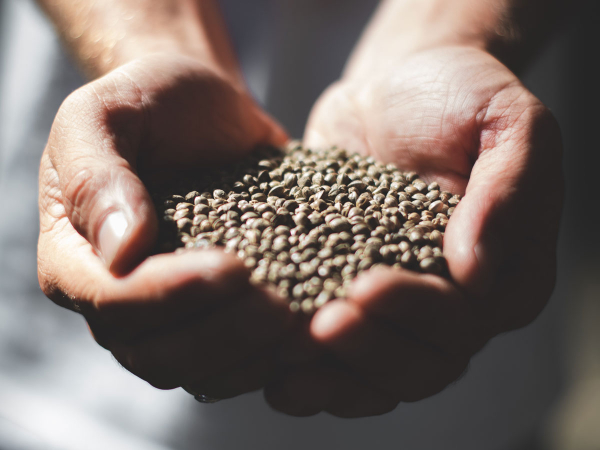
A new project funded by the Ministry for Primary Industries (MPI) aims to establish a hemp seed processing plant in New Zealand.
MPI is contributing more than $245,000 to Hemp Connect’s two-year pilot project through its Sustainable Food and Fibre Futures fund.
The project aims to enable locally grown hemp food products to compete with imported varieties.
Since 2020, the Levin-based company has been working on creative solutions for processing New Zealand grown hemp more efficiently and reducing production costs.
“One of the keys to reducing costs has been researching how to use the entire seed, as well as the associated waste streams,” says Mathew Johnson, managing director of Hemp Connect.
“Our goal with this project is to make hemp food production in New Zealand a viable and internationally competitive option.”
Johnson says, traditionally, the cost of importing hemp food has been significantly cheaper than producing it locally.
“By increasing the scale of production, new product developments such as husk bi-products, hemp sprouts and animal feed will become more economically viable,” he says.
“We’ve been working tirelessly to modify our existing equipment and have researched equipment from all over the world to find ways of getting the most out of every hemp seed.
“Kiwis are incredible thinkers when it comes to innovation, particularly in the food and beverage industry. We have loved working with so many people, including our new staff, engineers, electricians and pneumatic specialists, to apply our Number 8 Wire and problem-solving skills to an industry that has been around for centuries, but without the New Zealand touch.
“We’re delighted to be partnering with MPI to prove our concept at a larger scale, and look forward to working hard over the next two years to make this a reality.”
Steve Penno, director of investment programmes, says the project fits with the Government’s Fit for a Better World roadmap.
“Hemp doesn’t need chemicals and is drought tolerant, so it has environmental benefits. One of the most exciting aspects of this project will be enabling Hemp Connect to develop products that have never been produced domestically or internationally.”