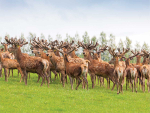
Barry Cuttance Suspension: Inside the NZDFA Dispute
A spat within the ranks of the New Zealand Deer Farmers Association has resulted in the suspension of outspoken North Canterbury farmer Barry Cuttance.




 increase font size
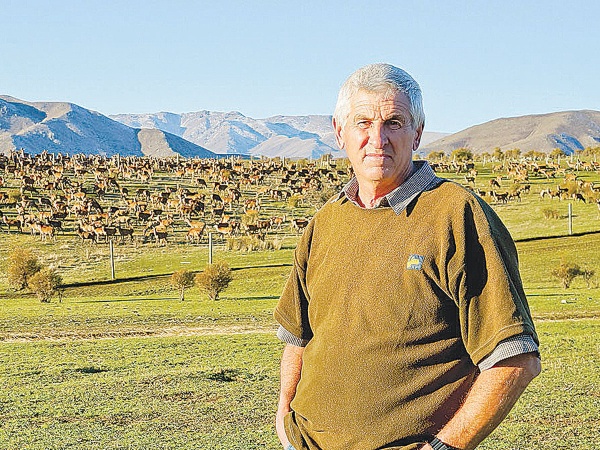 New chair of Deer Industry New Zealand (DINZ), Paddy Boyd.
Paddy Boyd, the new chair of Deer Industry New Zealand (DINZ), says his priority is to make sure deer farmers are engaged and provide them confidence to grow.
"That's what we've got to do. We've got to grow this industry," Boyd told Rural News.
"We just want to make sure that we're all here, driving the same way. So, it's about engaging the farmers.
"That is a priority of mine, to make sure that farmers stay informed."
Boyd says part of that push was that DINZ has appointed a new communications manager to make sure there was "really good communication" coming back from the market to the farmers.
It also has a new CEO, Rhys Griffith, with 14 years' experience in velvet and venison marketing.
DINZ governance was recently upended with the dropping of the incumbent chair, Wanaka deer farmer and veterinarian Dr Mandy Bell (who was also acting as the interim CEO at the time). The board is made up of eight members, four appointed by producers through the New Zealand Deer Farmers Association (NZDFA) Selection and Appointment Panel, and four appointed by processor/exporters. Bell lost her place on the board when her slot came up for rotation and the panel chose veteran deer industry professional John Tacon instead.
Boyd, who himself served on the selection panel before joining the board about a year ago, said that the selection panel's discussions were all about what director skill set is needed on the board at any one time.
He paid tribute to Bell as "a very clever lady" who had the full support of the board in implementing a well-designed and new strategy, which was all about getting product recognised by a much bigger and more diverse market than it had aimed at for the previou 20-plus years.
"But fresh minds make gains. There's no doubt about that."
Meanwhile, the deer velvet market has had a boost, with new protocols agreed with China for the export of frozen unprocessed ('green') velvet.
South Korea is the biggest market for velvet but much of it goes via processors in China. Very little is processed here, but the Chinese were threatening to stop the trade.
Boyd said working with both New Zealand and Chinese regulators to draw up the new protocols was one of the biggest things he was involved with as a board member over the last year.
They have secured agreement for the November 2024 to 2025 season but now want to secure 2025/2026, he said.
The protocols have all been drawn up but a formal signing ceremony isn't expected until later in the year.
"It's been a very nervous time for the velvet growers, to be honest."
On venison, which is mostly exported to Europe, especially Germany, Boyd says Covid hit hard because much of the meat went into the restaurant trade, which closed across the world.
“We’ve refocused ourselves a little bit, started to look at markets that are some retail, as well, just to give us further options.
“There’s a quite a big change now, going into North America and the Netherlands, and a few other countries that are that are consuming out of season as well.
“The venison market is looking really, positive. And it’s more about being able to use more of the carcass instead of just the top-end cuts. A lot of the American market is ground.”
With a lifetime of involvement in the deer industry, from the days of shooting, then later capturing, feral deer, Boyd is the manager of the 22,000ha Haldon Station, on the shores of Lake Benmore, where he has worked for 43 years. It currently runs 7000 deer, 14000 sheep and about 1800 cattle.
Boyd and his family also run 250 deer on their 40ha near Pleasant Point.
He says it’s still a young industry with a lot of potential for genetic improvement in the national herd.
“It has been going on with cattle and sheep for years, but we’ve still got quite a long way to go. We’ve made big gains but there’s still plenty of room yet.”
A spat within the ranks of the New Zealand Deer Farmers Association has resulted in the suspension of outspoken North Canterbury farmer Barry Cuttance.

Canterbury farmer Andy Macfarlane has been appointed to the board of AgriZeroNZ, the public-private partnership designed to accelerate the development and deployment of emissions reduction tools for New Zealand farmers.
The managing director of a company seeking to build a solar farm in Canterbury says receiving fast-track approval is a “really positive outcome”.
Animal disease management agency OSPRI has written off nearly $17 million after a botched attempt to launch a new integrated animal disease management and traceability system.
TB differential slaughter levy rates are changing with dairy animals paying $12.25/head, an increase of 75c from next month.


South of the central Hawke’s Bay town of Waipukurau is Taniwha Station – a highly successful 550ha bull beef farming operation.
Beef + Lamb NZ funded research has shown that some simple changes to pasture management could help farmers make better use of rainfall and build resilience before dry conditions hit.
OPINION: There could hardly be a more appropriate theme for a conference than the one chosen by the red meat sector - Navigating Volatility.
When Northland leather worker Vernon Suckling started making horse saddles 50 years ago, quad bikes and side-by-side vehicles were unheard of.
Alliance Group has confirmed that eligible farmer-shareholders who supply and continue to back the business will receive up to $20 million later this year, following the strategic investment partnership with Dawn Meats.
With a general election under five weeks away, Rural News is asking major political parties about their policies and positions on key issues facing the primary sector. We will run their responses to each question over the next four weeks. The ACT Party and the Greens didn't respond in time.




OPINION: The same mainstream media muppets that brought you Jacindamania in 2017 have been flat out pimping for the Opportunities…
OPINION: Your old mate reckons the atrocious way farmers in the UK are treated by their lords and masters in…




