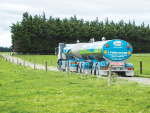
Fonterra FY26 Results: $9.69 Milk Price, $3.4bn Profit
Fonterra has unveiled its annual results for the 2026 financial year, posting $27 billion in revenue and close to $20 billion returned to New Zealand farmer owners and unit holders.




 increase font size
 Fonterra’s Kelvin Wickham says suspending GDT will not resolve the current supply/demand imbalance for dairy products.
Fonterra is brushing off calls to suspend its online dairy auction as a means of arresting the decline in milk powder prices.
The co-op’s managing director global ingredients, Kelvin Wickham, says suspending GDT will not resolve the supply/demand imbalance in the world market.
“GDT has not caused low prices. Low prices are a reflection of the market which is currently oversupplied with dairy product while dairy importing countries face political, social and economic challenges,” he told Rural News.
Calls to suspend the Global Dairy Trade (GDT) auction gained momentum on social media last week.
Federated Farmers Waikato president Chris Lewis called for an industry-wide discussion on whether GDT should be temporarily suspended until the market improved.
Lewis claimed GDT was a major contributor to the decline. “It’s been gamed by buyers and the price for that is being paid by [the] New Zealand farmer.”
Temporarily suspending the GDT was a “reasonable question” to ask, given the unprecedented and volatile times the industry faced.
He was backed by New Zealand First leader Winston Peters. “Auctions are great in bull markets like the Auckland property bubble, but it is a terrible way to sell when markets turn ugly, as the record low price for whole milk powder indicates,” Peters says.
Fonterra stopped selling milk protein concentrate (MPC70) through the auction in March 2014, Peter says. “So the co-op has form in doing what we suggest, albeit, with a small product line.”
The calls to exit GDT come after Fonterra slashed $1.40 from its forecast for the 2105-16 season to $3.85/kgMS, two days after dairy prices fell 9.3% in the latest auction. It was the 10th consecutive fall on the platform, dairy prices falling to levels not seen in 13 years.
But Wickham says everyone must remember GDT has not caused the low prices.
Nearly all the product offered in the last GDT event was sold to willing buyers, notes Wickham.
“There is a supply/demand imbalance and that’s what you’re seeing on GDT. Particularly, constraints on demand from big dairy importing countries (China slowdown and inventories, Russia import bans)… and milk supply continues to grow in Europe and US which is spilling over into soft global demand.
“We’re doing everything to move powder and other commodity products into higher value contracts and higher margin products.
“And to those calling for GDT to be suspended, that’s not going to solve the supply/demand imbalance.”
However, Fonterra may be looking at making changes to GDT. Chief executive Theo Spierings said during a television interview that drastic changes to GDT may be required to support dairy prices. The record low prices on GDT were “below the bottom” and “absolutely not sustainable.”
Fonterra is considering significant changes to GDT, given that prices were now below the government intervention levels seen in Europe, Spierings says.
“We have to look at some more drastic thinking on our GDT auction, because in Europe there’s a kind of a bottom created by governments, and we don’t have that, so we have to look at out-of-the-box solutions.”
Fonterra has unveiled its annual results for the 2026 financial year, posting $27 billion in revenue and close to $20 billion returned to New Zealand farmer owners and unit holders.
Fonterra Co-operative Group has confirmed the independently assessed candidates standing for election to its board in 2026.
Fonterra has revised its Farmgate Milk Price forecast for the 2026/27 season, lifting the midpoint and narrowing the range on the back of improving global dairy commodity prices.
Outgoing Fonterra Co-operative Council chair John Stevenson says that it has been a privilege to represent the co-op's farmer shareholders.
OPINION: It seems Canterbury processor Synlait is still in the doldrums.


Federated Farmers says it welcomes Labour's commitment to reviewing the Sharemilking Agreements Act, calling on other major parties to do the same.
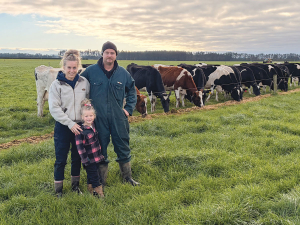
For Canterbury dairy farmers Sian Meijer and Rick Wobben, wearable technology has become one of their most valuable on-farm tools - helping manage 1850 cows across an expansive, high-performing dairy operation while improving efficiency, mating outcomes and day-to-day decision making.
Fonterra has unveiled its annual results for the 2026 financial year, posting $27 billion in revenue and close to $20 billion returned to New Zealand farmer owners and unit holders.
The first major update to the Dairy Cattle Code of Welfare in more than a decade has been released, marking what DairyNZ describes as an important step in ensuring animal welfare standards continue to evolve alongside scientific evidence and on-farm realities.
Ravensdown shareholders have elected Jane Montgomery and Kate Acland to the Ravensdown Board for three-year terms, following a closely contested director election.
Federated Farmers says new legislation replacing the Resource Management Act will cut red tape, unlock investment and help grow New Zealand's export-led economy, after the Planning Bill and Natural Environment Bill passed their third reading in Parliament yesterday.




OPINION: The same mainstream media muppets that brought you Jacindamania in 2017 have been flat out pimping for the Opportunities…
OPINION: Your old mate reckons the atrocious way farmers in the UK are treated by their lords and masters in…




