Mark Hooper Joins NZPork Board as Independent Director
Rural leader Mark Hooper has been appointed as an independent director to the NZPork board, bringing extensive farming, governance and advocacy experience to the role.




 increase font size
The first-ever warning to a sheep and beef farmer on exceeding nitrogen caps shows that Overseer is a “blunt instrument”, says Rick Powdrell, Federated Farmers meat and fibre chair.
He told Rural News it shouldn’t be used as a regulatory tool.
But Powdrell believes other councils will follow after the warning to a Taupo farmer by the Waikato Regional Council.
He says although Waikato was obliged to enforce its rules as they stand, the rules themselves are too restrictive.
“Sheep farming is an unpredictable business with the volatility in the weather and lambing percentages, which impacts your stock’s growth rate, finishing weight and time spent on farm, which is why Overseer is unsuitable as a blunt instrument tool.
“It was always intended as a guide and is great for a reference point but it should not be used as regulatory tool.”
The practical impact means a good lambing may increase stock by just a few animals, which are picked up in Overseer, he says.
“This is why we need to have rules that are practicable and allow farmers to farm the good years to get through the bad ones, all the while maintaining the goal of nutrient discharges. We need to give farmers certainty while enabling the regions to be sustainable economically and environmentally.”
To his knowledge it is the first time a sheep and beef farmer has been warned over N caps.
“But we will likely see the impracticality of Overseer as a blunt tool bringing more sheep farmers into the fold.
“This case highlights the need to look at the unintended consequences of some council plans. We think a nitrogen loss calculation rolling over a five year average may be an interim solution to allow for the fact that nature is unpredictable and farmers need room to adapt.”
Waikato’s move is a sign of things to come, Powdrell believes, as more regions adopt nutrient discharge rules.
“Sheep and beef farmers are rapidly becoming more engaged in the limit setting process and are adapting to the limits under more unpredictable farming models,” he says. “We have real concerns about making Overseer central to the regulatory process. It has severe limitations which must be acknowledged in all council plans.”
He says the Feds’ representative in the area says farmers are enquiring about what actually happened and why it was made public, which is not the usual practice. “It is stripping away the certainty farmers need to plan ahead and invest in more environmentally desirable kit,” he says.
Powdrell says there is no question that farmers are ready to be involved in planning limits and working to meet them; turnouts have been good at Beef + Lamb’s farm environment plan workshops around the country. The industry is also putting serious effort into onfarm actions that make a difference to water quality, such as the industry-agreed good management practices relating to water quality.
All farmers want is for the rules about working within limits to also work for farming, he says.
Rural leader Mark Hooper has been appointed as an independent director to the NZPork board, bringing extensive farming, governance and advocacy experience to the role.
The terrible floods that hit the Wairarapa may have subsided, but the danger to farmers still exists, according to local Federated Farmers president Rob Hickson.
Will a stronger, more coordinated voice help rebuild confidence and improve returns in the wool sector?
New Zealand's pest problem has reached crisis point, according to Federated Farmers' second National Pests Survey, which shows farmers are spending more money and effort on control — yet pest numbers keep climbing faster than they were two years ago.
Despite political shenanigans in Wellington, farmers are confident that Resource Management Act (RMA) reforms will get over the line in this term of Parliament.



Now in its fourth year, the 2026 Fencing Industry Awards, formed part of the proceedings of the FCANZ Conference, held in Nelson during August.
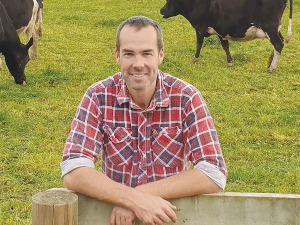
DairyNZ deputy chair Cameron Henderson has been re-appointed unopposed for another term.
OPINION: The stats speak for themselves.
Farms across the upper North Island are trialling different pasture mixes as part of a research programme that aims to build greater resilience into farming systems.
Election years are always a concerning time for farmers, according to DairyNZ chair Tracy Brown.
The Ballance Farm Environment Awards are coming to the West Coast of the South Island.


OPINION: The same mainstream media muppets that brought you Jacindamania in 2017 have been flat out pimping for the Opportunities…
OPINION: Your old mate reckons the atrocious way farmers in the UK are treated by their lords and masters in…