Final call for Alliance’s 2027 Graduate Programme
Alliance is calling for final applications for its 2027 Graduate Programme, with applications closing on Sunday 25 October.




 increase font size
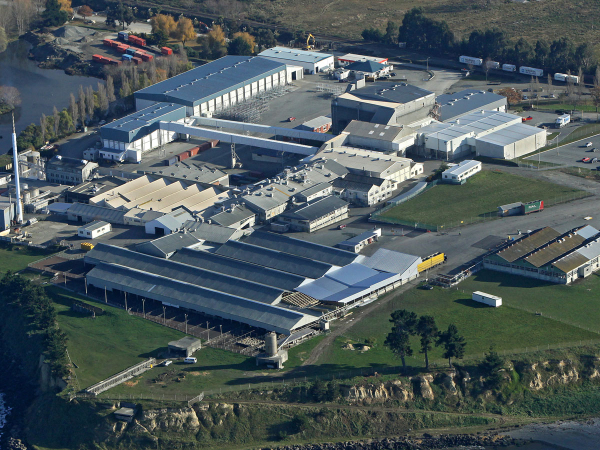 Alliance has announced a proposal to close its Smithfield plant in Timaru.
Alliance Group has announced a proposal to close its Smithfield meat processing plant in Timaru, South Canterbury.
If confirmed, the proposal would mean that sheep meat, calves and night shift venison processing would cease at the Smithfield plant.
Alliance would continue venison processing at the plant until no later than the end of December, by which time the company expects to have alternative arrangements in place for deer.
Approximately 600 staff are impacted by the proposal for the Smithfield plant, which has been owned by Alliance since 1989.
If the proposal is confirmed following a consultation process, impacted staff, whereever possible, would be offered the opportunity to apply for re-deployment at the company's other processing plants, however it is anticipated there would be a significant number of redundancies.
Willie Wiese, chief executive of Alliance, says the proposed closure is due to a decline in sheep processing numbers as a result of land-use change, which has resulted in surplus capacity in the company's plant network.
"This proposal aims to align our operations with current livestock availability, ensuring we have the right scale and cost structure to meet future demands as a leading red meat processor," Wiese says.
"By optimising our capacity to match livestock flows, we can position ourselves for long-term success and reduce our cost base," he adds. "We simply cannot maintain excess processing capacity when livestock numbers don't support it."
The 139-year-old Smithfield plant is the company's oldest site and requires significant investment in repairs and maintenance to keep it operational. It is also facing encroachment from retail development.
"We know our people at Smithfield, their colleagues and local community will be devastated by this proposal," says Wiese.
"Smithfield has a long and proud history, having been part of Alliance’s network for more than 30 years.
“Our priority is to support affected employees during this immensely difficult period. We will also work closely with local authorities and support agencies and ensure the local community is informed, supported, and included in discussions.”
Alliance has chosen to begin consultation with staff about the proposal this month because it marks the end of the season for sheep meat processing at the plant, says Wiese.
“We want to provide our people with some certainty about their employment options prior to sheepmeat processing season typically restarting at the plant in December.”
Alliance reported a loss before tax of $97.9 million for the year ending September 2023. This loss was largely due to weakening global markets, changing land use that has resulted in lower livestock volumes, and inflationary pressures.
“Despite everyone’s best efforts, these challenging conditions have persisted into 2024, and as we look towards the 2025 season and beyond, forecasted sheep numbers are expected to continue to decline, and deer numbers will remain static,” says Wiese.
“Therefore, we need to review our South Island processing footprint, and more specifically, our sheep and deer processing capacity," he adds.
“We believe we can process sheep, deer, and cattle at our four other South Island plants during peak season, without the need for a fifth plant.
“Our Lorneville plant near Invercargill currently runs five ovine chains, but at full capacity can run up to eight chains, and our Pukeuri plant near Oamaru has additional capacity available. Lorneville also has a venison operation with additional capacity,” Wiese says.
Alliance also operates a beef processing plant in Mataura, Southland, a sheep processing plant in Nelson, a beef and sheep plant in Levin and a sheep plant in Dannevirke.
Consultation will run until October 11 and a final decision is expected to be made by October 18.
“We will not be making a decision on the future of the plant until the end of the consultation,” Wiese says.
“In the meantime, we are committed to supporting impacted employees during this period,” he concludes.
Alliance is calling for final applications for its 2027 Graduate Programme, with applications closing on Sunday 25 October.
Alliance Group has confirmed that eligible farmer-shareholders who supply and continue to back the business will receive up to $20 million later this year, following the strategic investment partnership with Dawn Meats.
Alliance Group's $16 million programme to install innovative heat pump systems at its Otago and Southland processing plants wins a New Zealand Energy Excellence Award after cutting annual emissions by more than 24,000 tonnes of CO₂e.
Irish meat processor Dawn Meats has acquired Alexander Eyckeler GmbH, a long-standing German customer and partner of Alliance Group, for an undisclosed sum.
Alliance has announced two key appointments within its senior leadership team.



Federated Farmers has welcomed new rural policies released by ACT, saying they align closely with its own election priorities.

Rural Contractors NZ says proposed changes to land transport rules for agricultural vehicles are a welcome response by the Government to out of date regulations which have seen members hit with huge fines.
Alliance is calling for final applications for its 2027 Graduate Programme, with applications closing on Sunday 25 October.
Decades piloting planes has ensured vet and farmer David Hayes is focused on safety. So, after a serious accident while welding on farm, he is sharing his experience so others can learn from it.
Canterbury milk processor, Synlait Milk has confirmed Leon Fung as its chief executive officer.
OPINION: Making it easier to collect rainwater and use it to grow crops and livestock is a no brainer.





OPINION: The same mainstream media muppets that brought you Jacindamania in 2017 have been flat out pimping for the Opportunities…
OPINION: Your old mate reckons the atrocious way farmers in the UK are treated by their lords and masters in…




