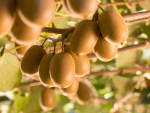
NZKGI Responds to Migrant Worker Exploitation Reports
Where any worker in the kiwifruit industry is mistreated, we expect the authorities to take action.




 increase font size

THE RECENTLY announced Psa rural assistance package will put food on the table – but it will not save businesses, says NZ Kiwifruit Growers Inc president Neil Trebilco.
There's a lot of misunderstanding over the extent of the Government financial package available now under 'adverse event' help announced earlier this month, he says.
"I think one of the principle things about the adverse event declaration is that it's official recognition by government of the seriousness of Psa and the impact it is having on the industry," says Trebilco.
"But the financial measures are somewhat limited – and that's what people don't understand." Orchardists and those outside the industry alike think it will keep growers in business. "Unfortunately it won't," he says.
Trebilco believes many orchardists will want to access the Rural Assistance Payment (RAP) but many won't qualify under income and asset tests. For example the income test is $341.60 for a married couple with no children and $204.96 for a single person over 25 years of age.
Assets that are part of the kiwifruit growing business will not be included in the assessment. However, Trebilco says any off-orchard assets will be taken into account including shares and any other outside income such as partner's income.
"The issue for growers is that might put food on the table for some but it won't satisfy any issues they have in meeting mortgage payments."
Many growers won't think it is enough assistance; some have over-estimated the amount of help available. "If you have a lot of debt it won't satisfy the need to meet interest payments on mortgages."
It will be paid to eligible growers for 12 months, but there are still issues to be worked through with government over when it will be declared in various areas. For instance Psa was first found in Te Puke in November 2010 and many growers are only now facing their first season with no income. Psa has only in recent months been discovered in areas such as Waikato, Northland and Hawkes Bay.
Trebilco says some growers are considering their future right now. December was always going to be 'D-day' for some once they saw what pollination was like and where Psa was going.
"Some growers are trying to decide right now whether they can stay in business or not."
Mixed results in experiments, resistance
THE END of spring is still showing mixed results for the new gold kiwifruit varieties.
December was meant to be 'D-day' for determining how well the new varieties would survive Psa. Varieties such as G3 and G9 were released to replace the highly susceptible Hort 16 cultivar which has now succumbed on some orchards throughout the country except in Nelson.
However, results on the new varieties' resistance to the disease are still very mixed, similar to that seen earlier in the season.
Kiwifruit Vine Health (KVH) chief executive Barry O'Neill says resistance is very variable based on variety, location and the grower's management of the orchard.
"So we can see fantastic G3 on one orchard and on another orchard G3 is struggling; likewise G9, G14 or Hayward. So it is extremely variable at the moment."
However they are seeing progression of Psa in some orchards and some locations later into the summer than last year.
"Normally when we get this hotter dryer weather, the Psa symptoms in the orchards slow down. In some locations and orchards that is the situation but in some they are still seeing symptoms of Psa. That's of concern."
As for new techniques to combat the disease, Zespri is doing trial work on covering vines with plastics to keep out rain and wind, to see if there was significant improvement in Psa, O'Neill says.
KVH is focusing on refining the key management techniques – not cutting green tissue, the spray programme to be used, and the type of sprays and combinations that will give the best effect.
Where any worker in the kiwifruit industry is mistreated, we expect the authorities to take action.

Kiwifruit growers are watchful but remain optimistic as concerns around the potential effects of the El Niño weather pattern this season.
More signs of a booming kiwifruit sector.
After delivering a strong financial year, rural trader PGG Wrightson says the coming months will depend on customer confidence and weather.
New Zealand growers have always adapted to changing conditions, but one challenge is steadily gaining ground across the horticulture sector: resistance.


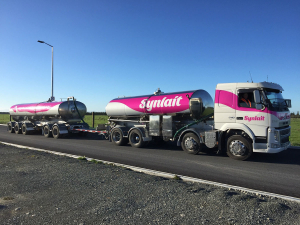
Synlait has swung to second-half profit as operations stabilise, but the dairy processor still posted a $75.4m annual loss.

LIC shareholders have elected a new North Island representative to the co-operative's Board, along with five representatives to its Shareholder Reference Group (SRG), following the company's Annual Meeting held in Invercargill.
Farmers across parts of Southland and South Otago are continuing to deal with difficult conditions after a prolonged run of wet weather, with pressure building around feed supply, stock management, pasture damage, farm infrastructure and everyday workloads.
Federated Farmers says it welcomes Labour's commitment to reviewing the Sharemilking Agreements Act, calling on other major parties to do the same.
For Canterbury dairy farmers Sian Meijer and Rick Wobben, wearable technology has become one of their most valuable on-farm tools - helping manage 1850 cows across an expansive, high-performing dairy operation while improving efficiency, mating outcomes and day-to-day decision making.
Fonterra has unveiled its annual results for the 2026 financial year, posting $27 billion in revenue and close to $20 billion returned to New Zealand farmer owners and unit holders.



OPINION: The same mainstream media muppets that brought you Jacindamania in 2017 have been flat out pimping for the Opportunities…
OPINION: Your old mate reckons the atrocious way farmers in the UK are treated by their lords and masters in…




