DairyNZ Resilient Pastures Trial Expands Across North Island
Farms across the upper North Island are trialling different pasture mixes as part of a research programme that aims to build greater resilience into farming systems.




 increase font size
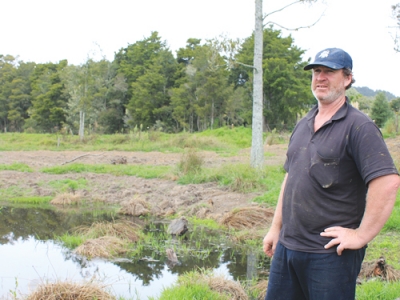 Northland farmer Steve Brown copped a $67,500 fine for cutting a stopbank during last year’s flood.
Two Northland farmers who dug through a stopbank during Northland’s biggest floods in July 2014 have been fined a combined $112,000, with one farmer copping most of the penalty.
Steve Brown faced a fine of $67,500 for cutting through stopbanks in the Waiotu and Hikurangi rivers; Clim Lammers was fined $45,000 for cutting through the Hikurangi River stopbanks.
Over 1000mm of rain fell on the Hikurangi Plains last July transforming it into a 500ha lake. The water remained for at least a week, fatally choking grasses which can only live underwater for six days before dying and, in Browns case, leaving his workers and neighbours house sitting in 1m of water.
After a week of river levels not dropping enough to allow floodgates to work, the two farmers took separate decisions to cut into the bank, then called the Northland Regional Council to let them know about the action they had taken.
The council then issued infringement notices to both farmers for cutting the stopbanks in August, telling them they were putting the overloaded river system under more pressure and potentially compounding the problems of flooded property owners downstream.
While the fine imposed was well short of the maximum allowable $300,000, Brown says it was nevertheless disappointing, given he had pleaded guilty and had taken steps to fix the stopbank after the flood had passed.
“Its sad that you’re not legally allowed to do what’s good for the environment, like letting heathy water out rather than letting it stagnate.”
Brown says, at the time, he needed to put 300 cows onto State Highway 1 to keep them safe.
“We are raised to treat human life first, then animal welfare next, then to look the after environment as caretakers of the land. What else were we supposed to do?”
Brown hired a contractor to fix the Waiotu River breach in mid-July, providing Whangarei District Council staff a digger and a tractor to fix the Hikurangi breach.
In a way, the fine comes as a relief for Brown who says waiting for trial was a very drawn-out process.
The farmers weren’t asked for a plea till December, four months after the initial notice was issued and sentencing didn’t happen till April 13, seven months and four trips to the Whangarei District Court after the incident that resulted in the fine.
“The first time we appeared for sentencing on January 16; they told us they wouldn’t be able to deal with the case because they didn’t have a judge present with enough background in environmental law.”
Brown won’t get any help to pay the fine as public liability insurance isn’t able to be used for fines.
“I don’t even think I will be able to use it to pay for legal costs because the insurance isn’t able to cover acts that are deliberate. I don’t want to think about the case I just want to get back to the farm and focus on that.”
Farms across the upper North Island are trialling different pasture mixes as part of a research programme that aims to build greater resilience into farming systems.

OPINION: Since when did one and one make three? Who didn't smell an elephant-sized rat when our leaders decided to give $60 million to save the cement factory in Northland?
New Zealand needs to make sure that it continues to focus on its own food security, according to HortNZ board member and blueberry grower Dermott Malley.
A five-year study has found that the cost of reducing emissions without technology may be significant and unsustainable for Northland dairy farmers.
OPINION: As the Northland Agricultural Field Days celebrates an impressive 40 years, Northland Regional Council (NRC) extends its congratulations to the current and past organising committees for reaching this milestone.


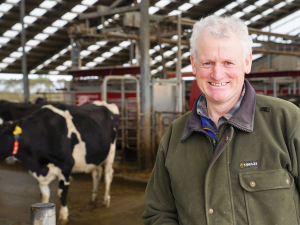
In Dacre, near Invercargill in New Zealand’s South Island, Bruce Dinnington is running a dairy operation unlike any other.

A free online platform aggregating governance vacancies across rural and regional New Zealand has been launched.
Environment Minister Nicola Grigg has announced details of a new rural plastics recycling scheme.
Agricultural drone operators say that a government decision to allow lower-risk drone work without certification won’t lower standards but drive innovation and efficiency.
OPINION: Warning bells are ringing in the arable sector.
Farmgate lamb prices are down by 8%, beef cattle by 4.5% and farm expenditure up by 4.2%.



OPINION: The same mainstream media muppets that brought you Jacindamania in 2017 have been flat out pimping for the Opportunities…
OPINION: Your old mate reckons the atrocious way farmers in the UK are treated by their lords and masters in…