
Tongan Student Wins Final William Gearish Award
Vetekina Pau'u is the first Tongan to win the William Gearish Memorial prize and sadly she will also be the last recipient.




 increase font size
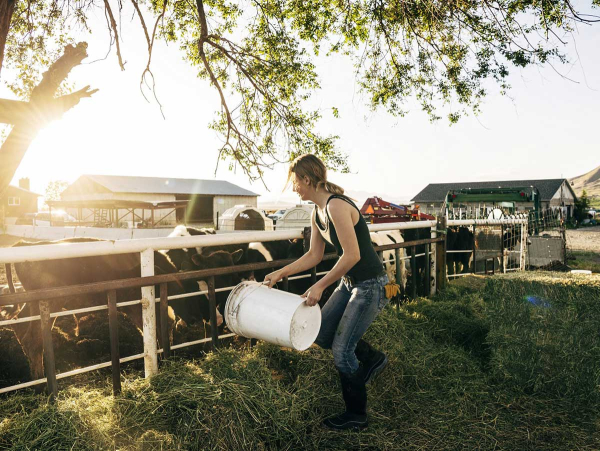 The programme is designed to promote mental health and wellbeing to first year agricultural students, many of whom fall within the young adult category.
Research into the impacts of the inaugural rollout of the WellMates programme at Massey University has shown promising results and outlined ways to strengthen its delivery, the university says.
WellMates, a mental health and resilience programme developed by Lincoln University, is being run for a second year at Massey after researchers found it significantly benefitted participants.
The programme is designed to promote mental health and wellbeing to first year agricultural students, many of whom fall within the young adult category.
While recent studies have shown farmers are prone to experiencing burnout, young people aged 17-24 are particularly vulnerable within this community.
The group is often underrepresented in mental health promotion strategies despite making up approximately 25% of farmer suicides.
School of Social Work Senior Lecturer Dr Nicky Stanley-Clarke, who played a pivotal role in bringing the programme over to Massey, has been among the researchers studying what effect WellMates is having.
She says the research shows WellMates is having a positive effect in increasing awareness and building upon existing knowledge of mental health.
“We conducted surveys on participating agricultural students before and after engaging in the programme, as well as a control group of agricultural students in the same year who didn’t attend. Students who participated in WellMates showed greater mental health and wellbeing knowledge than students who didn’t,” says Stanley-Clarke. “WellMates helped them build their skills and improve their confidence in advocating for themselves and others.”
A second round of funding from Massey Lincoln Agriculture Industry Fund (MLAIF) (formerly known as Massey – Lincoln and Agricultural Industry Trust) has provided the opportunity for WellMates to also be offered online this year.
“We’ve worked with the learning designers here at Massey to translate the content from in-person courses into a module embedded within a learning platform such as Stream,” says Stanley-Clarke. “The team has been fantastic at ensuring it’s engaging for our distance cohort by including pop-ups, videos and scenarios. Our Young Farmers facilitators have recorded voiceovers to guide people through the module.”
“Mark Rainier from the Student Services team has supported the delivery by peer reviewing the online module and ensuring the appropriate resources are immediately available, including Massey’s wellbeing and counselling services and TalkCampus.”
Stanley-Clarke says an interesting trend that appeared in the pre-programme survey was the number of students who presented with optimism bias.
She says many students tend to underestimate the possibility of experiencing stressful situations, believing those scenarios are unlikely to happen to them or will resolve without the need for support services.
“We learnt from our research that peer-to-peer connection was found to be really important and can help undo this type of thinking.”
WellMates was initially run as a two-hour conversation lead by Lincoln students who flew up to deliver the programme. Dr Stanley-Clarke says this year they’re partnering with Massey’s Young Farmers Club to improve connection and combat optimism bias.
“Members of the club have volunteered to be facilitators and deliver the programme. Students will get to hear from people like them about how important it is to take steps to manage your wellbeing and to know how to access support which helps break down stigma, particularly around the ‘tough farmer’ ideal. When you see others like you having that conversation, you’re more likely to join in and be engaged.”
Other changes to be implemented in the programme include reconsidering the timing of the programme within the semester and ensuring it’s embedded into the course.
“It’s important to be strategic with timing to ensure students are open and receptive to the messages,” Stanley-Clarke says. “It can’t be in the middle of exams or right before semester break when assignments are due.”
She says researchers also found it is vital students view this course as important and that it’s sold by lecturers as such because otherwise when students get busy, they’ll make the decision to skip it, thinking it won’t affect them.
“Getting people in the room so they can engage with the messaging is important, so having it as part of the course with an assessment or participation grade attached can be good motivation,” she says.
Vetekina Pau'u is the first Tongan to win the William Gearish Memorial prize and sadly she will also be the last recipient.

Sam Whitelock is an All Black rugby great, Farmstrong Ambassador and working dairy farmer in the Manawatu. Having stepped away from professional sport and returned to his roots on the family farm, he talks about balancing farm life with advocating for rural wellbeing.
OPINION: More than three decades ago, I was part of a group who received a monthly audio cassette tape from international leadership statesman, Dr. John Maxwell.
Researchers at Massey University are using a special piece of scientific equipment to improve the measurement of greenhouse gas emissions from pasture soils.
Interest in agritech and production animal systems has prompted Massey University's School of Agriculture and the Environment to new majors to its popular animal science degree.



Federated Farmers has welcomed new rural policies released by ACT, saying they align closely with its own election priorities.

Rural Contractors NZ says proposed changes to land transport rules for agricultural vehicles are a welcome response by the Government to out of date regulations which have seen members hit with huge fines.
Alliance is calling for final applications for its 2027 Graduate Programme, with applications closing on Sunday 25 October.
Decades piloting planes has ensured vet and farmer David Hayes is focused on safety. So, after a serious accident while welding on farm, he is sharing his experience so others can learn from it.
Canterbury milk processor, Synlait Milk has confirmed Leon Fung as its chief executive officer.
OPINION: Making it easier to collect rainwater and use it to grow crops and livestock is a no brainer.



OPINION: The same mainstream media muppets that brought you Jacindamania in 2017 have been flat out pimping for the Opportunities…
OPINION: Your old mate reckons the atrocious way farmers in the UK are treated by their lords and masters in…




