
Lanaco and Blueair Launch World-First NZ Wool Air Filter
New Zealand wool is reaching new heights as air filtration companies move away from synthetic products to biodegradable alternatives.




 increase font size
 Malcolm Ching.
What's “hot to trot” in fashion and trends can have a big impact on our wool prices, says Malcolm Ching, Purelana manager with Wool Services International.
A drift down in our wool volumes has been matched by the drift down in wool demand, he says.
“In the end it all sort-of balances out and keeps us at a similar level for supply/demand and then it comes down to what is fashion, what is ‘hot to trot’ at the moment for consumers,” Ching explains.
“Is the American economy doing well? Is there a cold winter in Northern Europe or somewhere else where wool again is seen as being a desirable product to have in carpeting, clothing, upholstery or blankets instead of synthetic?
“It doesn’t take much, a very small percentage shift toward wool again and it can impact greatly here. That is probably what has been pushing our prices around a bit more lately.
“Wool has been a bit on the increase as a desirable textile in the past couple of years so hopefully that will continue and minimise any downside.”
Palle Petersen, general manager, Bloch & Behrens Wool, the wool export arm of PGG Wrightson, says anything with a finer micron seems to be selling pretty well.
“A lot of these short wools, if they were a bit finer crossbred, would have gone into carpet wool but now that seems to be going into other products – cloth for coats and that sort of thing.
“That is taking the volume out of what goes to the carpet industry and it has also helped to keep prices at pretty good levels. There is a broader range of end products that New Zealand wool seems to be getting into these days, so we are not as reliant on the carpet sector, which is healthy. But it still is a big factor.”
Ching says a factor which drove higher prices this year was when people put a percentage of NZ into their product mix they probably put too much relative to what was available to our market with the high dollar.
“Because of that some of them, where they can, will be reducing the amount of NZ wool in their product and substituting. But they still will need a percentage of it.
“Then there are those whose products are made out of 100% NZ wool and they can’t afford to go anywhere else so they have to pay the price.
“But it squeezes their margins and long term it makes them think about what would they do long term in the future,” he says. “We walk a very fine tightrope on what we can really do for the bulk of NZ wool.”
New Zealand wool is reaching new heights as air filtration companies move away from synthetic products to biodegradable alternatives.
Will a stronger, more coordinated voice help rebuild confidence and improve returns in the wool sector?
OPINION: Confidence in the wool sector is rebounding as prices hit levels not seen in more than 15 years.
The recently signed free trade agreement with India is an invitation to strengthen relationships between the New Zealand and Indian strong wool industries, says Wool Impact chief executive Andy Caughey.
Strong competition and tightening supply have seen wool reach its highest prices paid at auction since 2011.


Federated Farmers says it welcomes Labour's commitment to reviewing the Sharemilking Agreements Act, calling on other major parties to do the same.
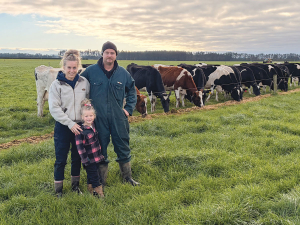
For Canterbury dairy farmers Sian Meijer and Rick Wobben, wearable technology has become one of their most valuable on-farm tools - helping manage 1850 cows across an expansive, high-performing dairy operation while improving efficiency, mating outcomes and day-to-day decision making.
Fonterra has unveiled its annual results for the 2026 financial year, posting $27 billion in revenue and close to $20 billion returned to New Zealand farmer owners and unit holders.
The first major update to the Dairy Cattle Code of Welfare in more than a decade has been released, marking what DairyNZ describes as an important step in ensuring animal welfare standards continue to evolve alongside scientific evidence and on-farm realities.
Ravensdown shareholders have elected Jane Montgomery and Kate Acland to the Ravensdown Board for three-year terms, following a closely contested director election.
Federated Farmers says new legislation replacing the Resource Management Act will cut red tape, unlock investment and help grow New Zealand's export-led economy, after the Planning Bill and Natural Environment Bill passed their third reading in Parliament yesterday.





OPINION: The same mainstream media muppets that brought you Jacindamania in 2017 have been flat out pimping for the Opportunities…
OPINION: Your old mate reckons the atrocious way farmers in the UK are treated by their lords and masters in…




