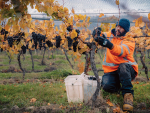
SWNZ Strengthens People Pillar for Global Markets
With ethical employment practices a "hot topic" in key markets, Sustainable Winegrowing New Zealand (SWNZ) is strengthening its People Pillar.




 increase font size
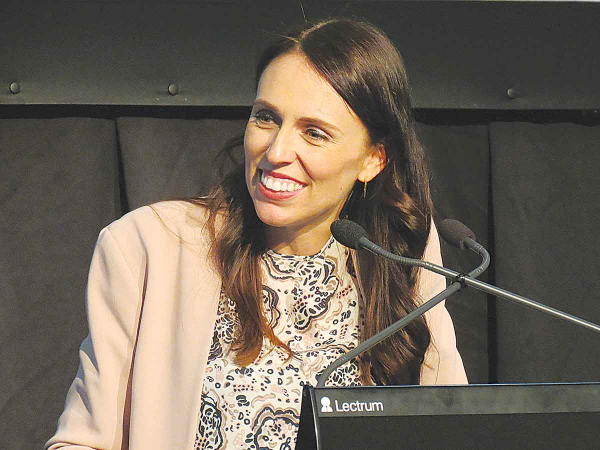 Catherine Tither sent Jacinda Ardern a scathing letter on migrant worker visas saying the changes announced last week don’t go far enough.
A Marlborough dairy farmer who wrote a scathing letter to PM Jacinda Ardern on migrant worker visas says the new changes don’t go far enough.
Catherine Tither, milking 630 cows in Canvastown, Marlborough, told Rural News that there is still a lot of uncertainty for the migrant work force following the changes announced last week.
“Yes it solves the immediate crisis of experienced people still being available,” Tither says.
“I can’t see Kiwi’s filling the dairy vacancies – even with the unemployment figures. I’m pleased they acted before we lost our valued experienced work force. Dairy will be hell without these people.”
Last week, Immigration Minister Iain Lees-Galloway announced a six-month extension to temporary work visas. About 3000 dairy farm employee temporary visas are due to expire.
He also announced the Government would grant an extra six months of stand-down period that applies to some migrants. Workers who were subject to the 12-month stand-down period and were going to have to leave New Zealand this year, will now be able to stay for the duration of the extension.
But Tither says the Government has failed to address the issue of migrant visa holders with NZ jobs being locked out of the country due to border closures. In her letter to the PM, Tither noted that a recent DairyNZ promotion of dairy as a career for New Zealanders got a lukewarm response.
“I see the promotion attracted 300 expressions of interest, dwindling to 90 registrations. Even in the unlikely scenario that every one of the 90 registrations starts and continues working in our industry, it will not fill the current 1000-plus vacancies to be filled.
“Calving, our most intense work period, is bearing down on us, we have unfilled vacancies and nothing is happening to fill these critical positions.
“Many of these positions are for experienced dairy farm employees. It will take new entrants to our industry at least one full season’s work to gain limited dairy farming experience and at least three years to be experienced enough for herd manager responsibility.
“In a nutshell, the campaign to encourage new Kiwi entrants to dairy is attracting too few, and the few it has attracted lack the experience we require.”
Tither says her farm is considered a large scale operation in the region, which is not known as a key dairy area.
Career dairy farmers prefer to be employed in intensive dairy areas like Canterbury or Otago where there are more job opportunities in the same geographical area, enabling less disruption for school children and working partners.
Tither says most farms around them are staffed by owner operators and maybe one employee.
“Being unable to recruit enough Kiwi employees, we have employed two or three Filipinos since June 2014. Two of these men have been employed by us for six and four years respectively on one year work visas.”
She says the industry needs to retain experienced migrant work visa holders to fill the current vacancies and if insufficient unemployed Kiwi’s enter dairying, we need to be able to fill our vacancies with experienced, motivated dairy farm employees from overseas in the future.
Tither says her letter was acknowledged by the PM’s office and passed to Minister of Immigration. She re-sent the letter to the PM’s office expressing her unhappiness with the changes proposed by Lees-Galloway.
With ethical employment practices a "hot topic" in key markets, Sustainable Winegrowing New Zealand (SWNZ) is strengthening its People Pillar.

OPINION: Farmers have been clear: it is getting harder, not easier, to find and keep good people.
OPINION: Your old mate hears an international incident is threatening to blow up the long-standing Anzac alliance as Kiwis and Aussies argue over who wants new Australian resident and former NZ Prime Minister Jacinda Ardern.
OPINION: Did former PM Jacinda Ardern get fawning reviews for her book?
Building on the success of last year's events, the opportunity to attend People Expos is back for 2025, offering farmers the chance to be inspired and gain more tips and insights for their toolkits to support their people on farm.


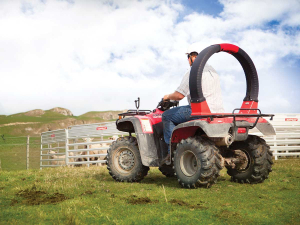
When Northland leather worker Vernon Suckling started making horse saddles 50 years ago, quad bikes and side-by-side vehicles were unheard of.
Alliance Group has confirmed that eligible farmer-shareholders who supply and continue to back the business will receive up to $20 million later this year, following the strategic investment partnership with Dawn Meats.
With a general election under five weeks away, Rural News is asking major political parties about their policies and positions on key issues facing the primary sector. We will run their responses to each question over the next four weeks. The ACT Party and the Greens didn't respond in time.
The red meat sector is in great heart.
Dr Scott Champion, Foundation for Arable Research chief executive, says that everyone in the supply chain had a role to play in driving the sector's long-term success.
Entries opened on Monday, 5 October 2026 for the 2027 New Zealand Dairy Industry Awards (NZDIA), which organisers describe as the nation's biggest celebration of excellence in the dairy sector.





OPINION: The same mainstream media muppets that brought you Jacindamania in 2017 have been flat out pimping for the Opportunities…
OPINION: Your old mate reckons the atrocious way farmers in the UK are treated by their lords and masters in…




