
The good, the bad and the ugly – 2015 in review
Another year has almost passed us by – again – and it is time for the annual review of 2015's good, bad and ugly in regards to the primary sector as seen by the Rural News editorial team...




 increase font size
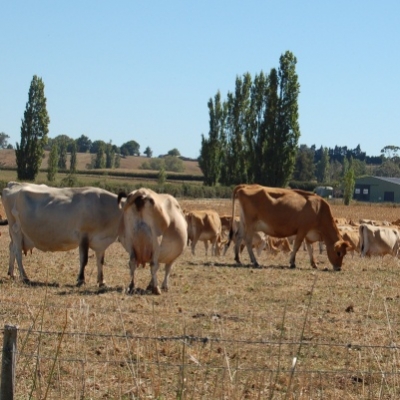
Be proactive in your thinking and recognise your options because the next three weeks will be crucial in planning to deal with drought.
That’s the message to farmers in Manawatu/Rangitikei region from the local Fed Farmers’ Meat and Fibre chair Richard Morrison. He says the dry weather has come earlier than normal to his region and that’s got local farmers wondering what’s going to happen next
Morrison says it hasn’t rained there for a long time, but most people grew a lot of grass leading up to Christmas so there has been feed on hand. It seems like a stand-off with people waiting to see if the rain is coming before planning their next move.
“It seems like the works should be flat-stick because everyone should be off-loading stock and while people are booking space the works probably aren’t as full as they might be,” he told Rural News. “I think people are probably getting the lambs into their yards and finding they’re not as good as they hoped or thought they would be. I believe they are sending off the lambs that are ready and hoping they’re going to get a shower of rain to be able to bring the next bunch along.”
Morrison thinks lambs in the region are probably a bit lighter than what people would hope or like.
“We have had bad droughts before and this is early – it’s not February – and people are wondering, is this just a typical dry summer or is it going to get worse and will the rain come? Everyone can remember the last three years and how challenging that was.”
Morrison says the Rangitikei River is running low and it’s possible restrictions on irrigation could be imposed. “The soil moisture maps are out and the deficit looks pretty bad and anyone can see just how dry the grass is.”
He says farmers should be looking closely at feed budgets and starting to develop a plan they can implement if the situation gets worse.
Another year has almost passed us by – again – and it is time for the annual review of 2015's good, bad and ugly in regards to the primary sector as seen by the Rural News editorial team...

The end of the year is fast approaching so some end of year thoughts on a few of the significant developments of the year to wrap things up!
It was a Saturday afternoon and it had been raining for two days; Taranaki farmer Graham Fergus decided to move his ewes on a hilly paddock.
Harry Matthews knows the area well, a key to his being hired to liaise with farmers.
When Lyn Neeson, who farms near Taumaranui, saw the Whanganui and Ohura rivers rise rapidly in June, she figured this spelled trouble for farmers downstream and she was right.



LIC shareholders have elected a new North Island representative to the co-operative's Board, along with five representatives to its Shareholder Reference Group (SRG), following the company's Annual Meeting held in Invercargill.
Farmers across parts of Southland and South Otago are continuing to deal with difficult conditions after a prolonged run of wet weather, with pressure building around feed supply, stock management, pasture damage, farm infrastructure and everyday workloads.
Federated Farmers says it welcomes Labour's commitment to reviewing the Sharemilking Agreements Act, calling on other major parties to do the same.
For Canterbury dairy farmers Sian Meijer and Rick Wobben, wearable technology has become one of their most valuable on-farm tools - helping manage 1850 cows across an expansive, high-performing dairy operation while improving efficiency, mating outcomes and day-to-day decision making.
Fonterra has unveiled its annual results for the 2026 financial year, posting $27 billion in revenue and close to $20 billion returned to New Zealand farmer owners and unit holders.
The first major update to the Dairy Cattle Code of Welfare in more than a decade has been released, marking what DairyNZ describes as an important step in ensuring animal welfare standards continue to evolve alongside scientific evidence and on-farm realities.





OPINION: The same mainstream media muppets that brought you Jacindamania in 2017 have been flat out pimping for the Opportunities…
OPINION: Your old mate reckons the atrocious way farmers in the UK are treated by their lords and masters in…




