Lanaco and Blueair Launch World-First NZ Wool Air Filter
New Zealand wool is reaching new heights as air filtration companies move away from synthetic products to biodegradable alternatives.




 increase font size

Increased activity from China and India helped lift some wool sector prices significantly for the 11,700 bales on offer this week, New Zealand Wool Services International Ltd's general manager, John Dawson reports.
There was an 88% clearance. The weighted indicator for the main trading currencies strengthened 0.68% with market demand overriding this potentially negative influence.
Dawson says merino fleece followed the Australian market trend over recent sales, increasing 10% to 15%. Mid micron fleece 24.5 to 26 micron was less in demand, easing by 1% to 2% with 26.5 to 31.5 micron firm to 3% stronger.
Fine crossbred full fleece came under strong competition with prices generally 5% to 7.5% dearer. Fine Crossbred 3/5 and 3/4 inch shears were also strongly contested, lifting 6% to 10%. The shorter types barely changed.
Good colour coarse crossbred fleece were 3% to 5% dearer with average styles firm to 2% dearer. Coarse Long Second Shears were 3% to 5% firmer with shorter types generally 5% to 9% stronger.
Strong competition from China and India was supported by Western Europe, Middle East, United Kingdom and Australasia.
The next sale on November 1 comprises a reduced volume of about 6800 bales of North Island wools.
New Zealand wool is reaching new heights as air filtration companies move away from synthetic products to biodegradable alternatives.
Will a stronger, more coordinated voice help rebuild confidence and improve returns in the wool sector?
OPINION: Confidence in the wool sector is rebounding as prices hit levels not seen in more than 15 years.
The recently signed free trade agreement with India is an invitation to strengthen relationships between the New Zealand and Indian strong wool industries, says Wool Impact chief executive Andy Caughey.
Strong competition and tightening supply have seen wool reach its highest prices paid at auction since 2011.



Now in its fourth year, the 2026 Fencing Industry Awards, formed part of the proceedings of the FCANZ Conference, held in Nelson during August.
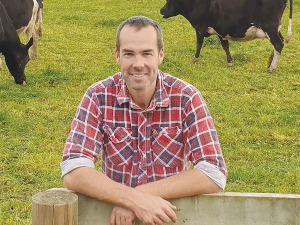
DairyNZ deputy chair Cameron Henderson has been re-appointed unopposed for another term.
OPINION: The stats speak for themselves.
Farms across the upper North Island are trialling different pasture mixes as part of a research programme that aims to build greater resilience into farming systems.
Election years are always a concerning time for farmers, according to DairyNZ chair Tracy Brown.
The Ballance Farm Environment Awards are coming to the West Coast of the South Island.

OPINION: The same mainstream media muppets that brought you Jacindamania in 2017 have been flat out pimping for the Opportunities…
OPINION: Your old mate reckons the atrocious way farmers in the UK are treated by their lords and masters in…