WorkSafe Safety Push Reveals Major Farm Safety Gaps Across New Zealand
A safety push across New Zealand has revealed significant gaps in hazardous substances management, farm vehicles, tractors, quad bikes and side-by-sides.




 increase font size
 Worksafe New Zealand chair, Gregor Coster.
Worksafe New Zealand’s chair says he’s asked the senior managers at his organisation to try to broker a deal with farmers over the carrying of passengers on quads.
This arises from the huge outcry from farmers and industry organisations about WorkSafe threatening to prosecute farmers who carry passengers on their quads.
Professor Gregor Coster told Rural News that he’s asked WorkSafe managers to work with farmers and the manufacturers of quads to try to find “a way forward” regarding carrying pillion passengers on quads.
There is confusion about the manufacturers’ recommendations on carrying passengers. ‘Pillion passenger’ is said to mean a person sitting on the same seat as the driver as opposed to being on the back of the quad. There are also claims that carrying spray gear on the back of quads is more dangerous than a passenger.
Coster says while the work is going on, WorkSafe is sticking to its policies on quads.
“But surely it should not be beyond the wit of a group of wise heads – I am referring to farmers in particular – to come up with a sound protocol and guidance for the safe carriage of people on quad bikes,” he says.
“Federated Farmers has provided excellent leadership in this space. They have a fact sheet on their website and we support that. Many farmers have grasped the importance of them and their family and whanau coming home safely every day. That’s our focus and we want to see everyone come home healthy and safe.”
Coster was full of praise for the way the Ahuwhenua Trophy management team ran a large field day at a Gisborne farm recently. About 60 quads and side-by-side vehicles were used on a tour of Maringa Station. Strict rules were imposed on those attending the day: helmets were required on quads and side-by-sides, seat belts used on the side-by-sides and no passengers were allowed on quads.
Coster and three of his staff were at the field day
“Coming to the Ahuwhenua Trophy day has been a great experience. It’s been great to see so many farmers so well briefed on health and safety and carrying out those proper practices,” he told Rural News. “It shows that farmers can do this and all credit to them.”
A safety push across New Zealand has revealed significant gaps in hazardous substances management, farm vehicles, tractors, quad bikes and side-by-sides.
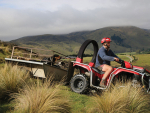
Decisions you make in an instant on the farm can be the difference between life and death.
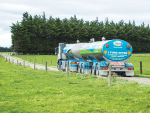
WorkSafe New Zealand is calling on farmers to consider how vehicles move inside their barns and sheds, following a sentencing for a death at one of South Canterbury’s biggest agribusinesses.
Following a sentencing for a death at a South Canterbury agribusiness, WorkSafe New Zealand is calling on farmers to consider how vehicles move inside their barns and sheds.
WorkSafe is recommending the dairy industry reassess its use of slide pulsators, following a recent death in a Waikato milking shed.

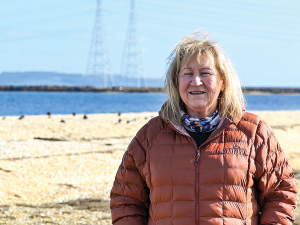
For 15 years, Glenda Rees has travelled from Gore to Awarua, often several times a week, to keep watch over one of the country’s rarest birds.
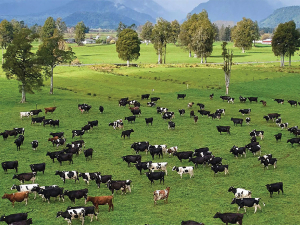
With some farmers opposing a government-industry partnership set up to develop methane reducing products, one NZ company claims that it already has a product on the market.
During the nesting season, from September to December, industrious starlings can quickly build nests in the darker areas behind tractor and vehicle, usually close to hot engines, typically resulting in localised damage or in some cases complete write-offs.
The meat processing industry is much more collegial than it was in the past and is now more focused on common goals.
With the last couple of months having seen some potential tractor purchases put on hold with the impending election and continued input cost rises, year-to-date figures, ending September, has seen deliveries up around 5% over the same period in 2025, with a total of 2026 units.
Beef+Lamb New Zealand is calling for nominations for director roles in the Northern South Island and Northern North Island electoral districts.



OPINION: The same mainstream media muppets that brought you Jacindamania in 2017 have been flat out pimping for the Opportunities…
OPINION: Your old mate reckons the atrocious way farmers in the UK are treated by their lords and masters in…