Power Farming Launches Southland Joint Venture
Power Farming has launched a joint venture in Southland.




 increase font size
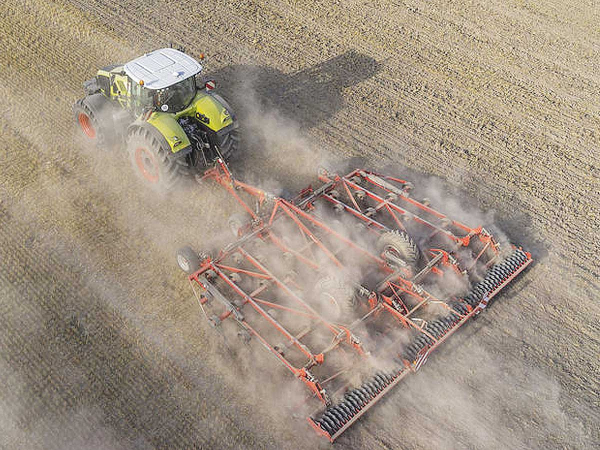 The Kverneland Turbo T is offered in 6.5 and 8 metre working widths.
Machinery importer and distributor Power Farming has introduced a new weapon to its extensive cultivation arsenal in the shape of the Kverneland Turbo T.
Offered in 6.5 and 8 metre working widths, both trailed machines carry five banks of tines which fold to a manageable 3-metre transport width.
Aimed at cropping farmers and vegetable growers, the Turbo T is said to be particularly useful for dealing with maize stubbles or fodder beet residues, by offering 725mm of under-frame clearance, combined with a 190mm leg spacing.
Carrying 31 or 44 tines respectively, the 6500 and 8000 machines are equipped with the well-known Kverneland Triflex 400 tines with the instantly recognisable green, maintenance-free, leaf spring configuration. Offering up to 400kg resistance, the layout can operate at working depths of 3 to 20cm.
“The Turbo T is designed to operate at high speed, while maintaining a consistent depth, opening up the soil profile to encourage drainage and air flow,” says product manager-cultivation and seeding at Power Farming, JP Chapman.
“During testing, we’ve found the machine to be very versatile in the spring ahead of maize planting, going deeper to promote root growth. Likewise, post cereal harvesting, it can be use at high speed at shallower depths to promote weed and volunteer germination, with very impressive work rates.”
These machines offer a “full cut” across the whole working width, a combination of forward speed and resonance within the leg delivers good mixing of trash and organic matter, with the added benefit of a level finish. Power requirement is low at around 35-40hp per working metre.
Routine maintenance is also kept low with the use of high-grade steel and sealed bearing assemblies. For very high daily outputs, the machines have a maximum horsepower rating of 450hp
The standard point, a 60mm knock-on fitment, is suitable for working at depth to ensure full soil movement through the profile, while also offering time saving during replacement. For shallower operations or lighter soil types, options include a 150mm point or the “Tiger” point – specifically designed for stony soils.
Rear of the tines, a levelling element consists of a revolving disc configuration, which is suited to all conditions – particularly heavy land and high straw volumes.
Final consolidation and finishing is carried out by the rear-mounted, 565mm diameter Actipacker.
Ease of use is taken care of with hydraulic cylinders and spacers for depth control, with a separate manually-adjusted crank handle for the levelling element. If working depth is adjusted, a clever parallelogram linkage ensures the levelling system is also adjusted to maintain the quality of work.
In addition, the Automatic Load Transfer (ALT) system sees the front depth wheels linked to sensors that detect increasing load.
From here, the system adjusts to transfer up to 1800kg of force to the drawbar, helping to reduce wheel-slip by up to 10%.
The main transport wheels are mounted within the machine’s main frame.
This helps to deliver a sub-10 metre turn at headland, while also creating good weight transfer to the tractor during reversing manoeuvres.
Power Farming has launched a joint venture in Southland.
Morrinsville-based agribusiness leader Geoff Maber has been appointed an Officer of the New Zealand Order of Merit (ONZM) in the King’s Birthday Honours, recognising a lifetime of service to agribusiness, the rural sector and the wider community.
Waikato agribusiness leader Geoff Maber has been appointed an Officer of the New Zealand Order of Merit (ONZM) in the 2026 King's Birthday Honours.
With Agritechnica just around the corner, it’s no surprise to see manufacturers drip-feed some information of new products worth a closer look.
Founded in Germany as recently as 1977, today, the Fliegl Group employs more than 1100 workers, offering an expansive range of transport solutions, from their base in Bavaria.


Minister of Conservation Hon Tama Potaka has appointed Susan O'Regan as Chair of the Queen Elizabeth II National Trust (QEII) for a three-year term.
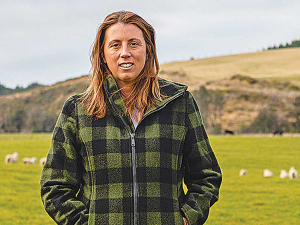
Red meat farmers are welcoming Labour’s plan to review the Emissions Trading Scheme and not to campaign on pricing agricultural emissions.
Where any worker in the kiwifruit industry is mistreated, we expect the authorities to take action.
Mid Canterbury Federated Farmers arable chair, Bevan Lill, said Beef + Lamb NZ data indicated that for the last six years, the average arable return on investment was about 0.8% while inflation ran about 4% - so the average arable farm was going backwards at about 3% a year.
Seed and grain companies share the concerns of arable farmers about the viability of their sector, says Seed and Grain New Zealand chief executive Dr Sarah Clark.
The New Zealand Institute of Forestry (NZIF) says unnecessary changes to New Zealand’s Emissions Trading Scheme (NZ ETS) will seriously erode investor confidence and result in significant reductions in forest planting rates.


OPINION: The same mainstream media muppets that brought you Jacindamania in 2017 have been flat out pimping for the Opportunities…
OPINION: Your old mate reckons the atrocious way farmers in the UK are treated by their lords and masters in…




