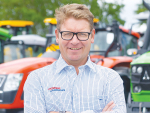
Power Farming Launches Southland Joint Venture
Power Farming has launched a joint venture in Southland.




 increase font size
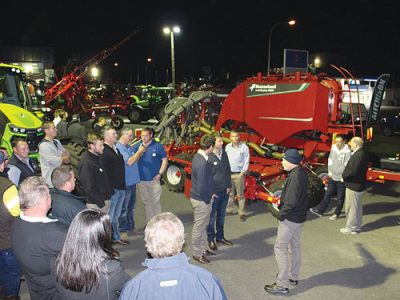 Attendees at Power Farming’s ‘Big Night Out’ held in Morrinsville recently.
Heavy metal addicts of the farm machinery kind made a pilgrimage recently to Morrinsville for distributor and retailer Power Farming’s ‘Big Night Out’.
Pulling together a huge display of large-scale products for high-end farmers and contractors, the family owned business showed the latest tractor offerings from Deutz Fahr, Versatile and Kioti.
And there were implements from Kverneland, Maschio, Merlo, Jaylor and Aitchison.
Alongside showing visitors the latest and greatest, Power Farming also took them on a tour of its premises to show what it takes to be a successful distributor.
In logistics alone, 700 containers arrive annually at the MPI-approved facility for unloading and processing through the assembly building; 1600+ items pass through, creating 2000 individual jobs. Inventory is 600 items held in stock at any one time.
On the service front, customers now demand around-the-clock technical support, which Power Farming achieves on several levels.
At wholesale, this means seven technical/support staff in New Zealand, 11 in Australia and three in the US. They liase with supplier factories at 50 locations in 10 countries. They also deal with retail support where 23 retail service managers oversee 150+ NZ-certified technicians who keep customers going.
Annual spending on training is massive and $500,000 goes on diagnostic equipment.
In parts support the company holds at least 100,000 line items with a combined NZ and AU retail value of $50 million. Thirteen personnel oversee order processing and despatch to send 30,000 items per month to users; peak months are October - December. Those items must be available off the shelf at the right time, requiring delivery lead times of up to eight months.
Managing director Geoff Maber talked about the challenges of running such a business -- making sound business decisions and forming enduring partnerships with overseas suppliers, in many cases family-owned, as is Power Farming.
The company invests heavily in its future, Maber said. It has at least $15m in buildings and infrastructure to create a good environment for customers and employees, essential in attracting the best staff.
Maber expects hefty price rises in the coming months -- perhaps 15-20% over 18 months -- because of tariffs in America, Brexit in Europe and changing global trends.
Exchange rate changes have caused the NZ dollar to fall 25% against the USD and 10% against the Euro, Maber said. Steel prices have risen in the last year by 17-20%. Higher oil prices have caused a 10% rise in the price of plastics and tyres.
But Maber says it’s a great time to be in the agricultural industry, given that increasing populations need increases in food production and Asian consumers are eating more fats and meat proteins.
In NZ all Power Farming’s key brands are tracking upwards despite Mycoplasma bovis and negative comment on farming by city journalists.
In Australia, after record sales in 2017, the drought this year is already depressing spending on machinery: June alone is down 10%.
Power Farming’s confidence is seen in its recent expansion into North America, where at least 200,000 tractors are sold annually. But there are frustrations, Maber said, notably in arranging retail credit.
Power Farming has launched a joint venture in Southland.
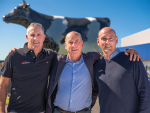
Morrinsville-based agribusiness leader Geoff Maber has been appointed an Officer of the New Zealand Order of Merit (ONZM) in the King’s Birthday Honours, recognising a lifetime of service to agribusiness, the rural sector and the wider community.
Waikato agribusiness leader Geoff Maber has been appointed an Officer of the New Zealand Order of Merit (ONZM) in the 2026 King's Birthday Honours.
Founded in Germany as recently as 1977, today, the Fliegl Group employs more than 1100 workers, offering an expansive range of transport solutions, from their base in Bavaria.
Distributed by Power Farming Group, the Kioti tractor brand has carved a niche for itself over the past two decades by offering productive, reliable and well- priced machines in the sub-compact, compact and agricultural utility sectors, from 22 to 115hp.


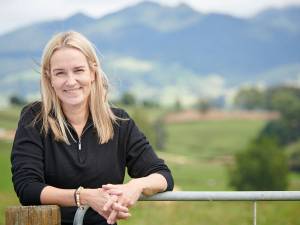
Minister of Conservation Hon Tama Potaka has appointed Susan O'Regan as Chair of the Queen Elizabeth II National Trust (QEII) for a three-year term.
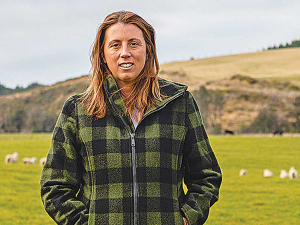
Red meat farmers are welcoming Labour’s plan to review the Emissions Trading Scheme and not to campaign on pricing agricultural emissions.
Where any worker in the kiwifruit industry is mistreated, we expect the authorities to take action.
Mid Canterbury Federated Farmers arable chair, Bevan Lill, said Beef + Lamb NZ data indicated that for the last six years, the average arable return on investment was about 0.8% while inflation ran about 4% - so the average arable farm was going backwards at about 3% a year.
Seed and grain companies share the concerns of arable farmers about the viability of their sector, says Seed and Grain New Zealand chief executive Dr Sarah Clark.
The New Zealand Institute of Forestry (NZIF) says unnecessary changes to New Zealand’s Emissions Trading Scheme (NZ ETS) will seriously erode investor confidence and result in significant reductions in forest planting rates.


OPINION: The same mainstream media muppets that brought you Jacindamania in 2017 have been flat out pimping for the Opportunities…
OPINION: Your old mate reckons the atrocious way farmers in the UK are treated by their lords and masters in…




