Award-winning Māori farm severely damaged by isolated Northland thunderstorm
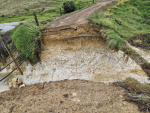
One of the country's top Māori farms has been badly damaged by a severe isolated thunderstorm which hit parts of the east coast of Northland last week.




 increase font size
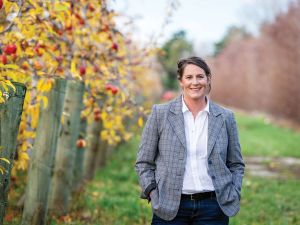
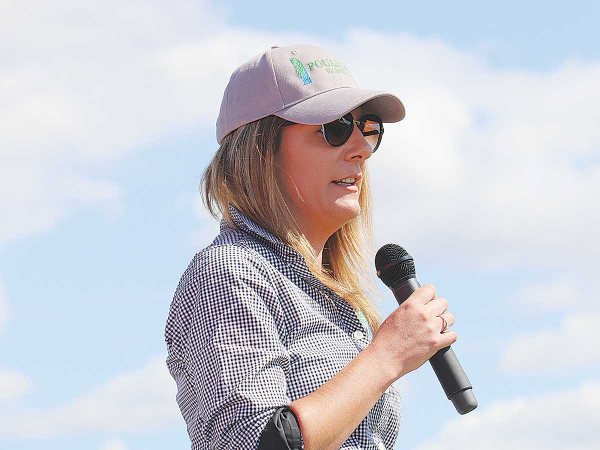 Chief executive of Pouarua Farms, Jenna Smith addresses the field day crowd.
As the autumn sun rose in the east, the first of more than 100 people from around the district started arriving for the field day.
There was the traditional welcome and the Ahuwhenua trophy donated by former Governor General Lord Bledisloe, was ceremoniously brought onto the farm. Guests would hear presentations from the directors and staff of Pouarua farms in a large marquee set up near the farm office. Another marquee was set up nearby for the catered morning tea and lunch.
It was then a chance to do a brief farm tour on foot - the first stop being near the new dairy shed and a chance to get out in the paddocks and to get up close with the herd of Farm A. The event ran like clockwork, albeit a little behind time.
Tasked with organising the day was chief executive of Pouarua Farms, Jenna Smith. She admits it was a huge task to pull the day together, but says everyone from directors, senior managers and farm staff worked well together. She puts the success of the day down to good communication.
"They say that good communication is not what you say, but what people have received and judging by today our communication has been successful," she told Rural News.
Smith says the feedback from the day was positive with people interested in some of the wider innovations taking place on the farms. She says the land is very delicate and susceptible to environmental pressure. They have come up with a vision - healthier food for a better life.
"That is that not necessarily all dairy because it may not be right to continue in dairy and so we are looking at other options for land," Smith explains. "For example, we are pretty heavily down the line on a blueberry orchard and have retired some land that we will use to graze beef cattle on when we have the feed to spare. We are also growing maize to sell."
A big issue for Pouarura and other farms on the Hauraki plains is the summer dry.
The peat soil dries out quickly and last season they had to deal with a six month drought. This year they are four months into a drought. Smith says the answer is to focus on growing grasses and crops that can best cope with the dry conditions.
"We are using those Italian ryegrasses and conserving that in the spring when we can and having that there for summer," she explains. "We go then go into a good summer cropping programme so we are using an early maturing turning, which allows us to get into that in November and set our rotation out a little bit further."
She says they then get into later maturing turnip, which takes them past Christmas and follow that with a sorghum, which has been drilled in behind the early maturing turnips.
Smith says Sorghum is a bit unusual, but it likes the high temperatures - a bit like maize - and she says it works for them, Smith adds that their approach is not prescriptive, because the farms are not a text book operation.
For Smith, who started life as a dairy assistant in Otago, it's been a case of progressing through the ranks of dairy industry. Sadly, she had a farm bike accident early in her career which ended her on farm working days. However, with support from Landcorp, she's had a number of roles - including a stint as a sharemilker, which have eventually led to her role at Pouarua.
One of the country's top Māori farms has been badly damaged by a severe isolated thunderstorm which hit parts of the east coast of Northland last week.
Recently two of New Zealand's top Maori sheep and beef farms held field days as part of the prestigious Ahuwhenua Trophy competition. The two are: Whangaroa Ngaiotonga Trust, northeast of Whangarei, and the proprietors of Tawapata Onenui farm on Mahia Peninsula in southern Hawke's Bay. Reporter Peter Burke attended both field days.
Farms from Northland and northern Hawke's Bay are the finalists in this year's Ahuwhenua Trophy competition for the top Māori sheep and beef farms.
The search is on to find the top Māori sheep and beef farm with entries now open for the 2025 Ahuwhenua Trophy competition.
A dairy farm owned by one of the largest Māori dairying farming operations in the country has won the prestigious Ahuwhenua Trophy for the top Māori dairy farm for 2024.


National’s pledge to introduce 19 new national standards shows the party is serious about getting Wellington out of farming, Federated Farmers says.
The National Party’s policies to make it easier to grow fresh vegetables, secure reliable water and energy and simplify farm planning are practical changes that will give growers the confidence to invest, according to Horticulture New Zealand (HortNZ).
Fonterra Co-operative Group chief financial officer Andrew Murray has resigned to take up a role outside the dairy giant.
A major move is about to get underway to improve the quality and viability of dairy beef and cattle in NZ.
Veterinarians say changes to the code of welfare for dairy cattle provides a positive foundation for improved cattle welfare across the country.
Today, 15 October, is the International Day of Rural Women, which recognises rural women’s contribution to farming, communities and the environment.


OPINION: The same mainstream media muppets that brought you Jacindamania in 2017 have been flat out pimping for the Opportunities…
OPINION: Your old mate reckons the atrocious way farmers in the UK are treated by their lords and masters in…




