The real cost of forages should be a key driver for a farm business; but to determine ‘real value’, buying decisions should be based on various factors, says SeedForce.
Quality and utilisation will help determine the true value of forages fed. Rather than buying on cents/kgDM, the quality (MJME/kgDM) and utilisation (as a %) of that feed should be calculated to highlight the true cost and expressed in c/kgDM consumed or c/MJME.
This will then allow all potential feed options to be compared on their specific attributes and the best option(s) selected that will complement each other in a mixed ration.
One of the most cost-effective, quality feed options to consider is sugar beet.
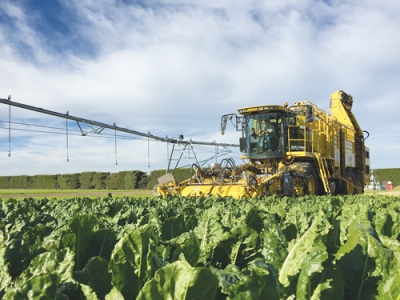
Of the same species as fodder beet, sugar beet differs in its attributes. Bred specifically for mechanical harvesting, sugar beet is much more uniform in its appearance than fodder beet which has direct benefits for harvesting. While fodder beet can be harvested, this can pose issues such as excessive ‘harvest loss’, which can be directly attributed to plant uniformity and crown height.
With sugar beet these harvest losses are minimised, most notably in the topping phase of harvest. The bulb shape and size of sugar beet help ensure a cleaner harvest than fodder beet which are often varied in their size. The aim for any mechanical harvesting of beet is to maximise returns by removing all leaf material but leaving the bulb intact.
The key benefits of harvested sugar beet are its consistent quality of 12MJME/kgDM and high utilisation – at least 95% -- regardless of conditions. Sugar beet can be a versatile feed option fitting into a range of feeding systems and timings. With low protein bulbs, it combines well with spring grass production and can be fed whole or chopped depending on your system. It can also be stored longer than fodder beet due to its higher DM%.
Many farmers are utilising sugar beet in their systems now as a high-energy source with production benefits. Uses are varied, but typical uses are 5kgDM sugar beet fed during lactation in a dairy system or higher levels fed out on pasture to dry cows or R2 steers balanced with high quality pasture. Its quality can substitute more expensive alternatives in a daily ration. Whether bought in or grown on farm, this flexibility is one of its key advantages.
Sugar beet also has the advantage over fodder beet of higher dry matter percentage, leading to harvestable yield advantages, transport benefits and longer storability. If grown onfarm, rather than bought in, this has huge implications on cost as the higher the harvestable yield the lower the cost/kgDM.
The logistics of cartage also improve with the higher bulb DM% for sugar beet; for example, carting 30 tonne fresh weight of beet in a truck and trailer equates to 5.4 tDM for a load of fodder beet at 18%DM vs 6.9 tDM of sugar beet at 23%DM – which is a 30% advantage for sugar beet in every load. The benefit is even greater if the sugar beet DM% is higher, which is common.
Sugar beet seed is still available for planting this spring and there are mechanical harvesters in many regions nationwide.
• SeedForce is an Australasian seed developer and marketer backed by RAGT Semences.