Why Now Is the Time to Plan Farm Succession, Findex Says
OPINION: Succession and long-term planning are perennial topics because it is perpetually sidelined on busy farms.




 increase font size

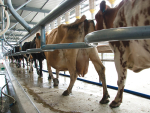
Massey researchers are four years into a trial which could have profound implications for beef and dairy farmers alike. Peter Burke reports the details as relayed at a recent Beef + Lamb NZ and DairyNZ dairy/beef integration day in the Manawatu.
COULD THE best beef cow of the future be what’s currently considered a cast-off from the dairy industry?
That’s what a long-term trial at Massey University’s Tuapaka research farm on the outskirts of Palmerston North aims to find out.
The trial is based on what many dairy farmers have until now regarded as their ‘outcasts’: calves sired by beef bulls put over the tail end of the herd.
Dr Rebecca Hickson and Professor Steve Morris are running the Beef + Lamb NZ-funded trial with a herd of 200 cows. The cows are either pure Angus, Angus-Friesian, Angus-Jersey, or Angus-Kiwicross.
They’re being mated with Hereford, Angus, Simmental and Charolais bulls.
The objective is to determine the best beef cow based on its ability to:
• Calve at two years of age.
• Achieve good weaning percentages.
Not be too heavy.
• Produce big calves while cleaning-up pasture.
• Carry body condition to get through tough times.
• Produce progeny that grow well beyond weaning and taste good.
Hickson says it is about comparing cows of different live weight and milk production to see which are the most efficient on a number of criteria, in particular number of calves weaned, calf weights and cow feed requirements. They are looking for the perfect beef cow: a cow that meets all the above criteria and does so with the least inputs.
While it’s still early days in the trial, after four lactations some trends are starting to show up.
“What we are seeing is the reproductive performance – that is the number of calves weaned and inter-calving interval – and pregnancy rates are all very similar.
“The differences that are coming in [are] that the high milk yielding cows are producing heavier calves versus the lower milk cows which are producing lighter calves.”
Based on the results so far, Hickson says her current favourite is the Angus Kiwicross but they need to see if trends to date continue for another three years at least, and if any problems such as overly big udders or mastitis emerge that might not in a genuine beef cow.
“So far the Angus Kiwicross is in front because she is a moderate sized cow, so she’s a relatively low cost animal to run, but she’s producing great big calves.”
Hickson notes a lot more Kiwicross calves are coming out of the dairy industry and their potential is relatively unknown. Many show up with Jersey markings and people tend to shy away from them, but she says based on the results of the Massey trial to date, there is no reason to. In fact, they could be a good option.
“We hope that more people purchasing four days old calves or weaner calves are willing to purchase beef crossbred calves and it would be nice to see to more of those calves coming into the
beef industry, as opposed to going on the bobby truck.
“Certainly, as a breeding cow they are a sensible choice. What we are really doing is putting the numbers out there. If farmers haven’t tried it, they don’t know,” says Hickson, noting the Friesian-Hereford was the cow used historically where farmers wanted a dairy-beef cross herd.
A common comment with such cows was that they would do well for a few years then develop problems as they got older.
OPINION: Succession and long-term planning are perennial topics because it is perpetually sidelined on busy farms.
Farms across the upper North Island are trialling different pasture mixes as part of a research programme that aims to build greater resilience into farming systems.
Election years are always a concerning time for farmers, according to DairyNZ chair Tracy Brown.
Researchers at Massey University are using a special piece of scientific equipment to improve the measurement of greenhouse gas emissions from pasture soils.


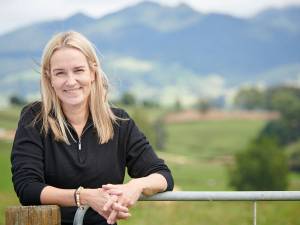
Minister of Conservation Hon Tama Potaka has appointed Susan O'Regan as Chair of the Queen Elizabeth II National Trust (QEII) for a three-year term.
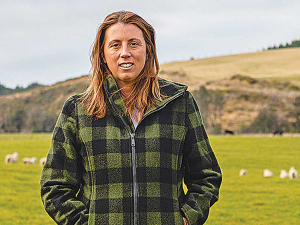
Red meat farmers are welcoming Labour’s plan to review the Emissions Trading Scheme and not to campaign on pricing agricultural emissions.
Where any worker in the kiwifruit industry is mistreated, we expect the authorities to take action.
Mid Canterbury Federated Farmers arable chair, Bevan Lill, said Beef + Lamb NZ data indicated that for the last six years, the average arable return on investment was about 0.8% while inflation ran about 4% - so the average arable farm was going backwards at about 3% a year.
Seed and grain companies share the concerns of arable farmers about the viability of their sector, says Seed and Grain New Zealand chief executive Dr Sarah Clark.
The New Zealand Institute of Forestry (NZIF) says unnecessary changes to New Zealand’s Emissions Trading Scheme (NZ ETS) will seriously erode investor confidence and result in significant reductions in forest planting rates.




OPINION: The same mainstream media muppets that brought you Jacindamania in 2017 have been flat out pimping for the Opportunities…
OPINION: Your old mate reckons the atrocious way farmers in the UK are treated by their lords and masters in…