
NZ-designed testing method unlocks healthy soil
A study arising from a partnership with Ravensdown, AgResearch and Ngāi Tahu Farming, has created a benchmark approach to testing the health of soils.




 increase font size
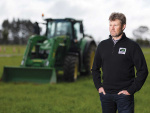
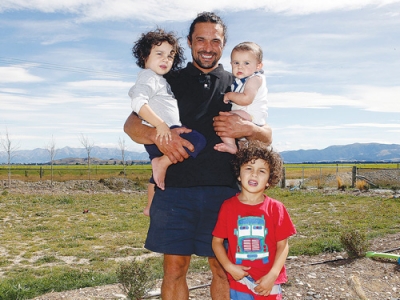 Ngai Tahu Farming’s Hemi Dawson, pictured here with his three sons, says it’s all for the next generation.
Hemi Dawson says Ngai Tahu Farming have to set the standard everyone aspires to because their mana is at stake.
He says Maori have to be the strongest voice for the environment; Ngai Tahu Farming must not contribute to the degradation of waterways. He believes this will change the general population's perception of farming and then they can engage the population so they can be part of the process.
On each farm there is a mana whenua working party involved in governance and they hold you accountable, Dawson said. This imposes stricter guidelines for Dawson than on many other farms.
Health and safety are prominent: all staff must wear hi-vis vests and everyday there is a start-up health and safety meeting on each farm.
The hapu also put conditions on how the farms operate; for instance, no palm kernel extract, no dead-cow holes, water use must be optimised and each farm must forge sustainability.
Dawson describes himself as an instinctive farmer; he keeps his eyes open and makes sure he has his finger on the pulse of his farm.
He manages 250 effective ha and milks 900 cows. His initiatives on the farm include planting 21,000 native trees and he has cut nitrogen use 100 units lower than the hapu stipulated.
Every dollar not spent adds to the bottom line, so Dawson tries to make the best of money spent. He says the requirement to satisfy iwi expectations is more of a challenge than would rise in a regional council because their fiercest critics come from within the tribe.
Rod Lamb joined Ngai Tahu Farming in July 2015 when the farm was fairly new, with 350 effective ha and 1050 cows. Lamb is not your normal farm manager: he had played a corporate 'game' before and run multiple farms. He joined Ngai Tahu Farming because it was the same, but different.
He enjoys being a mentor more than a manager; he doesn't put himself out there, and instead will push one of his workers out in front to challenge him. He enjoys passing on knowledge, making them learn and getting the staff to tell him what they are doing on the farm.
He is heavily involved in the Whenua Kura programme Ngai Tahu has set up as an agricultural school. The iwi recently bought the nearby Eyrewell lodge to house students.
A study arising from a partnership with Ravensdown, AgResearch and Ngāi Tahu Farming, has created a benchmark approach to testing the health of soils.
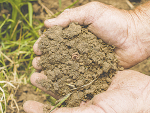
A study arising from a partnership with Ravensdown, AgResearch and Ngāi Tahu Farming, has created a benchmark approach to testing the health of soils.
What is expected to be the country's largest and most comprehensive regenerative agriculture trial is gearing up to take place in North Canterbury over the next seven years. Nigel Malthus reports...
A special ceremony was held in Taupo recently for the official signing of an agreement to transfer specific water quality monitoring functions to the Tūwharetoa Māori Trust Board.
A new state of the art accommodation facility for RSE or temporary overseas workers at a large Māori kiwifruit orchard in the Bay of Plenty has been opened by the Minister of Māori Development, Nanaia Mahuta.


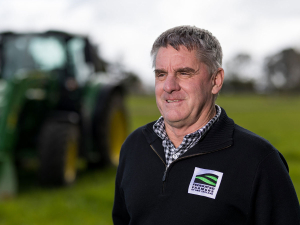
National’s pledge to introduce 19 new national standards shows the party is serious about getting Wellington out of farming, Federated Farmers says.
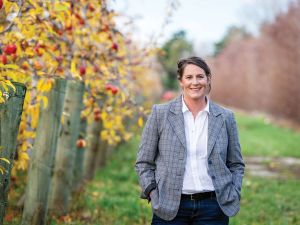
The National Party’s policies to make it easier to grow fresh vegetables, secure reliable water and energy and simplify farm planning are practical changes that will give growers the confidence to invest, according to Horticulture New Zealand (HortNZ).
Fonterra Co-operative Group chief financial officer Andrew Murray has resigned to take up a role outside the dairy giant.
A major move is about to get underway to improve the quality and viability of dairy beef and cattle in NZ.
Veterinarians say changes to the code of welfare for dairy cattle provides a positive foundation for improved cattle welfare across the country.
Today, 15 October, is the International Day of Rural Women, which recognises rural women’s contribution to farming, communities and the environment.



OPINION: The same mainstream media muppets that brought you Jacindamania in 2017 have been flat out pimping for the Opportunities…
OPINION: Your old mate reckons the atrocious way farmers in the UK are treated by their lords and masters in…




