OPINION: How do you keep a farming business viable?
In the UK farmers are derisking their businesses by scaling back food production. They're choosing alternatives with a more guaranteed income such as rewilding or growing crops for biofuels. The British Government has been warned by the National Farmers' Union that there are two factors at play - the weather and support.
Record rainfall this year has resulted in poor yields (21-32% decrease in comparison with 2023) in some crops. In combination with the 50% decrease in support payments (subsidies), the sector has been finding other ways to make an income. Barns have been turned into wedding venues, storage and offices. Farm cottages are B&Bs. And fields have been fenced for dog walking. One enterprising farmer calculates that a hectare of dog walking field can make more moneyin a week (fully booked at weekends and at least 50% booked during the week) than a hectare of wheat in a year.
The UK has over 69 million people. It also has 13.5 million dogs.
In contrast, New Zealand has just over 5 million people and 850,000 dogs - in a country slightly bigger than the UK.
Doggie walkie fields aren't going to be the answer for many farmers in New Zealand in terms of diversification of income.
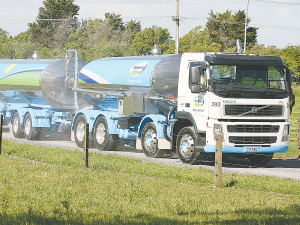
In the past, New Zealand de-risking has been through the development of co-operatives. In competing with the world for markets, farmers joined together in ever bigger groups to own processors (for milk and meat, for example) and suppliers (such as insurance and agrichemical companies).
Read More
These co-operatives have built up assets and services in a manner that has not generally been copied by non-co-operative companies. Further, the co-operatives fund research that benefits many aspects of the food chain.
The theory that a co-operative can find a better price, either selling or buying, than an individual farmer can achieve is supported by research. A report commissioned by MPI and published in 2021 stated that "farmers now retain about 26% more of the international price for milk than what would be expected based on the previous (prior to Fonterra) historical relationships between the New Zealand farmgate price and farmgate prices in other countries".
Similarly, a report commissioned by the UK Government in preparation for Brexit found that dairy prices in the EU were higher in the regions where co-ops had significant market share. Further, "where co-ops protect farm-gate prices, this benefits farmers across the sectors and regions concerned, not just co-op members".
This is apparent in the milk sector in New Zealand – Fonterra sets the milk price for private companies.
New Zealand has approximately 330 co-operatives, threequarters of them in the primary sector and most farmers are associated with more than one. This is in considerable contrast to the UK, where only half of all farmers belong to a co-operative.
Reasons given by UK farmers for not joining a co-operative included lower prices from independents and entrepreneurs.
The lower prices might work in the short term for a few, but society does not benefit as a whole. In particular, the social fabric created by co-operative families is absent in the community. In the longer term, UK co-operatives were almost twice as likely to survive their first five years than other companies, with 80% of co-operatives lasting even longer. Co-ops have also been more resilient through economic recessions.
Until recently, it would have been difficult to find a farmer in New Zealand that isn’t involved in a co-operative in some way. Increasingly, however, compressed margins and increased hours spent on paperwork and compliance are encouraging farmers to think of other options and business models.
To be strong any group requires enthusiastic membership involvement to create a convincing mandate to continue. From a strong membership, good governance enables positive outcomes.
It is something of an irony that the UK is suggesting increased membership in co-operatives to help farmers survive, at the very time that questions on value are being asked in New Zealand.
To stay ahead, New Zealand farmers wanting an improved outcome for sales of valuable food should read the research; getting involved in co-operatives is the way to add strength.
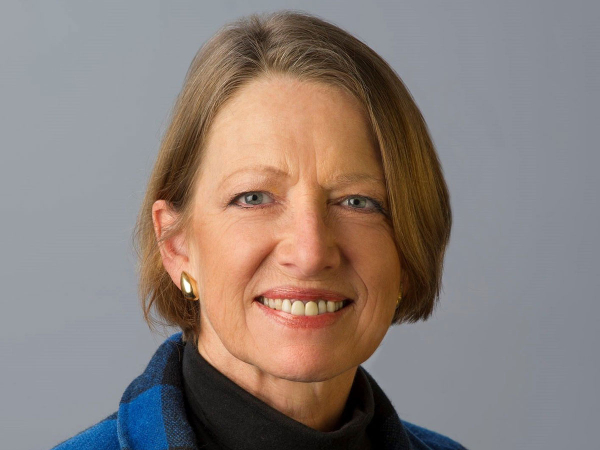
Dr Jacqueline Rowarth, Adjunct Professor Lincoln University, is on the board of directors of DairyNZ, Deer Industry NZ and Ravensdown. The farms in which she is involved have shares in six co-operatives.