Thursday, 29 September 2022 09:55

Editorial: About time!

Written by  Staff Reporters
The new National Policy Statement for Highly Productive Land (NPS-HPL) aims to protect NZ’s most productive land and provide security for both our domestic food supply and primary exports. The new National Policy Statement for Highly Productive Land (NPS-HPL) aims to protect NZ’s most productive land and provide security for both our domestic food supply and primary exports.

OPINION: Finally it looks like the Government has fashioned new regulations for the primary sector that will actually be welcomed.

Until now, both Environment Minister David Parker and Agriculture Minister Damien O'Connor have a poor record of imposing rules and regulations on the sector that have proven to be unworkable, complicated and poorly communicated. One only has to look at their attempts at introducing and implementing the incoherent freshwater regulations or winter grazing rules as prime examples of this.

However, recent moves by the Government - under O'Connor and Parker's direction - to introduce new regulations to protect highly productive land used for growing vegetables and fruit appear to be on the money. The difference this time is that these regulations have come about after proper, comprehensive consultation with and working alongside the sector, instead of deciding from on high that new rules need to be imposed.

As HortNZ chair Barry O'Neil says, the sector is pleased with the plans as it is something it has been advocating for some time.

It is clear that something needed to be done to protect valuable, productive soil from being lost to housing developments and ever expanding urban sprawl. During the past 20 years, about 35,000 hectares of highly productive land has been carved up for urban or rural residential development, while 170,000 hectares has been converted to lifestyle blocks.

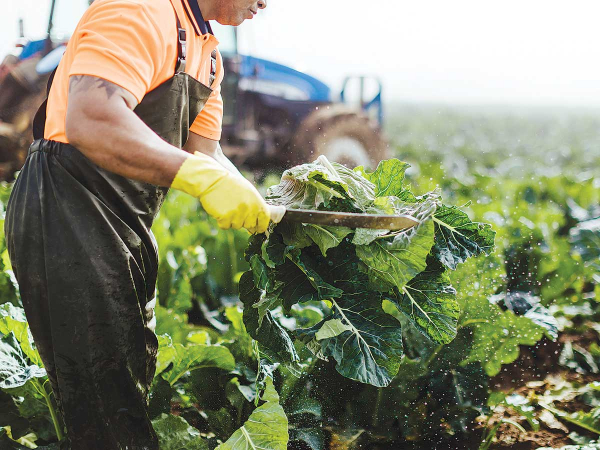
The new National Policy Statement for Highly Productive Land (NPS-HPL) aims to protect NZ's most productive land and provide security for both our domestic food supply and primary exports. Under the new NPS, councils will be required to identify, map and manage highly productive land to ensure it's available for growing vegetables, fruit and other primary production, now and into the future.

These new regulations are a good move and long overdue. Now, how about those freshwater and winter grazing rules?
More like this

Editorial: Marlborough's viticulture evolution

OPINION: When I moved to Marlborough two decades ago, I found countless lines of tidy vines, neatly mowed and carefully sprayed, with diligent conventional practices interspersed with the odd organic or cover-cropping outlier, like Te Whare Ra.

Editorial: Getting RMA settings right

OPINION: The Government has been seeking industry feedback on its proposed amendments to a range of Resource Management Act (RMA) national direction instruments.

Editorial: Agri's mojo is back

OPINION: Good times are coming back for the primary industries. From sentiment expressed at Fieldays to the latest rural confidence survey results, all indicate farmer confidence at a near-record high.

Featured

Rural health programme inspires new optometry graduate

Grace Su, a recent optometry graduate from the University of Auckland, is moving to Tauranga to start work in a practice where she worked while participating in the university's Rural Health Interprofessional Programme (RHIP).

National

India FTA negotiations end

A landmark moment for New Zealand. That's how  Prime Minister Christopher Luxon describes the conclusion of negotiations for an India-New…

Machinery & Products

» Latest Print Issues Online

The Hound

Yes, Minister!

OPINION: The release of the Natural Environment Bill and Planning Bill to replace the Resource Management Act is a red-letter day…

Two-legged pests

OPINION: Federated Farmers has launched a new campaign, swapping ‘The Twelve Days of Christmas’ for ‘The Twelve Pests of Christmas’ to…

» Connect with Rural News

» eNewsletter

Subscribe to our weekly newsletter