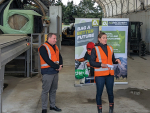
New Rural Recycling Scheme to Replace Voluntary Farm Plastics Programmes by 2027
Environment Minister Nicola Grigg has announced details of a new rural plastics recycling scheme.




 increase font size
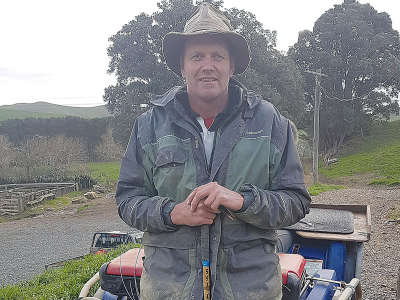 John Jackson.
OPINION: ‘Policy on the fly’ has never been a good option and our Government appears to be combining this with ideology at the forefront and common sense trailing behind.
The reality is that the global warming ‘bull’ has already escaped from the yards into the china shop and we need to get it back in the yards, whilst incurring as little damage as possible.
The planning of this manoeuvring must not be rushed. It is, after all, a long term project.
Much has been written about the idiocy of directly taxing at farm level purely on the quantity of methane emissions and N fertiliser only to have a less efficient producer pick up our shortfall elsewhere in the world.
Hopefully those that govern us – and those that represent our industries – can be convinced that haste is not the issue here, but that direction is.
Effective policy with regard to carbon dioxide is not to remove your most efficient hybrid cars from the road is it?
Therefore, let’s slow down, take a deep breath, and have some sense on methane and the potential removal of a large quantity of New Zealand’s agricultural produce from world trade as a direct result of the proposed tax.
Thinking clearly on ‘cause and effect’ both within this country and internationally, the aim should not be to exacerbate this global warming effect by rash implementation of the wrong policy.
The correct policy here would be to have the greater good of the world in mind.
While we are in an enviable position, we cannot rest on our laurels. In the interests of further improving our efficiency we must continue and – if possible – accelerate the good work now being done to find effective mitigation techniques and solutions.
Take note of what we have learnt over time on the effectiveness of techniques such as riparian planting and wetland development on mitigating sediment, phosphorus and nitrogen losses within our on farm systems. The science and techniques are now proven. However, it has been a 10-year-plus process from development to measurement.
We already hold a position in the top quartile of efficiency for pastoral production. We have been blessed with a climate that generally aids farming and we have developed systems to utilise this.
This is our country’s natural advantage, and we have every right to be proud of that, to utilise it to our own benefit and to the benefit of the world.
Our agricultural industry representatives need to be strong in their resolve over GHGs.
If you were to believe the hype from government officials, the speed at which Beef + Lamb NZ and DairyNZ appeared to have acquiesced in agreement with Government ideology has surprised and disappointed most farmers.
I am told by industry representatives that this is not so. I have yet to be convinced and would argue strongly that any concession is on ideology rather than in the interests of cooling the world.
Greenhouse gas emissions are a global problem. There is no reason to ‘lead the world’ if we lead them in the wrong direction. Every country has the responsibility to assess their needs on an individual basis, but they should make decisions in the best interests of the world.
From an agricultural perspective, countries that emit the greatest footprint per kg of product need to be at the forefront of such innovation and mitigation. After all theirs is the most pressing need.
NZ might be the first in the world to see the sun, but for the world’s sake it needs to be amongst the last to make significant changes to the nature of its pastoral agriculture.
• John Jackson completed a Bachelor of Agricultural Commerce at Lincoln University and read social studies at Oxford (philosophy, politics and economics). He farms sheep and beef at Te Akau.
Environment Minister Nicola Grigg has announced details of a new rural plastics recycling scheme.

For the first time in a quarter of a century, Federated Farmers has something positive to say about the Labour Party’s climate change policy leading into a general election.
The Ballance Farm Environment Awards are coming to the West Coast of the South Island.
Climate, nature and animal wellbeing make up Fonterra's refreshed sustainability roadmap released last week.
There's been widespread support from the primary sector for the Government's announcement on changes to freshwater farm plans that come under the Natural Environment Bill, which is now set to replace the existing RMA.


High country stations, mixed sheep and beef farms, Māori-owned farms, corporates and family operations are among the nine commercial farms taking part in the Livestock Innovation Farming Transformation programme, known as LIFT.
OPINION: New health and safety guidance unveiled by the Government recently provides farmers greater certainty about what is expected of them when managing risks on farm.
The National Animal Welfare Advisory Committee (NAWAC) is seeking public feedback on proposed changes to the Code of Welfare for Rodeos.
A New Zealand initiative supporting farmers to restore the health of grazing landscapes has received international backing through the Regenerative Fund for Nature, a global collaborative fund supporting regenerative agriculture and the communities that produce natural fibres for the fashion industry.
Combine premium New Zealand products, blend in a family ritual and what do you get? A world-class functional drink.
Entries are now open across eleven regions for the 2027 New Zealand Dairy Industry Awards (NZDIA).



OPINION: The same mainstream media muppets that brought you Jacindamania in 2017 have been flat out pimping for the Opportunities…
OPINION: Your old mate reckons the atrocious way farmers in the UK are treated by their lords and masters in…




