
Rural Contractors Urged to Renegotiate Contracts as Fuel Prices Surge
Rural contractors are getting guidance on how to deal with recent rising fuel prices.




 increase font size
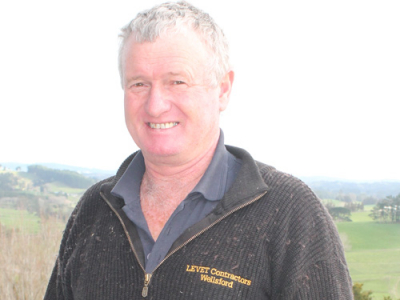 Steve Levet.
Despite wet weather in many regions, the outlook is encouraging and we are seeing plenty of good growth around the country as rural contractors start cranking up for their busy season.
Where I am based in Northland, the ground is wetter now than any time during the winter and if this continues ground work is going to be well behind; we have even had to spray out paddocks that are too wet to get on.
However, according to NIWA’s latest weather outlook, this year’s spring looks set to be a good one. There is no mention of dry or drought, in stark contrast to this time last year when the country was readying itself for a 50-year-record drought.
At the risk of relying too much on the weather forecaster (they say weather forecasters exist only to make economists look good!), I’ll relay NIWA’s prediction that the North Island is likely to have warmer-than-average temperatures through to the end of December, and rainfall is likely to be normal to above-normal and soil moisture levels likely normal to above-normal for the whole island.
Meanwhile, reports from the South Island also show this spring has been good so far. Only a month ago there was talk of another dry spring, but this has all but disappeared. The good news is that the drought-stricken regions of North Canterbury and Marlborough have also benefited and feed levels in these regions is recovering.
As a farmers and contractors we couldn’t ask for a better spring outlook. These conditions, if they prove accurate (note the qualifier), will take a lot of stress out of farming through summer this year. And they will give many farmers the opportunity to top up supplementary feed supplies, much of which got cleaned out during the autumn.
Meanwhile, speaking of economists, there are also brighter forecasts for many on commodity prices.
According to Rabobank’s latest Dairy Quarterly report, dairy export surpluses are expected to reduce by 3.4 million tonnes year-on-year – more than at any time since the global financial crisis. The bank says this comes at a time when dairy demand in domestic markets has remained firm and with dairy farmers struggling to grow production and should result in farmgate prices rising in most export markets. Rabobank dairy analyst Emma Higgins notes while the recent GDT dipped by 3% it is still up 21% for the year to date.
Currently lamb schedules are sharp, as more companies reflect the demand for Christmas chilled meat in a short-supply market; some have been offering supply and quality premiums to attract numbers. However, there are warnings these price premiums may only last until the sea freight deadline of the end of October for the EU/UK Christmas and Chinese new year trade.
Beef remains strong, as the prime market looked to fill the gaps opened in the North Asian market by shortages out of Australia. But with the first shipments of Brazilian beef hitting the US market, analysts are uncertain how it will influence the market, though local prime steers are still selling well.
So, things are looking positive, economically and climatically, for the agricultural sector -- good news for farmers and contractors. Long may it continue.
• Wellsford-based agricultural contractor Steve Levet is the president of the Rural Contractors New Zealand (RCNZ).
Rural contractors are getting guidance on how to deal with recent rising fuel prices.

Rural contractors will be able to play a role in the revamped agricultural plastic recycling scheme with new regulations due for Cabinet signoff before this year’s election.
Rural Contractors NZ says members are frustrated at having to work through more layers to get visas approved for skilled seasonal machinery operators ahead of the imminent season start. Andrew Olsen comments.
Rural contractors deserve to be listened to on safety issues created by new roading developments which don’t allow motorists to pass slow-moving vehicles, says Associate Agriculture Minister Andrew Hoggard.
When the new National-led government is finally formed there will be a long list waiting for it to action from the primary industries sector.



The potato industry is celebrating the success of two rising stars - James Blair, the 2026 Young Grower of the Year and runner-up and innovation award winner, Amber Davy.
Twenty-eight emerging leaders from across the horticulture sector spent two days last month learning valuable skills and connecting with industry experts.
There are five entrants in this year’s Young Horticulturist of the Year, competing in a series of technical, practical, business and leadership challenges.
A seasoned horticulturist has been appointed to deliver the Apple Action Plan, a key initiative of the India-New Zealand Free Trade Agreement.
New Zealand's citrus growers have been told to compete on the value built into their fruit rather than the volume they grow.
Hawke's Bay fruit growers are being reminded of the need to prepare for whatever the El Niño weather system may bring in the coming months.





OPINION: The same mainstream media muppets that brought you Jacindamania in 2017 have been flat out pimping for the Opportunities…
OPINION: Your old mate reckons the atrocious way farmers in the UK are treated by their lords and masters in…




