MPI cuts 391 jobs
The Ministry for Primary Industries (MPI) has informed staff it will cut 391 jobs following a consultation period.




 increase font size
 The decision has huge implications for future biosecurity outbreaks.
The recent High Court ruling that the Crown was negligent and breached its duty of care to kiwifruit growers affected by the damaging Psa disease a decade ago has huge implications for future biosecurity outbreaks.
While the Government has yet to decide if it will appeal the ruling, if it sticks it will be precedent-setting.
Growers who joined the class action argued that the former Ministry of Agriculture (now Ministry for Primary Industries) had allowed Te Puke company Kiwi Pollen to import kiwifruit pollen for the first time in April 2007 through to 2010. They argued the officials should have properly analysed the risk from imports, given that kiwifruit pollen had not been brought into New Zealand before and officials had failed to inform the kiwifruit industry about the imports.
Justice Jillian Mallon agreed with the complainants and ruled that MAF owed a duty of care to kiwifruit growers because it had responsibility for controlling what goods could be imported into NZ. She ruled that MAF had breached its duty of care in its decision on whether to grant import permits for kiwifruit pollen.
Justice Mallon also ruled that the claimants had proven on the balance of probability that the consignment of anthers containing pollen was the cause of the outbreak.
As Lincoln University senior lecturer in agribusiness Nic Lees says, this means MPI can be liable for its decisions on importation of any product that may have biosecurity risks.
“In the past MPI has done risk assessments on importing products, but the risk of a biosecurity failure has rested with the industry not MPI. This fundamentally changes that. Now MPI (and by proxy the government) is legally liable for a biosecurity failure.”
The High Court decision is contained in a 500-page document that traverses events dating back 12 years -- pre-dating the establishment of MPI. Interestingly, it also gives the lie to the current Government’s reaction to the ruling -- putting all the blame for the Psa outbreak on the previous administration. The allegedly infected imports first came into NZ in April 2007 during the previous Labour/NZ First government’s watch.
However, petty finger-pointing by politicians will soon mean nothing if this court ruling holds because governments of whatever political colour could be confronted with more hefty compensation claims for current and future biosecurity breaches.
Precedent setting indeed.
The Ministry for Primary Industries (MPI) has informed staff it will cut 391 jobs following a consultation period.

Despite experiencing the PSA outbreak first-hand growing up, Animal and Plant Health scholarship winner Sarah Wilson says deciding to study agribusiness was the best decision she could make.
A long running legal dispute between the Crown (MPI) and a group of kiwifruit growers over the incursion of kiwifruit vine disease Psa has been settled out of court.
The experience of PSA – and the way Italy and China dealt with Covid-19 – shaped how Trevelyans Packhouse proactively manages their way through the Covid pandemic.
The Crown will appeal the High Court’s decision that the government was negligent in allowing kiwifruit vine-killing disease Psa into the country.


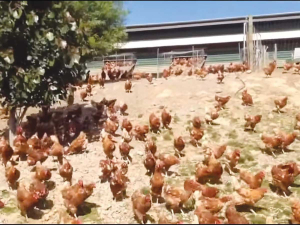
Mainland Poultry has confirmed new ownership of its vertically integrated agribusiness with Pacific Equity Partners Gateway (PEP Gateway) now joining current shareholders Navis.

The recently published State of the Industry -Tractors and Machinery 2025 from the Australian Tractor and Machinery Association (TMA), the equivalent of New Zealand’s TAMA, gives an interesting perspective of the industry.
Strong competition and tightening supply have seen wool reach its highest prices paid at auction since 2011.
The Government is funding a feasibility study to investigate what would be required for a successful farmer-led purchase of the McCain Foods' vegetable processing site in Hastings.
A young man just five years out of his Lincoln University degree already has his foot in the door of farm ownership, as equity manager of a large new dairy conversion now taking shape in Mid- Canterbury.
Visitors to the LIC stand at this year’s Fieldays can expect practical farm conversations, specialist drop-in sessions and exclusive shareholder events.





OPINION: The old saying 'a new broom sweeps clean' doesn't always hold up, if you ask the Hound.
OPINION: This old mutt went to school to eat his lunch, but still knows the future of the country, and…