Where Is The Honesty Among Our Representatives?
OPINION: A founding principle of Groundswell NZ is that farmers, and people generally, should be provided with full and accurate information about regulations that directly affect them.




 increase font size
 Jamie McFadden
OPINION: Having attended the webinars, meetings and reading the information, I am none the wiser as to why the world's most emissions efficient farmers are being taxed for emissions and by how much.
It defies logic for a government to implement policies that will reduce the amount of food producing land in a country that is leading the world in sustainable food production.
Recently the Government decided to put agriculture into the Emissions Trading Scheme (ETS) and farmers would pay an emissions tax. However, our industry leaders offered to partner with the Government to find a nicer way than the ETS to emissions tax farmers. Thus, the He Waka Eke Noa (HWEN) partnership was born.
The purpose of HWEN is unclear. If the aim was to reduce global emissions, then a blunt tax on NZ farmers would not see the light of day. The official HWEN consultation material states that all three emissions tax options (including the ETS) will have a less than 1% impact on reducing emissions and this is not even taking all farmers into account.
The publicity also states the purpose of HWEN was to come up with an emissions tax option that was better than the ETS. Seems it is nothing to do with being visionary, achieving environmental outcomes or effective, efficient policy - it is mainly about how to emissions tax farmers in the nicest way possible.
This would explain the sales pitch, which was to make farmers so fearful of the dreaded ETS that they would choose an almost equally flawed option simply on the grounds of it being sold as less repugnant.
To seal the HWEN emissions tax deal, some sweeteners have been thrown in.
The first is that the two HWEN options allow farming representatives to be at the "advisory board" table with the Government. It is unclear how the advisory body would be appointed and how decisions would be made.
There is no guarantee that the HWEN options are any safer from government dictate than the ETS. The problem with this "we must be at the table" thinking is that farmers are always on the menu.
If we look back on the last few years, the biggest turnaround we got from the Government was when Southland Federated Farmers stepped away from the table on Freshwater winter grazing rules and called for farmers to not apply for consents. There is a lesson here and it is naïve to think that always being at the table is the most effective approach.
The second sweetener is the promise of sequestration credits. However, these have been massively overstated. For example, native forest existing prior to 2008, farmers can only claim for the additional sequestration resulting from 'active management'. Imagine the bean counters trying work that one out - at cost to the farmer.
In another example, virtually none of the hundreds of riparian native planting projects we have undertaken for farmers over the past 20 years are eligible for HWEN credits.
In summary, I don't ever recall in my 25 years of submission processes not knowing what a proposal was going to cost me.
There is no cost benefit or economic analysis, and we have no idea what the administration cost to farmers will be.
What is the solution? I am part of the Groundswell team who are developing a new approach to environmental issues. We are seeking a focus on environmental outcome and actions on the ground tailored to each individual farm and catchment. Our proposal takes an integrated approach to addressing all environmental issues, including emissions.
Much of what we are proposing is reflective of the direction of the many catchment and landcare groups, and individual effort already happening on the ground.
We encourage everyone to lobby politicians and industry leaders to advocate for practical, workable policies rather than acceding to government dictates. One thing is clear - if the goal is environmental outcomes and reducing global emissions, then there is no place for the current HWEN or ETS emissions tax options.
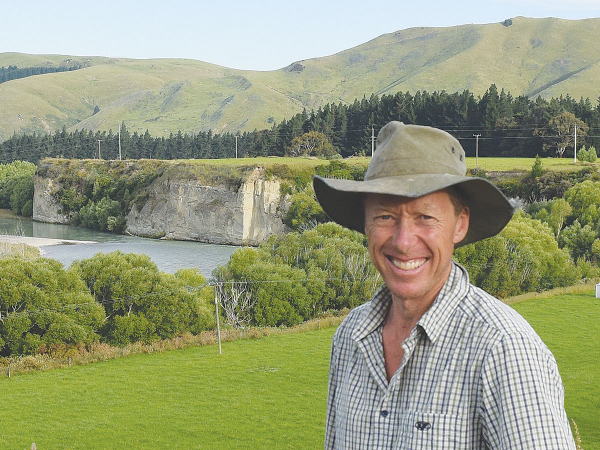
Jamie McFadden chairman of North Canterbury based Rural Advocacy Network and spokesman for Groundswell.
OPINION: A founding principle of Groundswell NZ is that farmers, and people generally, should be provided with full and accurate information about regulations that directly affect them.
Climate, nature and animal wellbeing make up Fonterra's refreshed sustainability roadmap released last week.
Ravensdown has reported a net profit before tax and rebate of $50.1 million for the year ended 31 May 2026.
Canterbury farmer Andy Macfarlane has been appointed to the board of AgriZeroNZ, the public-private partnership designed to accelerate the development and deployment of emissions reduction tools for New Zealand farmers.
With a third of NZ dairy farmers still running outdated refrigerants, the country's largest farm refrigeration company says the opportunity for quick, meaningful emissions gains has never been clearer.


Dairy processors are ready to further boost New Zealand’s export earnings but want the incoming government to match their ambition with good policy.
Massey University is best placed to solve the “problems” facing the dairy industry, says vice chancellor, Pierre Venter.
Synlait's longest serving employee – a man who joined the Canterbury-based milk processor even before it began processing milk – is now its newest executive.
A dairy industry leader believes eradicating the common and costly disease, Bovine Viral Diarrhoea (BVD) is within reach.
A farmgate milk price of $10/kgMS this season is firming up as milk powder prices soar and the New Zealand dollar weakens.
Federated Farmers has welcomed new rural policies released by ACT, saying they align closely with its own election priorities.



OPINION: The same mainstream media muppets that brought you Jacindamania in 2017 have been flat out pimping for the Opportunities…
OPINION: Your old mate reckons the atrocious way farmers in the UK are treated by their lords and masters in…




