Bailey's skill to speak 'plain language'
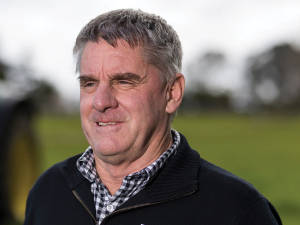
Tributes flew last week at the official farewell in Wellington for the retiring chair of Dairy Companies Association of New Zealand, Malcolm Bailey.




 increase font size
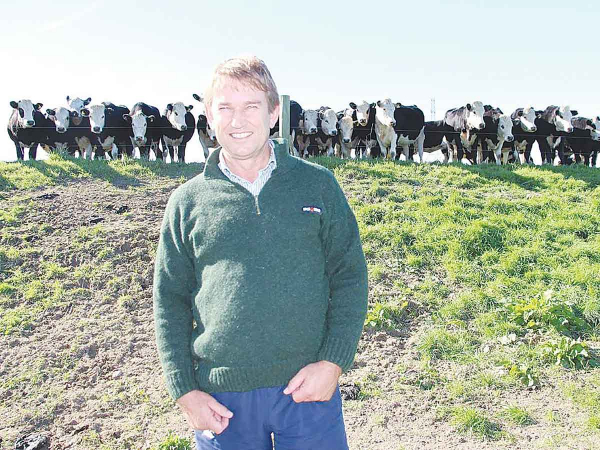 Malcolm Bailey says the farming region of Manawatū, Rangitikei and Horowhenua is a significant part of primary industry in New Zealand.
OPINION: The farming region of Manawatū, Rangitikei and Horowhenua - with Palmerston North as the key city - is a significant part of the primary industries in New Zealand.
We have a large chunks of NZ's elite soils. We have the full range of farming and horticultural operations: Asparagus to zucchinis and most things in between. Our strong hill country is home to a variety of livestock, as well as mānuka honey and carbon farming.
The central geographic location of Palmerston North means it is a natural freight and logistics hub for a wide range of industries and this supports the food production and distribution of our region. We are also a hub for livestock trading with the largest sale yards in New Zealand located in Feilding.
We have a world class agri-food/ agritech/ agribusiness hub built around Massey University.
This encompasses the major Crown Research Institutes, Riddet Institutes, Fonterra Research and FoodHQ. We also have a cluster of venture capital activity encompassing The Factory, Sprout and Finistere Ventures.
On the back of this research and development capability, we have a number of agritech companies such as Biolumic, Levno and Greentech Robotics, as well as a strong group of more traditional manufacturing businesses.
The highly qualified people we have working in this leading cluster help push us to top ranking in New Zealand for PhDs relative to the general population. We also have a strong arts community and in our midst many of New Zealand's leading artists.
We embrace science here and recognise that the gene technologies that developed Covid vaccines are also able to solve a lot of challenges we face in primary production - such as reducing climate gas emissions, improving animal health and improving water quality.
This region has outperformed the rest of New Zealand during the tough economic times caused by Covid. A key reason for this is the strength of our primary sector economy. A small but growing part of the rural economy here is tourism.
Most urban people are now quite disconnected from farming and food production, but many want to enjoy farm experiences as well as visit attractions like the Feilding sale yards. Many of these people are also attracted to the region's outdoor activities, such as trail riding and tramping.
While opportunities such as the CD Field Days to showcase the region have been curtailed by Covid, the ongoing strength and development of this region's primary sector economy is something to be proud of.
Malcolm Bailey is a Manawatu farmer and company director.
Tributes flew last week at the official farewell in Wellington for the retiring chair of Dairy Companies Association of New Zealand, Malcolm Bailey.
Malcolm Bailey grew up on a dairy farm near the township of Feilding in the lower North Island.
The man who has led the Dairy Companies Association of NZ (DCANZ) for the past 15 years believes the dairy sector does not get enough recognition for what it does for NZ.
Aged 64, Malcolm Bailey says farewell after a stellar career in the dairy industry but his knowledge, innovation and drive will not be lost to the wider primary sector.
Malcolm Bailey says one of the difficult things he's had to overcome in his tenure with DCANZ is getting traction in the media to point out all the initiatives and works that have been done by the industry in the face of public criticism.

Federated Farmers has welcomed new rural policies released by ACT, saying they align closely with its own election priorities.
Rural Contractors NZ says proposed changes to land transport rules for agricultural vehicles are a welcome response by the Government to out of date regulations which have seen members hit with huge fines.
Alliance is calling for final applications for its 2027 Graduate Programme, with applications closing on Sunday 25 October.
Decades piloting planes has ensured vet and farmer David Hayes is focused on safety. So, after a serious accident while welding on farm, he is sharing his experience so others can learn from it.
Canterbury milk processor, Synlait Milk has confirmed Leon Fung as its chief executive officer.
OPINION: Making it easier to collect rainwater and use it to grow crops and livestock is a no brainer.

OPINION: The same mainstream media muppets that brought you Jacindamania in 2017 have been flat out pimping for the Opportunities…
OPINION: Your old mate reckons the atrocious way farmers in the UK are treated by their lords and masters in…




