Milk Powder Prices Prop Up Farmgate Milk Price
Milk powder prices are keeping farmgate prices up, helping processors offset the dip in milk fat prices.




 increase font size
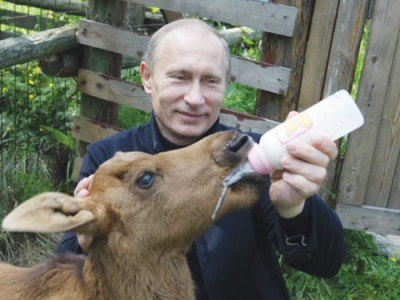 Vladimir Putin’s ban on European dairy products has caused an oversupply.
Global dairy commodity prices have risen sharply in recent months, as indicated by GlobalDairyTrade (GDT) auction results and European spot pricing.
Key drivers of this lift are the a deteriorating milk production outlook for New Zealand and reduced GDT offer volumes, but the speculation is that these alone may be insufficient for a sustained recovery.
Hence it was not totally unexpected when the GDT Price Index fell slightly in late October, signalling the possible end of additional demand brought on by the bottoming of the price cycle.
Ultimately needed to see prices meet or exceed 'average' levels of recent years is market rebalancing -- elusive for much of the past 18 months as sluggish demand has met persistent supply growth from the biggest exporters.
The removal of milk quotas and a reduction in sales opportunities because of the Russian import embargo have placed Europe at the centre of the oversupply facing dairy markets.
Although European milk production has not grown as rapidly as some had expected in the post-quota period, it has been sufficient to weigh on global markets. Europe's growth of 1.1% (976 million litres to July 2015) represented roughly half the total increase from the world's four major exporting regions for that period.
With a weaker currency and mountains of product to sell, European exporters have competed aggressively on price in traditionally Oceania-dominated demand regions such as Southeast Asia.
There has been no wholesale slowdown in production growth in Europe but Oceania is a different story. Australian production is up 3.1% season-to-date, although dry conditions are causing growth to slow.
Of particular note at the regional level, warnings of a sharp contraction in NZ's milk intakes are beginning to be borne out. September numbers from the Dairy Companies Association of NZ reveal a 7.5% fall, relative to September 2014.
Fonterra has reported a milk flow peak about 4% lower than last season, with some year-on-year recovery evident during October. High culling partly explains the lower production; the weather during the spring peak has so far been favourable.
A full season decline of up to 10% has been flagged by industry observers; Fonterra is forecasting its own full season intakes will be 5% below last year.
In the US a milk production response is evident also, albeit less dramatic. Growth is at its slowest since December 2013: September output was 0.4% higher than the same time last year (7.5 billion litres), compared to a 1.4% increase year-to-date.
Growth has come from a strong domestic market helping to insulate the US dairy industry from global price movements. This and a stronger US dollar caused exports to fall sharply. But rising global markets have brought domestic and international prices closer together, hence US export offers are increasing.
Consequently, while Oceania supply-side issues are beginning to pressure the prices, this is being mitigated by European and increasingly US competition, with
the continuation of northern hemisphere production growth likely to provide some comfort to buyers who don't specifically require Oceania product.
While prices seem to be finding support at current levels, further short term upside appears limited and a period of range-bound trading around the current level is likely.
Production trends during the southern hemisphere spring peak will help provide further direction, but a supply response in the northern hemisphere and a broader demand recovery are what the market needs. Expectations are for that to happen mid 2016 at the earliest.
• John Droppert and Amy Bellhouse are Dairy Australia industry analysts.
Milk powder prices are keeping farmgate prices up, helping processors offset the dip in milk fat prices.
OPINION: With 10,500 dairy farms, New Zealand continues to punch above its weight around the world.
A milk glut around the world shows no sign of easing, putting downward pressure on farmgate milk prices for the next few months.
Fonterra has reduced its forecast 2026/27 Farmgate Milk Price.
New Zealand dairy farmers are set to be the first in the world to receive access to a new digital physical milk pricing tool that enables them to fix the price for their physical milk.



LIC shareholders have elected a new North Island representative to the co-operative's Board, along with five representatives to its Shareholder Reference Group (SRG), following the company's Annual Meeting held in Invercargill.
Farmers across parts of Southland and South Otago are continuing to deal with difficult conditions after a prolonged run of wet weather, with pressure building around feed supply, stock management, pasture damage, farm infrastructure and everyday workloads.
Federated Farmers says it welcomes Labour's commitment to reviewing the Sharemilking Agreements Act, calling on other major parties to do the same.
For Canterbury dairy farmers Sian Meijer and Rick Wobben, wearable technology has become one of their most valuable on-farm tools - helping manage 1850 cows across an expansive, high-performing dairy operation while improving efficiency, mating outcomes and day-to-day decision making.
Fonterra has unveiled its annual results for the 2026 financial year, posting $27 billion in revenue and close to $20 billion returned to New Zealand farmer owners and unit holders.
The first major update to the Dairy Cattle Code of Welfare in more than a decade has been released, marking what DairyNZ describes as an important step in ensuring animal welfare standards continue to evolve alongside scientific evidence and on-farm realities.


OPINION: It seems Canterbury processor Synlait is still in the doldrums.
OPINION: Get offside with New Zealand First leader Winston Peters at your own peril.




