Diplomatic Incident
OPINION: Your old mate hears an international incident is threatening to blow up the long-standing Anzac alliance as Kiwis and Aussies argue over who wants new Australian resident and former NZ Prime Minister Jacinda Ardern.




 increase font size
 Tyran Jones
The China Australia Free Trade Agreement was delivered in 2014. What does 2015 hold for the Australian dairy industry?
The China FTA is not the pot of gold, but the opportunity for our exporters to continue apace their innovation path, developing new higher value, sought after dairy products.
The Chinese still do not fully trust their local supply and they want Australian product.
The scale of their market however is beyond our imagination.
The great hope is that product innovation, being a reliable supplier and fairer access to markets will reduce (not eliminate) our exposure to market volatility.
So, how do we work together to ensure our industry has the ability to capture the benefits of product, market and farm innovation to produce more milk for this and other rapidly developing dairy markets?
I could be provocative and suggest that processors embraced farmer representation when it came to lobbying for a meaningful China FTA for dairy, because they could see something tangible that would make them more profitable with little additional effort.
However, the shoe seems to be on the other foot when we start talking about production technologies – including high energy GM ryegrass, and animal health technologies - which might make milk production more efficient and profitable.
They, and some industry organisations, are stepping away from such technologies rather than working with us to design a strategy to build social capital among our consumers and communities to ensure we have access to new tools.
Access to new tools and technologies requires effort on behalf of processors, farmers and our organisations.
It is times like these we need to remind people in leadership roles where ‘their’ money is coming from.
If they are good at marketing and have established strong customer relationships they should be able to manage any technological production challenges within the market.
If we are going to be denied access to new tools, where will our milk production growth come from?
There are several production technologies on the horizon.
It is in our interests to look at the science, to look at the evidence and to take a new look at how these innovations might be applied to Australian dairy production systems to service this increased demand for dairy.
We must be wary of the stereotyped responses and scaremongering, whether it is about animal welfare or market acceptance of production techniques.
Production technologies can be adapted in positive and innovative ways with comprehensive support to generate the best possible outcome for individual farmers and for the industry.
All we need is the will to succeed.
Without this, there will be no new milk and others will dictate what we can and cannot do.
We must have a dialogue with our customers and communities to ensure we have access to these technologies.
We said in 2014, through the process of writing three Free Trade Agreements, that the Australian dairy industry is “open for business”.
We saw overwhelming interest in the Australian Dairy Farm Investment Forum hosted by Dairy Australia.
We cannot truly, hand on heart, say we are open for business if we are shutting down access to science and innovation, new tools and technologies in our dairy production systems.
We cannot say “we want your money” while on the other hand saying “we won’t allow production science, technology and innovation”.
If we shut down access to farm side innovation, in a very short time, global companies will ignore us and Australia will become known as the country where it is too hard to do business - we will have no access to new technologies, regardless of whether they become common place in the rest of the world’s dairy regions.
Those in industry leadership positions must take up the cause of long term competitive, profitable milk production.
They must advocate on behalf of farmers, engage in a meaningful way with customers and the community; to develop relationships and trust that the rigour behind our production, regulatory and food safety systems are impeccable.
Every single dairy farmer must also take up this challenge. Without this, the alternative will be a continuation of the stagnation we have seen over the last decade and a gradual erosion of Australian dairy’s global competitiveness.
The China FTA, along with other trade agreements complete and in-the-pipeline provide tangible prospects, but the onus is on the industry to truly ‘open the door’ to ensure we embrace the full opportunity.
• Tyran Jones is a director of Australian Dairy Farmers (ADF) and the Australian Dairy Industry Council (ADIC). He is the former president of the United Dairyfarmers of Victoria (UDV).
OPINION: Your old mate hears an international incident is threatening to blow up the long-standing Anzac alliance as Kiwis and Aussies argue over who wants new Australian resident and former NZ Prime Minister Jacinda Ardern.
OPINION: Your old mate hears that at a recent China Business Summit, PM Christopher Luxon delivered a none-too-subtle "could try harder" report card on the red meat industry regarding its exports to China - particularly when compared to Australia.
More Australian states are embracing virtual fencing technology, opening growth opportunities for Kiwi companies like Halter.
Fonterra says its ongoing legal battle with Australian processor Bega Cheese won’t change its divestment plans.
Farmers in the Australian state of New South Wales will soon be able to use virtual fencing and herding technology to boost farm productivity.


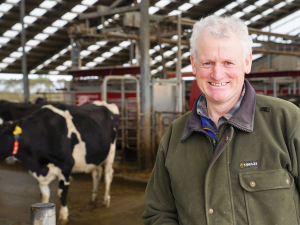
In Dacre, near Invercargill in New Zealand’s South Island, Bruce Dinnington is running a dairy operation unlike any other.

A free online platform aggregating governance vacancies across rural and regional New Zealand has been launched.
Environment Minister Nicola Grigg has announced details of a new rural plastics recycling scheme.
Agricultural drone operators say that a government decision to allow lower-risk drone work without certification won’t lower standards but drive innovation and efficiency.
OPINION: Warning bells are ringing in the arable sector.
Farmgate lamb prices are down by 8%, beef cattle by 4.5% and farm expenditure up by 4.2%.


OPINION: It seems Canterbury processor Synlait is still in the doldrums.
OPINION: Get offside with New Zealand First leader Winston Peters at your own peril.




