Sharemilkers Aaron and Marcia Flay Buy Their First Farm
After almost two decades of sharemilking, saving and building equity, Aaron and Marcia Flay this year realised their long-held dream of settling on their first dairy farm.




 increase font size
 Ashburton sharemilkers Sara and Stuart Russell.
Ashburton sharemilkers Sara and Stuart Russell have always tried to make their dairy operation as sustainable as possible.
Entering the Canterbury Ballance Farm Environment Awards helped them confirm they were on the right track.
“We wanted to see how our business compared with others, and to find out what we could do to improve,” says Sara.
Sara and Stuart, a former builder, 50:50 sharemilk 700 cows on 252ha (eff) south of Ashburton. The farm is owned by her parents Rick and Diana Bourke via the Bourke family trust.
The Russells entered the 2015 Canterbury Ballance Farm Environment Awards (BFEA) and won the LIC Dairy Farm Award in their first time in the competition.
“We were blown away to win the LIC award,” says Sara. “It was great to know the judges liked what we were trying to achieve.”
Last year’s LIC Dairy Farm award recognised the dairy farmer who demonstrated in a practical way the choices made to farm for the long term. Judges took into account the wise use of land, labour and capital resources, and they considered the effects of dairy farming on surface and groundwater and its impact on soil properties.
BFEA judges were impressed with the Russells’ work ethic, clear focus on productivity, innovative nutrient management and excellent staff management.
Sara says they always consider staff and the environment when making key management decisions.
She says winning the LIC Dairy Farm Award was a welcome endorsement of their operation.
“It was great to get such positive feedback from the judges. Stuart loves talking about the farm and we enjoyed the judging process. The judges gave us very useful advice on how we could improve our business, and we have taken on board their ideas.”
One tip they immediately implemented was putting shade cloth under the sawdust in the calf shed, to improve drainage.
“The judging process made us take a good look at our business and think hard about what we are spending our money on. That’s been a valuable exercise because in times like this, we have to watch our farm expenses very carefully.”
Sara says the awards evening was another highlight. “It was brilliant to meet so many people from different farm types. We found it quite inspiring.”
She and Stuart plan to enter the competition again. “We’d recommend it to other farmers. It’s an amazing experience.”
Entries for the 2016 Canterbury Ballance Farm Environment Awards close on 1 October 2015. Entry forms are available online at www.bfea.org.nz
This year the LIC award has changed to also recognise the important role herd improvement plays in a sustainable farming business.
“While best practice environmental management has always been linked to long term sustainability, herd improvement also has a key role to play in that it helps our farmers breed animals that are efficient converters of feed to milk,” LIC chief executive Wayne McNee says.
“Smart use of breeding, culling, animal health, selection pressure and reproductive management can help drive herd improvement and in turn deliver an efficient and profitable herd and farming operation.”
As a new aspect the judges will consider how entrants demonstrate high standards of herd improvement, reproduction, animal health and welfare via herd recording.
After almost two decades of sharemilking, saving and building equity, Aaron and Marcia Flay this year realised their long-held dream of settling on their first dairy farm.
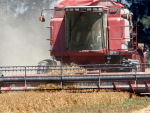
Mid Canterbury Federated Farmers arable chair, Bevan Lill, said Beef + Lamb NZ data indicated that for the last six years, the average arable return on investment was about 0.8% while inflation ran about 4% - so the average arable farm was going backwards at about 3% a year.
A warning for New Zealand seed and grain companies – be prepared for an exodus of farmers from the arable sector.
Gareth Hale is the current custodian of a 160-year legacy that saw his great grandfather dairying in Taranaki since the mid-1850s and grandfather dairying in the Waikato from the early 1900s.
A spat within the ranks of the New Zealand Deer Farmers Association has resulted in the suspension of outspoken North Canterbury farmer Barry Cuttance.

Farmlands has reported higher operating earnings and a profit before income tax of $4.5 million, up 118.9%, for the year ended 30 June 2026.
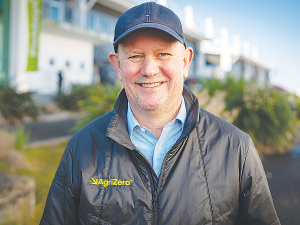
AgriZeroNZ has invested a further NZ$17.7 million in methane vaccine developer ArkeaBio and NZ$5.1 million in BioLumic, a New Zealand-founded company that uses ultraviolet light to develop low-emissions pasture..
Good news for Fonterra farmers. The co-op has raised this season’s farmgate milk price mid-point by 25c to $9.75/kgMS.
OPINION: Political parties are getting plenty of advice and recommendations from sector groups as the election approaches.
In farming there are external factors that can influence behaviour of a whole herd, such as a bad weather event, triggering false positive heat detections or health attentions.
For Canterbury dairy farmer Cameron Henderson, supporting Meet the Need comes down to a simple question: how can the success of New Zealand farming benefit more than just those within the industry?

OPINION: It seems Canterbury processor Synlait is still in the doldrums.
OPINION: Get offside with New Zealand First leader Winston Peters at your own peril.