BCS Targets: Why Body Condition Score Matters at Calving
Body Condition Score (BCS) is a critical element in managing the health and reproduction of the dairy herd.




 increase font size

THE RANGE of body condition scores (BCS) is as important as average BCS at calving on New Zealand dairy farms, says DairyNZ.
The ideal BCS of 5.0 for mixed age cows and 5.5 for first and second calvers is a target for each individual animal, as well as a herd target.
The cows at greatest risk of poor reproductive performance are the first and second calvers. Within a herd there is always a range of BCS, as each animal will have a slightly different metabolism, intake and milk production.
The challenge, says DairyNZ, is to get the spread in BCS at calving as small as possible around the targets. Aim for at least 90% of mixed age cows being BCS 4.5-5.5 at calving.
Strategies for getting every cow close to her ideal BCS at calving include:
Drying-off low producing, fat cows early. These cows put fat on their back instead of milk in your vat. When feed is short, herd milk production commonly increases by drying-off the low producing fat cows as the other more productive cows are fed better. In addition there is often an area of low quality feed on the farm where these cows can be put to maintain themselves, such as steep sidlings or gullies.
Ensure heifers are on track for weight and BCS. Check every four-six weeks that replacements are gaining enough weight and remedy any shortcomings (see DairyNZ Technical Series, Heifer Rearing pg 11). Aim to have these at BCS 5.5 when they return from grazing, as they will put little weight on – and often lose weight – while they adapt to being in the herd. Well grown heifers introduced to the mixed age cows during the dry period will compete well as milkers.
Give the first calvers more time dry than older cows. Young cows are still growing to reach their mature weight and often have lower intakes. Therefore, they are only able to put weight on slowly, and require more time to get to target condition.
Split dry herds on BCS and time until calving. If you dry off all at once then it is necessary to split the dry cows into herds based on condition and expected calving date. This allows for preferential feeding to get all cows to target BCS. Even if not enough feed is available to put on extra condition, creating herds is still a good idea, as it protects the younger cows from competition from the older more dominant cows. If supplement is going to be fed then feed it to the herd you want to gain the most condition or that needs to put it on fastest.
Staggered dry-off based on BCS and time to calving. The principle here is that every dry cow can be fed the same, but the difference is how long she is dry for. In low input systems, the dry-off decision rules work well. In higher input systems, where dry cows are well fed on a mixture of pasture and supplement, cows at BCS 4.5 or better only require 50-60 days dry; cows at BCS 4.0 or worse need about 80-90 days dry.
Part season once-a-day (OAD) milking for all or part of the herd. Cows milked OAD are less likely to milk off their back than cows milked twice-a-day, and when well fed will put more weight on during lactation. Groups of cows particularly vulnerable to not reaching BCS targets, such as first calvers and early calving cows, are ideal candidates for part season OAD milking.
The key is to go on OAD early enough to have an impact on BCS, as milking OAD for a couple of weeks or a month before drying-off has little impact.
The reduction in daily milksolids production can largely be made up by milking on for longer, as cows do not have to be dried-off as early due to BCS.
OAD milking is unwise where the herd already has a high SCC, as it will increase when starting OAD. – DairyNZ
Body Condition Score (BCS) is a critical element in managing the health and reproduction of the dairy herd.
Giving calves the best possible start to life has been shown to boost growth and resilience.
The first weeks of a calf's life quietly shape the future of the entire herd.
In calf rearing, the smallest details often have the biggest impact. While feed and genetics remain critical, bedding is increasingly recognised as a key driver of calf health, growth, and overall performance.
For decades, probiotics in calf rearing have been treated as a reactive tool – something to reach for when illness strikes. That thinking, according to Matt Collier of Probiotic Revolution, is leaving significant money on the table.

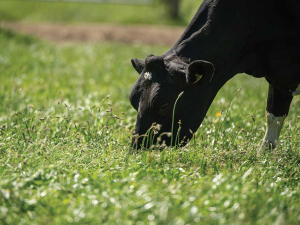
Farms across the upper North Island are trialling different pasture mixes as part of a research programme that aims to build greater resilience into farming systems.
Election years are always a concerning time for farmers, according to DairyNZ chair Tracy Brown.
The Ballance Farm Environment Awards are coming to the West Coast of the South Island.
Most dairy regions around the country have had a pretty good season so far says Tracy Brown.
Rural leader Mark Hooper has been appointed as an independent director to the NZPork board, bringing extensive farming, governance and advocacy experience to the role.



OPINION: It seems Canterbury processor Synlait is still in the doldrums.
OPINION: Get offside with New Zealand First leader Winston Peters at your own peril.