As the Traits Other Than Production (TOP) and classification season approaches, farmers are eager to find out how their cows will score on a national scale of excellence.
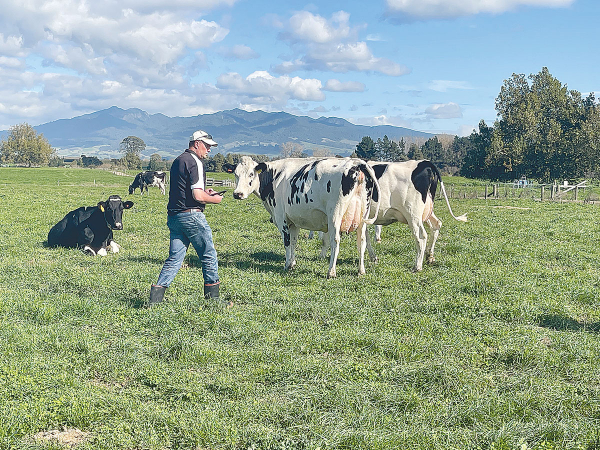
Last spring, trained inspectors visited hundreds of farms around New Zealand to assess the characteristics and traits of more than 32,000 Holstein Friesian in-milk heifers and cows.
The classification system, which aims to improve the overall standard of type and conformation of the New Zealand Holstein Friesian cow, recognises each individual cow's functional strengths and/or weaknesses scoring 13 individual traits on a scale of 1-9 and grades her accordingly with a Classification Award.
Registered Holstein Friesian animals receive a classification award between 70-90: Fair (70-74), Good (75-79), Good Plus (80-84), Very Good (85-89) and Excellent (90+).
To be eligible for an excellent award, cows must have calved at least three times, be in their third recorded lactation, and be at least four years of age.
All cows classified are also scored on a linear system for Traits Other than Production (TOP), given a score on a scale of 1-9 for 12 conformation traits, condition score, and an ‘udder overall’ and ‘dairy conformation’ score.
Members classifying must submit all two-yearold heifers (pedigree and grade) sired by a Holstein Friesian sire for TOP inspection as the data is important for the calculation of Bull Proofs.
Classification enables farmers to make better breeding decisions, as the more data about an animal that is recorded, the better. Classification and TOP scores can highlight strong traits, as well as weak traits that need to be considered when selecting bulls at mating.
TOP and classification scores are also valuable when marketing a heifer or cow; the figures can be printed in sale catalogues, providing a breakdown of individual traits, and allowing prospective purchasers to get an accurate picture of the animal.
Waikato dairy farmer and Holstein Friesian NZ board director Wendy Harker says there are multiple benefits to classification.
“Classifying animals means more accurate breeding values are going into the system, especially now that udders are being taken into account,” she says.
“It also means that breeders can trace the improvements in type, and the improvements from generation to generation. For me, classification is the only time I look at each individual animal in the herd and see what I need to improve in her.
“Classification also increases the value of the animal’s progeny, particularly when selling bulls and animals in the future.”
Holstein Friesian NZ presents the herd owner with the highest average classification score for two-year-olds with the Sherriff Memorial Trophy at the annual HFNZ Awards.
In 2021, Belbrook Dynamic Vanessa EX6 (BWPF-02-38), owned by John and Robbie Wakelin of Belbrook Holsteins in Rangiora, classified EX6 at the age of 19 – believed to be the first EX6 classification in New Zealand history.
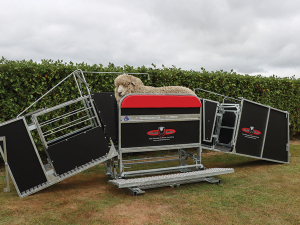
For the 2022 TOP Classification season, HFNZ has developed and owns a new and exciting way to record farmer trait scores for two-year-olds.