BVD Control Begins Long Before You See A Problem
Bovine Viral Diarrhoea (BVD) is sometimes viewed as a dairy industry issue, but the reality is that the disease can have serious consequences for beef breeding herds as well.




 increase font size
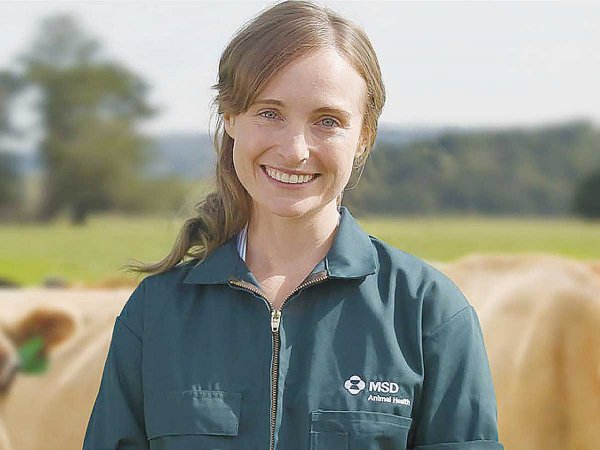 MSD Animal Health vet Amanda Kilby.
Bovine Viral Diarrhoea (BVD) is one of the dairy industry's most significant infectious diseases, causing pregnancy loss, birth defects, reduced milk production and immune suppression.
BVD costs New Zealand at least $150 million annually. For individual dairy farms, average cost estimates range from approximately $22 - $45 per mixed age cow per year.
BVD is spread persistently infected (PI) animals. PIs are cattle that were infected with BVD virus when they were fetuses, before their immune system had fully developed. A PI's body can't differentiate between itself and the virus, so PIs produce and spread virus in their mucus, faeces and saliva for their entire lives. Because PIs are the source of BVD, breaking the BVD transmission cycle means preventing PIs from forming, or at least preventing PIs from having contact with naïve cattle. This can be done by finding and culling PIs, vaccinating to prevent fetal infection, and improving biosecurity.
In the last several years, New Zealand's dairy industry has made significant gains in controlling BVD. Most dairy herds now conduct annual bulk milk screening, and the percentage of farms with PIs in the milking herd has come down significantly, from 14.6% in 2010 to 5.6% in 2017. This progress has come from farmers working with their vets and other stakeholders, such as LIC, to design and carry out individual farm BVD control plans. While this should be acknowledged and celebrated, it is also worth considering what lies ahead.
While many dairy and beef farmers report running closed herds, t's likely that only 2% of farms in New Zealand are truly closed systems. If you lend or borrow cattle yards, send animals away grazing, buy in any cattle (including bulls), or share fence lines with other stock, you're not running a truly 'closed herd,' and you have some BVD risk. Furthermore, while the dairy industry has made excellent advances in BVD control in the last decade, the beef industry has not. Approximately 60% of beef mobs that are screened show that they've had recent PI exposure. Our beef and dairy industries share fence lines and infrastructure, and they also trade stock, so BVD will continue to move between the two.
The other future bump in the road is that voluntary BVD control schemes can only take us so far. They rely on farmers calculating that paying to control BVD will be a good investment. Economic modeling shiws that strategic BVD control plans are likely to pay for themselves now, but as BVD becomes less and less common in dairy herds, the average benefit: cost ratio for BVD control will go down. Eventually, voluntary BVD control will make less sense. On our current trajectory, BVD incidence in dairy herds will likely stabilize wherever the 'average' disease cost over many years balances out the cost of paying for control measures every year. The risk with stopping there is that BVD will be less common, so more cows/herds will be naïve. This means that when BVD strikes, outbreaks will be more costly, on average, than they are now, as naïve herds experience the biggest impacts on production and fertility when exposed to BVD. In this scenario, the few farms that get outbreaks each year will pay the industry's entire disease cost.
These challenges highlight the need for a coordinated national eradication scheme. All countries that have successfully eradicated BVD have done so through a compulsory scheme, so if we are serious about BVD eradication, this will be the way forward. BVD Free NZ estimates eradicating BVD in a coordinated way would take between 5 and 10 years and would have a benefit: cost ratio of 1.8.
So, for now, keep doing what makes sense; working with your vet to implement farm specific BVD control plans.
Amanda Kilby is a technical veterinarian with MSD Animal Health.
Bovine Viral Diarrhoea (BVD) is sometimes viewed as a dairy industry issue, but the reality is that the disease can have serious consequences for beef breeding herds as well.
Bovine Viral Diarrhoea (BVD) remains one of the most significant infectious diseases affecting New Zealand dairy herds.
Bovine Viral Diarrhoea (BVD) is sometimes viewed as a dairy industry issue, but the reality is that the disease can have serious consequences for beef breeding herds as well.
Solid biosecurity practices, regular monitoring and timely vaccination are the three key pillars of effective Bovine Viral Diarrhoea (BVD) control on New Zealand farms. Zoetis veterinary technical advisor, Karley DeFrees, explains BVD is a costly but preventative disease that impacts a significant number of dairy farms in New Zealand. Implementation of a BVD control plan can help protect your herd from this avoidable disease.
Bovine Viral Diarrhoea (BVD) is estimated to cost New Zealand's dairy and beef industries more than $150 million every year, yet many of the tools needed to control it are already well understood. After more than 25 years in veterinary practice, Andrew Weir, animal health technical specialist at LIC, has seen firsthand the impact BVD can have on herd performance. We asked him about the role of persistently infected (PI) animals and the practical steps farmers can take to reduce their risk.


Federated Farmers says it welcomes Labour's commitment to reviewing the Sharemilking Agreements Act, calling on other major parties to do the same.
For Canterbury dairy farmers Sian Meijer and Rick Wobben, wearable technology has become one of their most valuable on-farm tools - helping manage 1850 cows across an expansive, high-performing dairy operation while improving efficiency, mating outcomes and day-to-day decision making.
Fonterra has unveiled its annual results for the 2026 financial year, posting $27 billion in revenue and close to $20 billion returned to New Zealand farmer owners and unit holders.
The first major update to the Dairy Cattle Code of Welfare in more than a decade has been released, marking what DairyNZ describes as an important step in ensuring animal welfare standards continue to evolve alongside scientific evidence and on-farm realities.
Ravensdown shareholders have elected Jane Montgomery and Kate Acland to the Ravensdown Board for three-year terms, following a closely contested director election.
Federated Farmers says new legislation replacing the Resource Management Act will cut red tape, unlock investment and help grow New Zealand's export-led economy, after the Planning Bill and Natural Environment Bill passed their third reading in Parliament yesterday.


OPINION: It seems Canterbury processor Synlait is still in the doldrums.
OPINION: Get offside with New Zealand First leader Winston Peters at your own peril.