Calf Rearing Facilities: Housing, Spacing & Hygiene Guide
Rearing facilities should be set up and maintained well to ensure calves stay healthy.




 increase font size
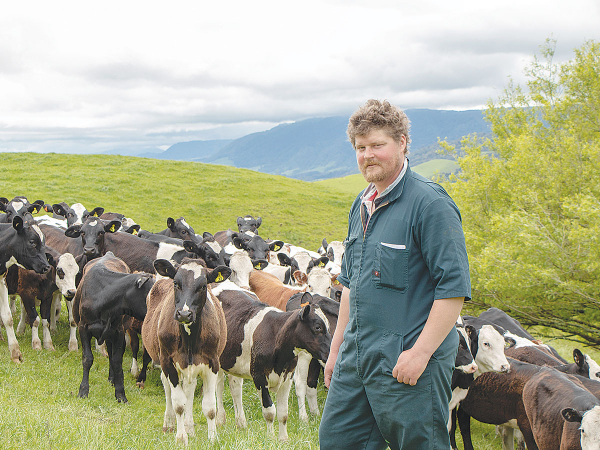 More than 85% of Floyd Smit's calves born this dairy season have been polled.
In response to growing demand from dairy farmers, CRV says is has increased its offering of polled sires from 11 to 15.
Farmers using genetics to breed hornless animals is a growing trend. Polled genetics save time and the expense of disbudding calves. And with less stress on the animals, it's another way farmers can look after the health and welfare of one of thier most valuable assets.
More than 85% of Floyd Smit's calves born this dairy season have been polled.
Floyd milks 370 cows through a 50-bale rotary on 322ha in Okoroire, nestled in the Kaimai Ranges. He runs a split calving system and milks twice-a-day all year round on a high input system five operation.
Floyd has spent the last 10 years on the farm, which he owns in equity partnership with his mother Nienke Hartog. The farm also operates in conjunction with another property where Floyd's younger brother Pete is sharemilking.
"We first started using polled genetics back in 2015 when CRV had the first heterozygous polled bull available, which was Powerplay," says Floyd.
"We didn't have to make a trade-off between polled and other traits. He met our criteria for being A2A2, he had good type and some solid figures behind him."
When the bull has two copies of the polled gene - Homozygous or (PP) - you are guaranteed his progeny will all be polled because all of them get one copy of the polled gene. Conversely, bulls with only one copy of the polled gene are referred to as heterozygous (Pp). Their progeny only has a 50% chance of being polled.
"We could see the merits of using polled sires and thought we'd give it a try as part of our breeding programme," says Floyd.
"It's grown from there as the quality of the bulls has improved and more bulls have become available.
"Now, we're milking about about 65 polled cows, with the majority of this season's calves born polled. Not having to dehorn them removes an intervention with the animals, which is important to me from an animal welfare perspective.
"The spotlight is us to do right by our animals. Breeding with polled sires helps our industry's international reputation and is an option for farmers wanting to secure a premium for their milk through initiatives like Fonterra's Cooperative Difference payment."
Floyd also invests in polled genetics for his dairy beef.
"We've got Angus, Hereford and some Belgian Blue on the ground. We're still experimenting a bit with the polled beef product, but I definitely think it makes sense.
"With beef, you want to be as hands-off as possible. We tag the calves as soon as they are born. But after that, we want to have as little to do with them as possible until weaning. If you don't have to dehorn them it's a time-saver, but it's also better for the welfare of the calf."
CRV markets a team of local and overseas polled bulls to farmers for both dairy and beef.
The stars of this year's polled line-up include crossbreed Arkan EFD Parkway ET PP, who offers excellent efficiency and strong fertility. Friesian Costers Hypol ET PP offers excellent fat and protein, along with great overall udder traits. Both these sires are also A2A2.
CRV product manager Peter van Elzakker says the availability of polled sires outside New Zealand is large, so these sires will be critical to speed up development of high indexing polled sires from New Zealand cow families.
"We aim to make available homozygous polled sires across breeds as this is the quickest way to a polled herd. In our breeding programme we use a range of homozygous bulls, but heterozygous bulls also have an important role to play because they give us access to different bloodlines and help add genetic diversity to a herd.
"We also use horned bulls over polled animals to help lift their index and lock in genetic gains. If we only used homozygous bulls over polled cows, we'd get a very narrow gene pool."
Peter says genetic solutions like polled play a key role in helping farmers improve animal welfare. This helps maintain their license to operate and achieve a premium for their milk through initiatives like Fonterra's new Cooperative Difference Programme.
Rearing facilities should be set up and maintained well to ensure calves stay healthy.
Solid biosecurity practices, regular monitoring and timely vaccination are the three key pillars of effective Bovine Viral Diarrhoea (BVD) control on New Zealand farms. Zoetis veterinary technical advisor, Karley DeFrees, explains BVD is a costly but preventative disease that impacts a significant number of dairy farms in New Zealand. Implementation of a BVD control plan can help protect your herd from this avoidable disease.
Although preventable, lamb loss from clostridial diseases during the first year of life on New Zealand hill country farms continues to be an issue. A field trial, where lambs were vaccinated at docking and weaning, demonstrated that vaccination was highly effective, lowering clostridial deaths by 23%. Zoetis veterinarian Dr Victoria Chapman unpacks the importance of robust animal health programmes, vaccination timing and the potential harmful consequences for stock when vaccination isn't given.
Bovine Viral Diarrhoea (BVD) is estimated to cost New Zealand's dairy and beef industries more than $150 million every year, yet many of the tools needed to control it are already well understood. After more than 25 years in veterinary practice, Andrew Weir, animal health technical specialist at LIC, has seen firsthand the impact BVD can have on herd performance. We asked him about the role of persistently infected (PI) animals and the practical steps farmers can take to reduce their risk.
The transition period is the make-or-break window for your entire season. If this period is poorly managed, you don't just see a few downer cows, you see a downward spiral that affects the cow's health, production and reproduction long into the season.

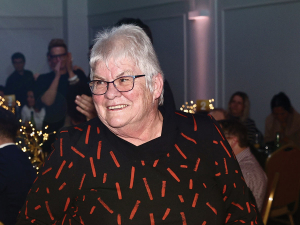
For 50 years, Tasman's Mel Ewers has been helping the apple sector navigate through compliance issues and training.
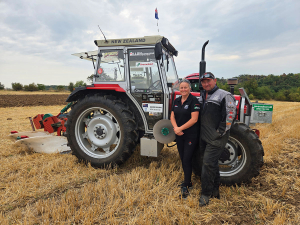
The New Zealand ploughing team to the world championship in Croatia next month will be banking on borrowed equipment as they seek glory.
Just a matter of hours after Indian Prime Minister Narendra Modi's historic trip to New Zealand, the political doors in India swung wide open for Associate Minister of Agriculture, Mark Patterson, who was there to help promote our high-quality coarse wool.
A new company set up to cultivate and supply seaweed for animal methane mitigation studies believes it could be a game changer for the dairy industry.
There's strong support from the horticulture sector for the Government's plans to overhaul and streamline the Recognised Seasonal Employer (RSE) scheme.
Potatoes New Zealand has congratulated Peter Reynolds of TA Reynolds Ltd in Pukekohe on being awarded the Horticulture New Zealand Bledisloe Cup, recognising a lifetime of service and contribution to New Zealand horticulture.

OPINION: The Irish dairy sector is facing a new dilemma - maintaining year-round fresh milk supplies.
OPINION: Could beef cows play an increasingly important role in improving profitability and resilience on hill country farms?