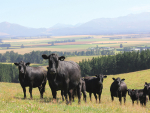
BVD Control Begins Long Before You See A Problem
Bovine Viral Diarrhoea (BVD) is sometimes viewed as a dairy industry issue, but the reality is that the disease can have serious consequences for beef breeding herds as well.




 increase font size
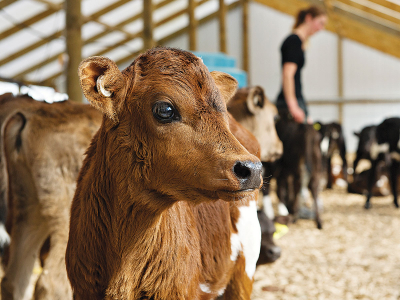 Keep calves safe by ensuring their environment is as clean as possible.
MSD Animal Health’s regional technical advisor/vet, Kim Kelly explains how to reduce the risk of your calves getting scours.
A calf gets scours when it accidentally ingests more scours-causing pathogens than its immune system can handle.
Unfortunately, the pathogens that cause scours can be found in the faecal material of healthy animals, and they can stay in the environment for days or even months, so all calves will have some exposure.
But, you can reduce the risk of calves getting sick by keeping colostrum, calf milk and the calves’ environment as clean as possible.
Tips to reduce risk:
- Dump colostrum and milk from scouring cows
- If cows in the colostrum mob have dirty udders, clean their teats with dry paper towels or alcohol teat wipes before cupping.
- Keep colostrum and transition milk in covered containers after collection. Use it asap.
- Clean & disinfect all calf feeding equipment and test buckets every day.
- At each feeding, begin with the new-born calves first. Then, feed all the healthy animals, moving from youngest to oldest. Feed sick pens last, ideally with dedicated equipment.
- Divide calf pens from one another with solid, easy-to-clean plastic or metal partitions or at least isolate sick pens with solid partitions, so sick calves don’t have direct contact with healthy calves.
- Keep enough fresh bedding in each pen so that calves are always dry.
- Spraying pens with disinfectant will only work if no organic matter is present.
- As calves come in, fill the shed pen-by-pen, so they’re with other calves their age. Leave them in the same pen until they go outside. This is sometimes called “all-in, all-out” management.
- Remove an individual sick calf from a pen of healthy calves as soon as you see that it’s scouring. Ideally, after they’ve recovered, these sick calves should go into another “recovered calf pen” instead of back with healthy calves.
- If more than a third of the animals in a pen are scouring, leave all the calves together and make that a sick pen.
- Clean and disinfect your boots, waterproofs, and change your gloves whenever you move from a sick pen to a healthy pen. Change foot baths daily.
- After calves are in the calf shed, ensure that you follow the 3 Q’s (Quickly, Quantity, Quality) and that you’re feeding the cleanest possible colostrum (“gold” - from the first milking), and transition milk (from the second and subsequent milkings).
Here is a summary of what to do if you have scouring calves:
- Isolate individual scouring calves or pens of scouring calves as early as possible.
- Check your hygiene and colostrum management practices. Watch our other Top Farmers’ videos for more information about these topics.
- Get your vet involved right away to help you contain the current outbreak and prevent an outbreak from happening again.
- Alternate milk and electrolyte feeds to scouring calves, providing 6-8 L of total fluids each day. Tube calves if they won’t drink. Provide free choice electrolytes overnight in pens of scouring calves, and ensure clean water is always available to all calves.
- Treat scouring calves with any other medications prescribed by your vet. Check with your vet that you’re using them correctly.
- Lastly, consider vaccinating the herd with Rotavec Corona. Calves fed colostrum from cows vaccinated with Rotavec Corona shed a lot less rotavirus & coronavirus in their faeces, therefore there is less likelihood of disease spread to other calves due to environmental contamination.
Remember to also be careful about your own hygiene around scouring calves so that you and your family don’t get sick. Always wear gloves in the calf shed and wash your hands and change clothes before eating and before interacting with young children, the elderly, pregnant women, or anyone else with a fragile immune system.
Consistently doing these things requires constant attention-to-detail, but, if you’re able to get the whole team on board before calving season begins, then, in the long-run, you’ll save time, money, stress, and, most importantly, calves.
For helpful videos and fact sheets which expand on the information in this article visit www.topfarmers.co.nz , a reference library of industry best practice for some key animal health management areas.
• Kim Kelly is MSD Animal Health’s regional technical advisor/vet.
Bovine Viral Diarrhoea (BVD) is sometimes viewed as a dairy industry issue, but the reality is that the disease can have serious consequences for beef breeding herds as well.

Bovine Viral Diarrhoea (BVD) is sometimes viewed as a dairy industry issue, but the reality is that the disease can have serious consequences for beef breeding herds as well.
Two inline milk sensors are now available on monthly subscription from SenseHub Dairy, adding milk yield and quality insights to the SenseHub Dairy platform powered by MSD Animal Health.
MSD Animal Health New Zealand has partnered with Agrecovery in New Zealand’s first pilot to recycle SenseHub Dairy Collars (previously known as Allflex Collars) used by its dairy farmer clients.
Use of cow monitoring collars is on the rise, with about 700,000 of New Zealand’s 4.9 million cows in milk now thought to be fitted with them – about 14% of the national milking herd.


Farmers across parts of Southland and South Otago are continuing to deal with difficult conditions after a prolonged run of wet weather, with pressure building around feed supply, stock management, pasture damage, farm infrastructure and everyday workloads.
Federated Farmers says it welcomes Labour's commitment to reviewing the Sharemilking Agreements Act, calling on other major parties to do the same.
For Canterbury dairy farmers Sian Meijer and Rick Wobben, wearable technology has become one of their most valuable on-farm tools - helping manage 1850 cows across an expansive, high-performing dairy operation while improving efficiency, mating outcomes and day-to-day decision making.
Fonterra has unveiled its annual results for the 2026 financial year, posting $27 billion in revenue and close to $20 billion returned to New Zealand farmer owners and unit holders.
The first major update to the Dairy Cattle Code of Welfare in more than a decade has been released, marking what DairyNZ describes as an important step in ensuring animal welfare standards continue to evolve alongside scientific evidence and on-farm realities.
Ravensdown shareholders have elected Jane Montgomery and Kate Acland to the Ravensdown Board for three-year terms, following a closely contested director election.



OPINION: It seems Canterbury processor Synlait is still in the doldrums.
OPINION: Get offside with New Zealand First leader Winston Peters at your own peril.




