
PGG Wrightson Revenue Tops $1.1b as Profit Jumps 46%
After delivering a strong financial year, rural trader PGG Wrightson says the coming months will depend on customer confidence and weather.




 increase font size
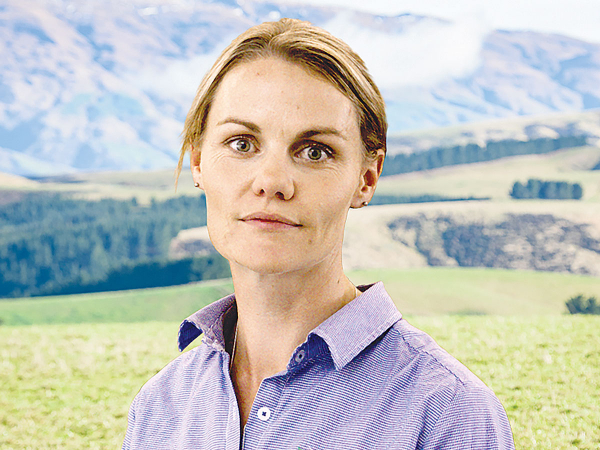 PGG Wrightson technical expert in ruminant nutrition Laura Pattie.
Dairy farmers are being encouraged to maintain the body condition of their rising three-year-olds as first-time calvers to help secure their longevity in the herd and maximise profitability.
PGG Wrightson technical expert in ruminant nutrition Laura Pattie told a recent a farmer webinar that prioritising rising three-year-olds for a second season is crucial to minimising wastage in terms of empty cows and lost milk production.
This begins at calving time and throughout the season.
"One of the biggest areas of wastage in our dairy industry is our rising three-year-olds, our first calvers, that are not getting pregnant again after their first season.
"If we can set them up better by prioritising their nutrition now and maintaining their body condition, we aim to have less wastage on farm," says Pattie.
"Good heifer management is all about increasing profitability. We want to maximise their production, not only just in their first lactation, but throughout their entire lifetime of production."
While good heifer management is important, Pattie says farmers should be checking the body condition scores of all their animals ahead of calving to ensure they have enough reserves for the coming calving season.
"Do your calculations to work out the best scenarios for your herd. What's it going to look like to keep production at a certain level now? How much condition can you add and how many kilos of feed do you need to do that?" says Laura.
She references DairyNZ's Facts and Figures book, which can help calculate how much feed is required to maintain production in a herd through to the end of the season and add condition if needed.
She says with the forecast payout looking good, dairy farmers might consider investing in more feed.
"Marginal profit gains of even 70 cents extra per cow per day can make a big difference. If you have 74 days of milking left to go and 200 or 300 cows, you're looking at another $10,000 and up to $15,000 in income."
Industry standard body condition score for mixed-age cows is 5.0, and for first or second calvers 5.5 for calving time.
"When animals reach their BCS targets there is less risk of uterine infections, fewer metabolic issues, improved production, and better reproduction results. If cows are in good health and recover well from calving, this also shortens the period between calving and the following season's mating.
"As a rule of thumb, we want no more than 15 percent of the herd above or below these targets. Then we've got a nice uniform herd, which is important to the efficiency of the overall farm system.
"If herds are too far above these scores, they tend to reduce their dry matter intake post-calving which affects milk production and increases the risk of ketosis. The same applies for cows well below those scores, who won't have enough reserves to maintain milk production."
Pattie stresses the importance of looking at cow condition and not just weight.
"Condition really is about that layer of squishiness on her, which means we can then get an idea of what sort of reserves she has to support her performance and her health."
DairyNZ runs the Body Condition Scoring Certified Assessor Programme and Pattie recommends farmers consider getting an independent person to assess their herds.
"When we see our cows every day, it can be hard to be honest with ourselves about where they're actually at. Contracting the services of a certified assessor will give you an objective and reliable measure of your herd's body condition to help you make better decisions.
"It's all about maximising dry-matter intake and working out how many kilograms of dry-matter each animal needs to be performing at the level we want, while not losing condition," says Laura.
She also encourages farmers to monitor NDF (neutral detergent fibre) levels and pasture utilization. This is particularly important in late summer when pasture has suffered heat stress and NDF levels are not as good, or in winter when pasture utilisation might be lower. This is because high NDF levels can limit dry matter intakes and herd performances.
Access to plenty of clean water and salt is also crucial along with adding magnesium and calcium which will have been mined from herds during pregnancy.
"We're not just feeding to keep the milk pumping," says Pattie.
"We want to manage our cows' condition as well to ensure they stay in our herd as productive animals for many seasons to come."
After delivering a strong financial year, rural trader PGG Wrightson says the coming months will depend on customer confidence and weather.
Body Condition Score (BCS) is a critical element in managing the health and reproduction of the dairy herd.
Strong competition and tightening supply have seen wool reach its highest prices paid at auction since 2011.
A firm belief in the agricultural sector has kept the PGG Wrightson business going for 175 years, says chief executive Stephen Guerin.
Body condition scoring ewes at least six weeks out from mating can make a significant difference to conception rates and scanning percentages.



LIC shareholders have elected a new North Island representative to the co-operative's Board, along with five representatives to its Shareholder Reference Group (SRG), following the company's Annual Meeting held in Invercargill.
Farmers across parts of Southland and South Otago are continuing to deal with difficult conditions after a prolonged run of wet weather, with pressure building around feed supply, stock management, pasture damage, farm infrastructure and everyday workloads.
Federated Farmers says it welcomes Labour's commitment to reviewing the Sharemilking Agreements Act, calling on other major parties to do the same.
For Canterbury dairy farmers Sian Meijer and Rick Wobben, wearable technology has become one of their most valuable on-farm tools - helping manage 1850 cows across an expansive, high-performing dairy operation while improving efficiency, mating outcomes and day-to-day decision making.
Fonterra has unveiled its annual results for the 2026 financial year, posting $27 billion in revenue and close to $20 billion returned to New Zealand farmer owners and unit holders.
The first major update to the Dairy Cattle Code of Welfare in more than a decade has been released, marking what DairyNZ describes as an important step in ensuring animal welfare standards continue to evolve alongside scientific evidence and on-farm realities.

OPINION: It seems Canterbury processor Synlait is still in the doldrums.
OPINION: Get offside with New Zealand First leader Winston Peters at your own peril.




