
Calf Shed Hygiene Starts with Chemistry
Good Calf shed hygiene has always been about providing clean, dry bedding.




 increase font size
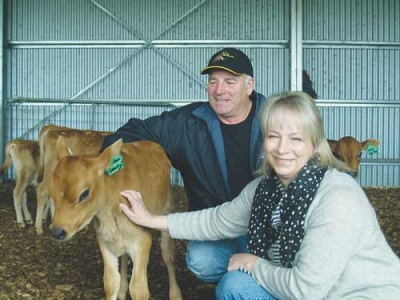 Trevor and Anthea Saunders say their aim is to be in the top 2% of Jersey herds in Australia, and an efficient calf-rearing program is an essential part of that.
Australian farmers Trevor and Anthea Saunders are dedicated Jersey breeders and their enthusiasm about their herd showed when we visited in late May.
The Saunders farm at Shady Creek, north-east of Warragul, Gippsland.
Anthea controls the calf rearing and is determined to give them the best possible start. Optimum feeding is by means of Urban automatic calf feeders installed in three bays of the calf shed where the different groups, each of 24 calves, are treated individually as sensors read their eartags.
The calves get the first eight hours of colostrum through the mothers, and then go onto a manual feeder where they receive colostrum only. “They are strong enough to be taken off after 24 hours,” she says.
The calf milk replacer to be used in the automatic feeder is critical and the Saunders worked with local vet Grant Nielsen from the West Gippsland Vet service who manages their calf management programme. They previously had problems with salmonella and E.coli.
“When we were looking at the calf milk replacers we wanted animal-derived components, not vegetable-sourced ones as the calf’s digestive system works better to get the best possible out of them. And probiotics are important,” she says. “They are fed milk at the right temperature at the right time – 1.5L at a time.
“We chose the MaxCare Ultimate formulation purely on its specifications – particularly the high protein and fat percentages. The calves make a better curd and it optimises the nutrient consumption and extraction from the feed.”
Milk powder maker Maxum Animal Nutrition has three different formulas in their MaxCare Calf Milk Replacer range.
mTop of the range is Ultimate, containing the highest nutrient density available in the Australian market with 28% protein and 22% fat, plus probiotics, amino acids, vitamins and minerals.
“Calves are fed ad lib up to 10L a day for the first two weeks. The feeder allows them 1.2L per feed every two hours until they reach their quota for the day. From two to 10 weeks they are on 6L a day and then the milk allowance is dropped to 2L at three months of age.
“Our calves look better than they ever did on whole milk. This formulation mixes well for the automatic feeders. I’ve reared calves for 30 years and I can tell how well they are doing. It’s important for one person to do that.
“We aim to grow our calves properly to achieve their genetic potential later as milkers.”
They get a feeding history for each calf through the auto feeding system computer.
The calves are on ad lib grain and water from birth, but no hay. “We believe the ‘scratch factor’ is more significant with grain feeding than hay. Later they get about 2kg/day of grain from six weeks to weaning,” Saunders says.
“From the 6L per day they are getting at two months and two weeks it is dropped to 2L at weaning at three months,” Anthea says.
Good Calf shed hygiene has always been about providing clean, dry bedding.
Matt Collier, Probiotic Revolution, says calves will drink a lot of milk once-a-day with their probiotic Calf Xtreme.
Rearing facilities should be set up and maintained well to ensure calves stay healthy.
Clean and comfortable calf sheds help create a nurturing environment for calves, reduces the risk of disease and encourages high growth rates.
Giving calves the best possible start to life has been shown to boost growth and resilience.


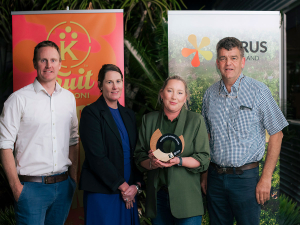
New Zealand's citrus growers were challenged to build their future on the value embedded in their fruit rather than the volume they produce, at Citrus New Zealand's annual gathering in Gisborne on 17 September.
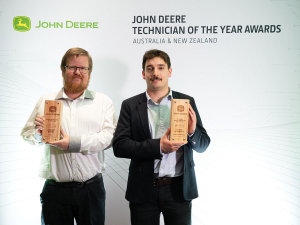
Leading John Deere technicians and apprentices from New Zealand and Australians were recognised at the recent sixth annual JD Technician of the Year Awards, held in Brisbane.
In Dacre, near Invercargill in New Zealand’s South Island, Bruce Dinnington is running a dairy operation unlike any other.
A free online platform aggregating governance vacancies across rural and regional New Zealand has been launched.
Environment Minister Nicola Grigg has announced details of a new rural plastics recycling scheme.
Agricultural drone operators say that a government decision to allow lower-risk drone work without certification won’t lower standards but drive innovation and efficiency.



OPINION: It seems Canterbury processor Synlait is still in the doldrums.
OPINION: Get offside with New Zealand First leader Winston Peters at your own peril.




