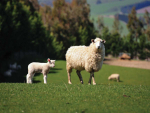
Early Weaning Lambs: What the Massey Trials Found
Farmers with high-quality feed available in late spring could consider weaning at least a proportion of their lamb crop early to benefit both lambs and ewes.




 increase font size
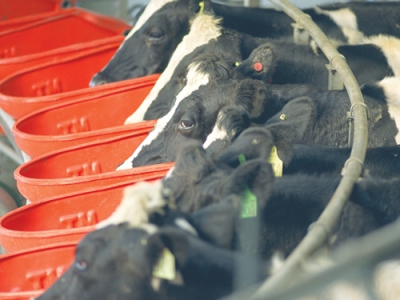 PKE has reasonable levels of energy and protein.
Palm kernel extract (PKE) is a by-product of the palm oil industry in South East Asia.
It is derived from the nut of the palm fruit after the oil is either mechanically extracted (most PKE imported to NZ) or solvent extracted (lower nutritive value).
According to DairyNZ, PKE is a dry, gritty meal with a soapy smell and has low palatability until cows get a taste for it. However, PKE has reasonable levels of energy (ME) and protein, and is relatively easy to introduce to cows over a range of farm systems.
The profitability of PKE is dependent on the price of PKE relative to milk price and the utilisation of PKE and pasture.
Some farmers question whether PKE is a low digestibility feed and should it matter?
DairyNZ says there is no single, ideal measure of feed quality. However, in New Zealand, metabolisable energy (ME) is the factor limiting milk production in most situations. Therefore, ME content (MJ/kg DM) is the best measure of feed quality for most farmers to use. It does not matter whether a supplement contains fibre, starch or sugar. The cost of each MJ ME should be how you decide which supplement to buy.
PKE contains about 11.0 - 11.5 MJ ME (mechanically extracted) and is, therefore, a reasonable quality feed for dairy cows when short of pasture.
DairyNZ also dismisses the suggestion that PKE should be avoided as a feed for dairy cows because it has a low digestibility (about 50%) and, as a result, will not promote the growth of rumen microbes. It says cow survive and produce on the waste products of rumen fermentation (volatile fatty acids), the micro-organisms that have grown during rumen fermentation, and the feed that was not fermented (i.e. bypasses the rumen).
As a result, there are multiple measures of feed quality, including:
Minerals and vitamins.
All of these are important to varying degrees, depending on what is lacking from the diet.
Digestibility
The digestibility of the feed refers to how much of the feed is digested in the rumen (rumen digestibility or rumen degradability) or along the entire digestive tract (dry mater digestibility). The rumen digestibility of a feed is important for determining the growth of rumen micro-organisms. These supply protein and some energy to the cow. However, there is a long digestive system after the rumen, in which proteins, fats and some sugars are digested and absorbed. Therefore, dry matter digestibility is a better measure of feed quality as it takes into account the whole digestive system and not just the rumen. Metabolisable energy is estimated from some measure of dry matter digestibility.
Protein
Protein is important because it provides the rumen micro-organisms with nitrogen to grow, the protein that bypasses the rumen is used directly by the cow, and because it also provides some energy.
Fat
Fats and oils cannot be used by the rumen micro-organisms and, therefore, do not promote microbial growth. They are instead used directly by the cow as an energy source.
What about PKE?
Palm kernel is not very digestible in the rumen. Estimates of rumen digestibility range from 50-60%. However, this does not accurately portray the feed value of PKE for dairy cows. The feed value in PKE comes from the ruminal digestion of fibre, some ruminal digestion of protein (55-60%), the protein digested in the small intestine (40-45%), and the fat, although the minerals are also important.
Most grazing dairy cows are short of ME. They are only rarely short of metabolisable protein (that is protein that reaches the small intestine). Therefore, changing supplement to increase the growth of rumen micro-organisms to further increase metabolisable protein will not be beneficial.
Metabolisable energy is the most important measure of feed quality for New Zealand farmers. Laboratory analyses indicate that PKE has an ME of around 11.5MJ/kg DM because of its relatively high fat content, its reasonably digestible fibre, and its protein content. However, as PKE is a by-product, this figure will vary and farmers are encouraged to have their feeds tested by a reputable laboratory.
Farmers with high-quality feed available in late spring could consider weaning at least a proportion of their lamb crop early to benefit both lambs and ewes.
Today, 15 October, is the International Day of Rural Women, which recognises rural women’s contribution to farming, communities and the environment.
The first major update to the Dairy Cattle Code of Welfare in more than a decade has been released, marking what DairyNZ describes as an important step in ensuring animal welfare standards continue to evolve alongside scientific evidence and on-farm realities.
Have a plan in place for your cows and staff.
DairyNZ deputy chair Cameron Henderson has been re-appointed unopposed for another term.



Federated Farmers has welcomed new rural policies released by ACT, saying they align closely with its own election priorities.

Rural Contractors NZ says proposed changes to land transport rules for agricultural vehicles are a welcome response by the Government to out of date regulations which have seen members hit with huge fines.
Alliance is calling for final applications for its 2027 Graduate Programme, with applications closing on Sunday 25 October.
Decades piloting planes has ensured vet and farmer David Hayes is focused on safety. So, after a serious accident while welding on farm, he is sharing his experience so others can learn from it.
Canterbury milk processor, Synlait Milk has confirmed Leon Fung as its chief executive officer.
OPINION: Making it easier to collect rainwater and use it to grow crops and livestock is a no brainer.




OPINION: It seems Canterbury processor Synlait is still in the doldrums.
OPINION: Get offside with New Zealand First leader Winston Peters at your own peril.