Early Weaning Lambs: What the Massey Trials Found
Farmers with high-quality feed available in late spring could consider weaning at least a proportion of their lamb crop early to benefit both lambs and ewes.




 increase font size
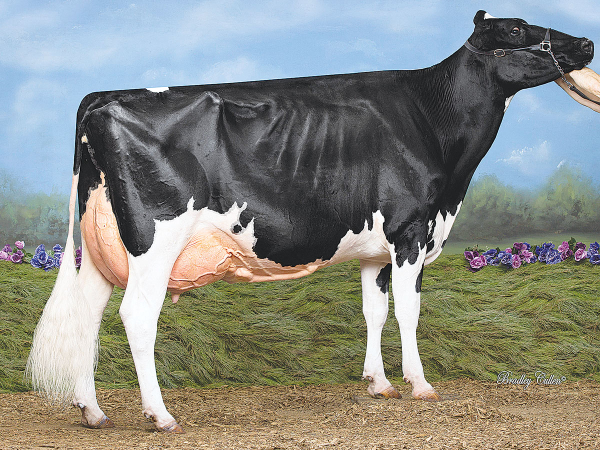 The granddam of Lot 15, Windy Vale Windbrook Frosty-Imp-ET; her granddaughter sold for $8500.
In a reasonably tight season for milk prices, the Summer Sensation Sale at the New Zealand Dairy Event in Feilding last month averaged $4,612 over 33 live lots.
The sale included live lots, embryos and semen. The top live lot was $15,000 and it was paid for a Jersey which sold at lot 23a – Posterity Man Susie.
The top-priced Holstein was $9,000, and it was paid for Lot 20, Paragon Graze Charlie. The second top-priced Holstein was paid for lot 15, Barwell Mercy Frosty. Frosty travelled from Canterbury to sell, and she traces back to an international household name in the industry that twice won World Dairy Expo. She was bought by Ryan Andrew, of Panic Station.
The sole Milking Shorthorn to sell was Westell Hunt Angela SOS and she was a popular inclusion.
She sold for the fifth highest price in the sale to Jarod Hudson, of Hudson Farming, at Ngatea, for $7,500. Angela’s fourth dam was the 2008 International Dairy Week Champion in Australia, Panorama Angeline 8. Her sire comes from the equally successful big-milk Queensland herd of Myrtleholme.
The pick of ten Brown Swiss calves from the Meier Trust sold for $4,000 to Fernlee limited.
The highest priced embryos were the imported embryos from double master breeder herd from Canada, Avonlea Jerseys. A package of five embryos sold for $2,000 an embryo ($10,000 for the package).
The semen lots sold for up to $1,200 per dose for five straws of sexed Holstein semen, Westcoast Alcove ($6,000 total), which as offered by the Gilbert family, from Ashburton in Mid-Canterbury.
Only one animal as passed in, according to Carrfields representative, Luke Gilbert.
“It was an extremely successful sale, with buyers from both islands of the country,” says Gilbert.
“BIDR played a massive part with 315 people watching the sale online from home. We are pleased and grateful to the vendors and to the purchasers.”
Farmers with high-quality feed available in late spring could consider weaning at least a proportion of their lamb crop early to benefit both lambs and ewes.
The first major update to the Dairy Cattle Code of Welfare in more than a decade has been released, marking what DairyNZ describes as an important step in ensuring animal welfare standards continue to evolve alongside scientific evidence and on-farm realities.
Bovine Viral Diarrhoea (BVD) is sometimes viewed as a dairy industry issue, but the reality is that the disease can have serious consequences for beef breeding herds as well.
Animal health company Bovonic is gearing up for its next stage of growth after increasing New Zealand sales of QuadSense by more than 50% in the last 12 months, including a record quarter for the business this year.
With lambing underway in many regions, Beef + Lamb New Zealand is encouraging farmers to put together a wellequipped lambing kit to help minimise lamb losses, particularly in bad weather.



Federated Farmers has welcomed new rural policies released by ACT, saying they align closely with its own election priorities.

Rural Contractors NZ says proposed changes to land transport rules for agricultural vehicles are a welcome response by the Government to out of date regulations which have seen members hit with huge fines.
Alliance is calling for final applications for its 2027 Graduate Programme, with applications closing on Sunday 25 October.
Decades piloting planes has ensured vet and farmer David Hayes is focused on safety. So, after a serious accident while welding on farm, he is sharing his experience so others can learn from it.
Canterbury milk processor, Synlait Milk has confirmed Leon Fung as its chief executive officer.
OPINION: Making it easier to collect rainwater and use it to grow crops and livestock is a no brainer.


OPINION: It seems Canterbury processor Synlait is still in the doldrums.
OPINION: Get offside with New Zealand First leader Winston Peters at your own peril.




