Fonterra FY26 Results: $9.69 Milk Price, $3.4bn Profit
Fonterra has unveiled its annual results for the 2026 financial year, posting $27 billion in revenue and close to $20 billion returned to New Zealand farmer owners and unit holders.




 increase font size
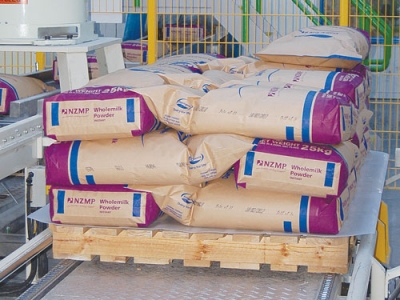 Whole milk powder prices have risen to US$2495/t.
Farmgate milk price forecasts by at least two banks, ASB and BNZ, have now been hiked upwards to $5/kgMS for the 2015-16 season.
This follows last week’s GlobalDairyTrade auction in which the overall index rose 16.5% and whole milk powder rose 20% to US$2495/t.
ASB has raised its forecast milk price by 50c from $4.50/kgMS to $5/kgMS and BNZ by $1.20, from $3.80 to $5/kgMS. All eyes will be on Fonterra this week to see if it revises its forecast milk price of $3.85/kgMS at the release of its annual results on Thursday.
Doug Steel, BNZ economist, says just six weeks ago there was probably a downside risk to the co-op’s previous forecast of $3.80/kgMS.
This risk squared to neutral, then at the last auction it went to upside and it has now lifted, showing how much things have changed in the past couple of months.
Steel says they had been hoping for a decent increase in last week’s GDT -- maybe in the 5-10% range. But at 16.5% the rise was “encouraging”. Prices are moving in the right direction and obviously less volume is part of it.
“Potentially there is a change in buyer psychology. When prices were falling rapidly before, there was the tendency [for them] to step back, thinking [they] would get the product cheaper at the next event,” he says.
“Now that prices have clearly turned higher, there seems to be more keenness to buy now and there is an increase in the number of unsatisfied buyers which suggests there are more of them and they are struggling to get product, which is pushing prices higher in the near term.
“We are of the opinion there [will be] some further gains over the course of this current season but certainly we haven’t factored in anything like the pace of climbs we have seen in the last three events.”
BNZ is factoring in prices getting to $2700/t to $2800/t for whole milk powder. “They are currently averaging about $2500/t, so we are forecasting a little bit higher but nowhere near the degree of increase we have seen over the last few events.
“We have stressed over the last few months the wide range of possibilities and there are many moving parts out there -- whether it be demand from China, or wobbles in financial markets or indeed just [the state of] the weather. We know there is a very strong El Nino but we don’t know what will be its impact on production.
“When there are so many things in play the market tries to figure out all those things and you see volatility in prices and that’s what we have.”
ASB rural economist Nathan Penny says the bank expected a decent increase at last week’s auction of about 15% for whole milk powder so the 20% was within the range of its forecasts.
“The market is still a bit focused on what Fonterra is doing with its auction volumes. That may explain some of that additional price strength for now,” he says. But he says the market has not yet fully realised the potential extent of a drop in NZ milk production which the ASB forecasts could be up to 5%.
Rabobank economist Emma Higgins says the massive jump in GDT prices is extremely pleasing and positive news. “The underlying reasons are largely a decrease in available supply and an increase in interest. The main driver is falling supply which is creating a short term mini-market,” she says. Rabobank predicts NZ production could fall up to 8%.
“We have more buyers in the latest auction and these have been largely spooked by the prospect of further volume reductions, and some are looking to sell their 2016 pipelines at the lowest-possible prices and they are tied to NZ product in some cases.”
However she says the GDT is unlikely to continue rallying at these extreme rates until there is a major shift in the fundamentals and a rebalancing of supply and demand factors.
“That is starting. Farmgate prices are falling elsewhere; we have seen farmers converge on Brussels protesting at the milk price. Once prices start falling that is a huge signal to decrease production and that’s what we need when the world is still awash with milk,” she says.
Fonterra has unveiled its annual results for the 2026 financial year, posting $27 billion in revenue and close to $20 billion returned to New Zealand farmer owners and unit holders.
Fonterra Co-operative Group has confirmed the independently assessed candidates standing for election to its board in 2026.
Fonterra has revised its Farmgate Milk Price forecast for the 2026/27 season, lifting the midpoint and narrowing the range on the back of improving global dairy commodity prices.
Outgoing Fonterra Co-operative Council chair John Stevenson says that it has been a privilege to represent the co-op's farmer shareholders.
OPINION: It seems Canterbury processor Synlait is still in the doldrums.



Federated Farmers says it welcomes Labour's commitment to reviewing the Sharemilking Agreements Act, calling on other major parties to do the same.
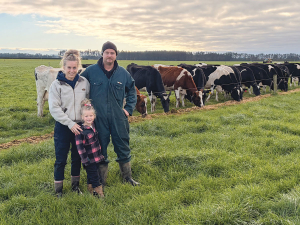
For Canterbury dairy farmers Sian Meijer and Rick Wobben, wearable technology has become one of their most valuable on-farm tools - helping manage 1850 cows across an expansive, high-performing dairy operation while improving efficiency, mating outcomes and day-to-day decision making.
Fonterra has unveiled its annual results for the 2026 financial year, posting $27 billion in revenue and close to $20 billion returned to New Zealand farmer owners and unit holders.
The first major update to the Dairy Cattle Code of Welfare in more than a decade has been released, marking what DairyNZ describes as an important step in ensuring animal welfare standards continue to evolve alongside scientific evidence and on-farm realities.
Ravensdown shareholders have elected Jane Montgomery and Kate Acland to the Ravensdown Board for three-year terms, following a closely contested director election.
Federated Farmers says new legislation replacing the Resource Management Act will cut red tape, unlock investment and help grow New Zealand's export-led economy, after the Planning Bill and Natural Environment Bill passed their third reading in Parliament yesterday.




OPINION: It seems Canterbury processor Synlait is still in the doldrums.
OPINION: Get offside with New Zealand First leader Winston Peters at your own peril.