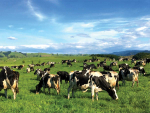
DairyNZ's Tracy Brown Flags El Nino Risk for Dairy Farms
Most dairy regions around the country have had a pretty good season so far says Tracy Brown.




 increase font size
 Emma Higgins
Rabobank has joined the group of milk processors and banks forecasting a milk price of $8-plus for the new season.
Last month, Fonterra announced its opening 2021-22 milk price forecast of $7.25 to $8.75/kgMS with a midpoint of $8/kgMS, a record opening forecast.
Synlait has come out with an $8 opening milk price. Westpac is also backing an $8 milk price while ASB is predicting $8.20/kgMS.
RaboResearch senior analyst Emma Higgins says Chinese dairy import demand remains strong and global dairy supply growth is stuck in neutral.
"China continues to drive global trade, and its healthy appetite for dairy imports over recent months has acted as the primary pillar of price support in the year to date.
"Import demand in China has been boosted by the ongoing recovery of its food service and retail channels - with demand in these channels now nearly back to pre-pandemic levels - and this thirst for dairy imports has helped keep farmgate milk prices on a higher trajectory journey for many farmers around the world."
Rabbank's Dairy Quarterly report says dairy prices have been further assisted by modest supply growth across the major export regions during the first half of the year.
"The recent European spring flush has largely been lackluster, and while milk flows in New Zealand, the US and South America have been more positive, the recent spke in some feed prices is a further factor which has constrained global milk production growth," Higgins said.
She expects to see feed prices remain firm well into 2021.
As a result, milk supply growth for the 'Big 7' dairy exporters (the US, the EU, New Zealand, Australia, Uruguay, Brazil and Argentina) will expand by just 1.3% in the second half of 2021.
Despite the upward revision in its New Zealand milk milk price forecast, Higgins said the bank was still expecting to see lower Chinese import demand in the second half of the year.
"China's milk production growth continues to push ahead and there is now an increasing risk that this growth will outpace consumption growth, adding further pressure on inventory levels. This, in turn, could change China's buying pattern and have negative implications for dairy commodity prices," she says.
"We do anticipate weaker demand from China will have an impact on commodity prices over the course of the season, however, we expect the timing of the softer demand will be past New Zealand's production and sales peak."
There are other issues on the horizon including shipping woes caused by Covid-19.
The report says ongoing global shipping issues and further waves of new Covid-19 variants have the potential to disrupt global dairy markets and shape as additional watch factors in the second half of 2021. The report says the new season kicked off on June 1 amongst generally positive settings for farmers.
Most dairy regions around the country have had a pretty good season so far says Tracy Brown.

Chinese beef trade quotas and a looming suspension of Brazilian beef imports into the European Union are expected to reshape global beef trade flows over the remainder of 2026, with implications for New Zealand exporters, according to Rabobank's Q3 Global Beef Quarterly report.
New Zealand consumers are paying more for beef mince than ever before, with the average retail price now sitting above $24 per kilogram, according to Rabobank.
West Otago dairy farmer Luke Kane has been awarded the 2026 Rabobank Dr John Morris Business Development Prize.
Twenty five secondary school students from around New Zealand recently completed a three day residential programme designed to explore career opportunities across the food and fibre production supply chain.

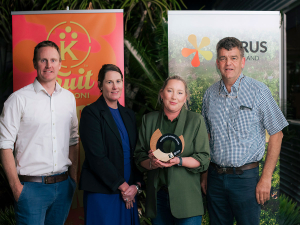
New Zealand's citrus growers were challenged to build their future on the value embedded in their fruit rather than the volume they produce, at Citrus New Zealand's annual gathering in Gisborne on 17 September.
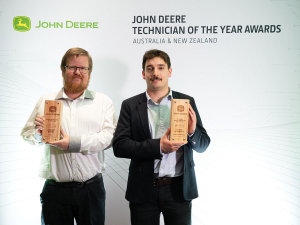
Leading John Deere technicians and apprentices from New Zealand and Australians were recognised at the recent sixth annual JD Technician of the Year Awards, held in Brisbane.
In Dacre, near Invercargill in New Zealand’s South Island, Bruce Dinnington is running a dairy operation unlike any other.
A free online platform aggregating governance vacancies across rural and regional New Zealand has been launched.
Environment Minister Nicola Grigg has announced details of a new rural plastics recycling scheme.
Agricultural drone operators say that a government decision to allow lower-risk drone work without certification won’t lower standards but drive innovation and efficiency.



OPINION: It seems Canterbury processor Synlait is still in the doldrums.
OPINION: Get offside with New Zealand First leader Winston Peters at your own peril.




